This past week we planted 800 Peppers (bell and hot) into leaf mulch.

It’s been hot this entire spring. We’ll be getting close to an extra 30 frost-free days this season from our anticipated average. The heat dome sits over Alberta as we speak and there is no rain in sight for the area of our farm in central Canada. Climate change is already here, and resilient systems are the best way to protect against these wild swings and weather trends. There is nothing more resilient on planet earth than nature.
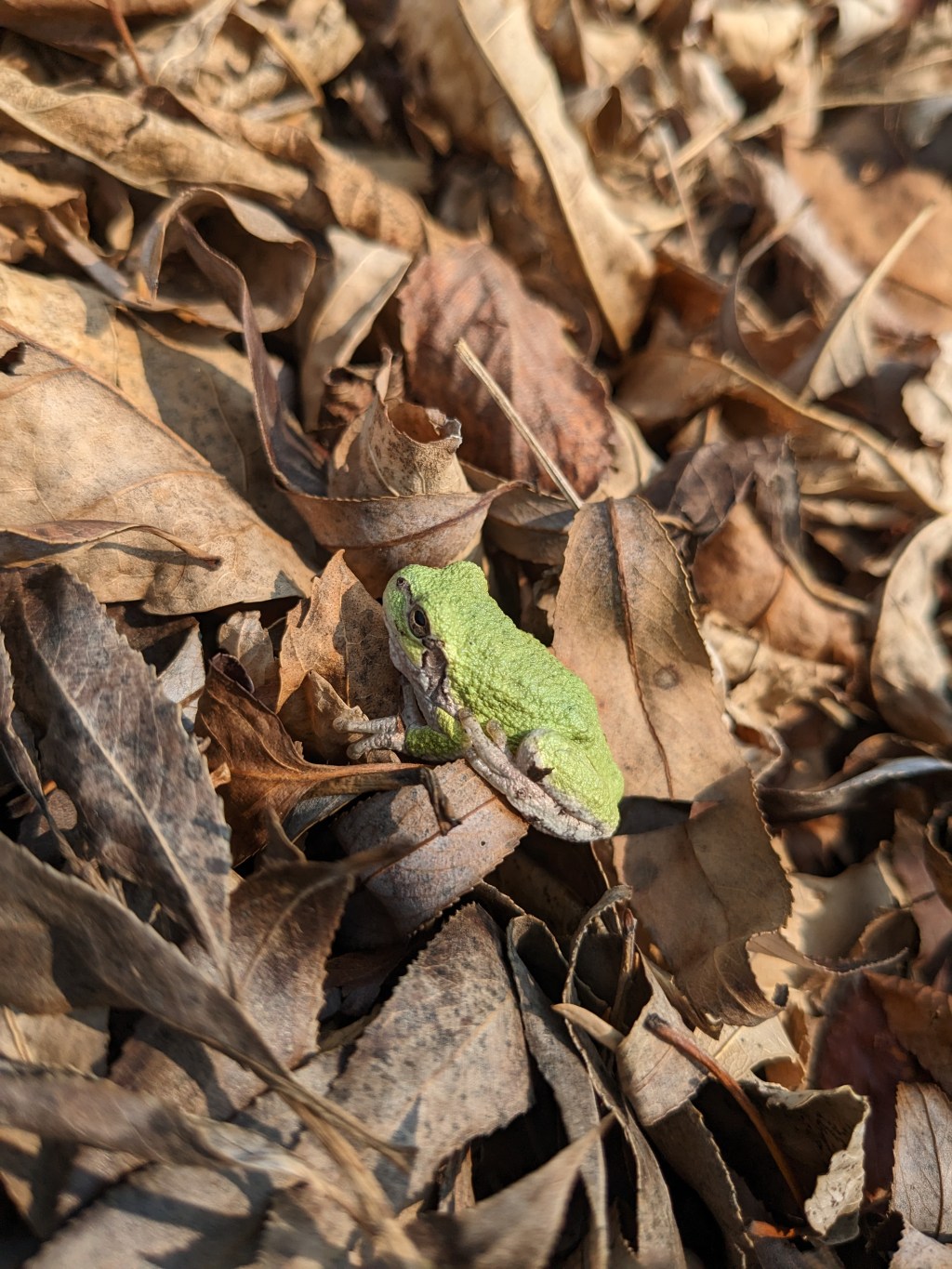
Under the leaf mulch, its cool and damp. The soil is soft and rich. You can scoop up a handful and look at it…and you can see many tiny little things moving around in it. Spiders scurry away if you remove the mulch layer. Frogs like to hide underneath the mulch as well, staying cool and keeping their skin moist. From the invisible to the almost-invisible to the frog, there’s a lot of life going on.
It is very exciting to see all these different critters as we transplant, and its a very good sign of a healthy and biodiverse system.
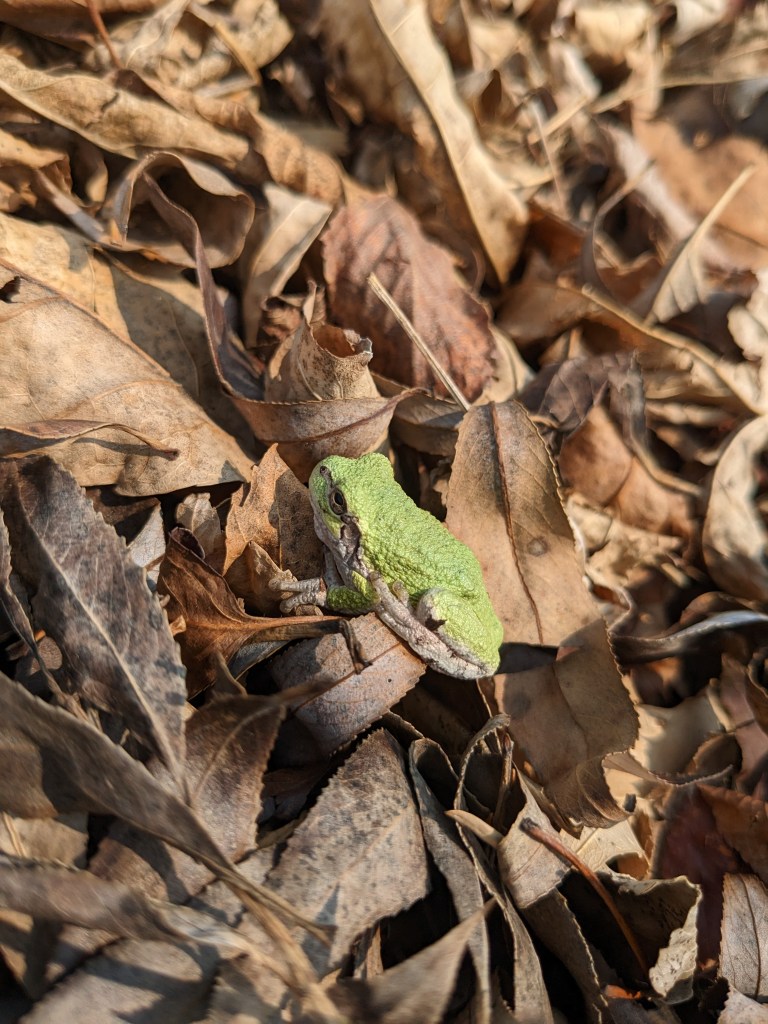
(That’s a Gray Treefrog)
It’s very easy to see and smell and feel that there is a whole system of life going on under the mulch. We all need water to live. And we all need to stay cool.
Exposing this valuable resource – soil – to the elements is one of modern agriculture’s biggest problems: actively changing the water cycle. Precious water evaporates into the atmosphere and leaves the soil dry and cracked, devoid of the rich life we want to see our plants growing in. By stripping the systems nature has built to retain water from the landscape, we run great risk of putting ourselves at a cascading set of problems: the soil dries out and stresses or kills soil life, plants become stressed, and stressed plants are highly susceptible to pests, diseases or will not produce high-quality fruit.
During a prolonged period in which no natural rain will fall, our goal is to to preserve the rainwater that does fall. Mulch is an easy way to achieve that, while helping all the diversity that lives underneath the parts of the plants that we can see.
Looking forward to our little section of peppers filling in and looking like they’re growing from the forest floor.


 Complimentary Blueberry Juice
Leave a comment