Not talking about it, or pretending it isn’t real, will not help us prepare for significant changes the world will face in the coming decades.
Not talking about it leaves our communities and societies weak, our businesses brittle, and unable to adapt in time.
Not talking about it means we double down, triple down, quadruple down, on the strategies that worked before, assuming they’ll work tomorrow.
Not talking about it doesn’t make the problem go away, nor does it make something happen slowly, way down the line, in the future, somewhere.
Not talking about it allows us to pretend it won’t affect us, and that the cost of learning new ways, adopting new methods, and pioneering change is simply too high.
It is simply easier to pretend it isn’t coming, talk about something else, so we can continue our business as usual, so the things we are used to won’t change.
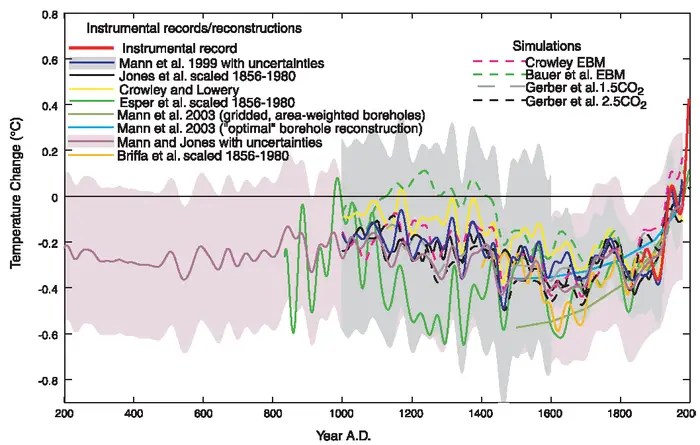
This study was widely mocked when it came out in 1999, partly by oil executives, partly by donors to political parties that stand to gain from it, and partly by people who thought it wasn’t an issue worth talking about.
Each and every year since 1999 has only shown this study to be extremely close to reality, 2023 will be the warmest year in recorded history.
Humans rarely experience things on a logarithmic scale. The combination of the things we aren’t talking bout, the things we aren’t doing, the scale of our consumption, the outdated modes of our agricultural models, separating ourselves as apart from and above our environment, all combine to make sure that we will, undoubtedly, cause history-altering changes to life on our planet, and those changes are coming faster than we can imagine they will.
It is a complex issue that goes far beyond the use of just fossil fuels: deforestation, pollution, the way we design our cities, and our agricultural models.
How will we design and build resilient systems to buffer, reduce and help prevent the changes that are rapidly approaching?
Not talking about it is a sure way to walk right into the giant rake, and then get mad, and wonder instead how the rake got there, who put it there, and who’s to blame for it.
Talking about it opens the doors to solution, technological innovation, and community building.
The moment we choose to build community instead of commodities, we can design and build resilient systems that are reciprocal, symbiotic and synergistic.
Graham
thanks for reading complimentary blueberry juice


 Complimentary Blueberry Juice
Leave a comment