The reason I love watching things grow in compost piles is that it’s a very visual and clear example of how plants respond to high microbial activity and organic matter.
There’s an overflow compost here, a sort of secondary pile where anything extra I can’t process through a worm bin first ends up. It’s a two-year old pile by now and starting to look really nice. I only turn it a couple times a year to incorporate the new material into it.
After the last flip which was probably in early July, we got a few volunteer seeds germinate. One of which was a squash, and out of interest I declined to turn the pile and instead be more amused by the pace at which the squash was growing. I don’t know what kind of squash it is as it is likely from last year’s discard pile, but a winter squash of some sort.
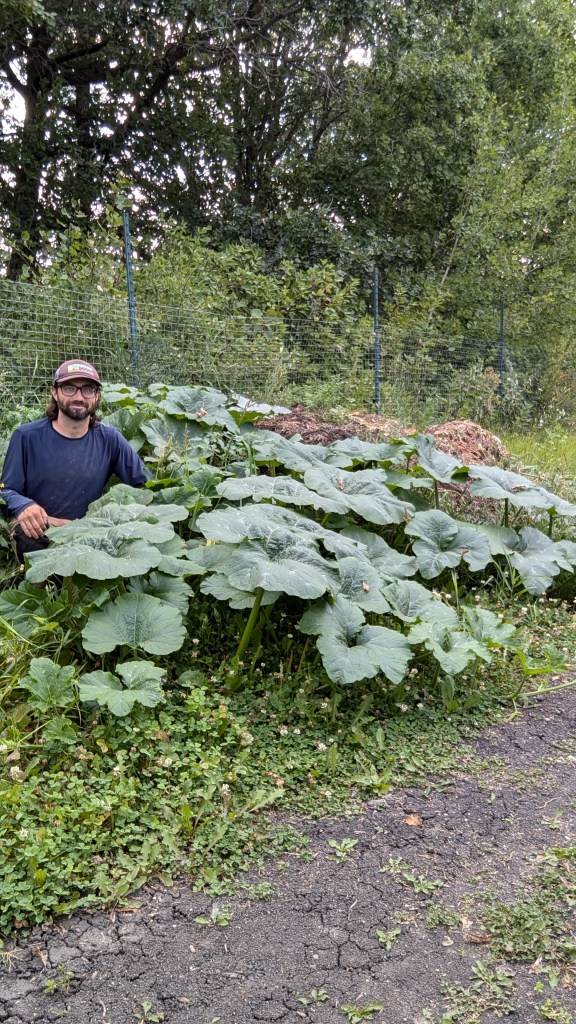
There is no fertilizer applied, and this squash germinated at least a month after the rest of our squash was planted….nor was it ever watered. This is 100% biologically-fueled growth.
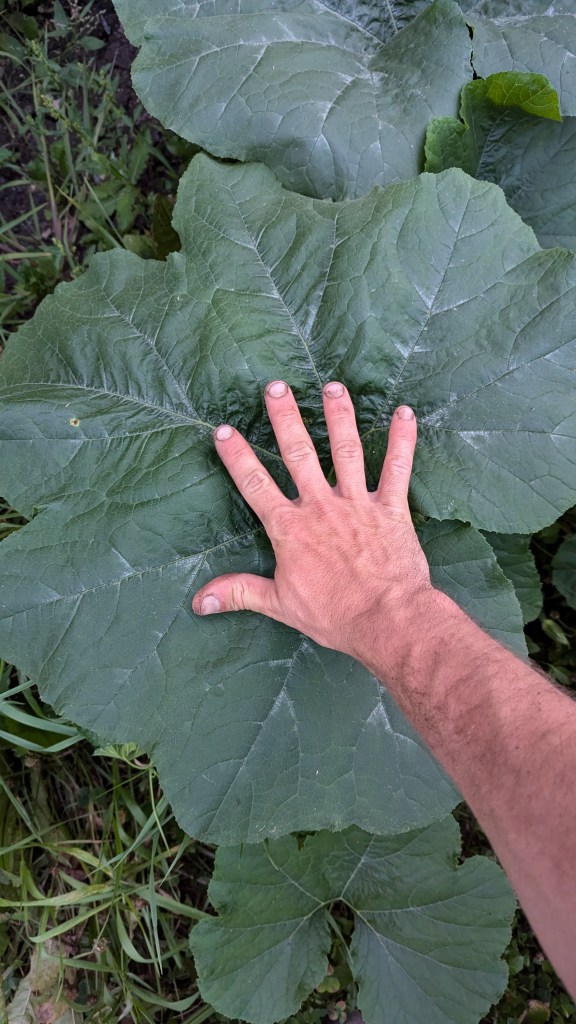
Plants function by feeding the microbial communities underground sugars from photosynthesis, and developing symbiotic relationships with many tiny organisms. Others, they consume via the roots. There is a great deal of communication going on between the plant and these organisms, and in a compost pile, they have many to work with.
What if we strive to make our agricultural systems as microbially rich and diverse as a compost pile?
What incredible things we would see.
What incredible things we could grow.
Graham
thanks for reading complimentary blueberry juice


 Complimentary Blueberry Juice
Leave a comment