For years, I just made lazy compost. I put stuff in a pile, sometimes it would heat up, sometimes it wouldn’t. And after years, I still have yet to harvest any reasonable amount of compost. The piles go bad, I abandon them, and they end up as waste I have to deal with in the springtime.
This season I decided to take all the lessons I thought I learned and apply them. The truth was that compost was not seen as a critical part of our operation, so it got little attention and minimal improvement over the years. If I was too lazy to turn a pile or maintain it, or water it, then it had to be something easy to use and also able to keep up with the volume of waste the farm generates. The answer was definitely worms.
I decided to finally start a Version 1 of a large worm compost bin, about 6 feet long, two feet high and two feet wide. Initially I thought it would end like the rest of my half-effort compost experiments.
But this year, voila….very nice, beautiful compost. I sifted 600 litres out of the worm bin and will be storing it above 0C for the winter.
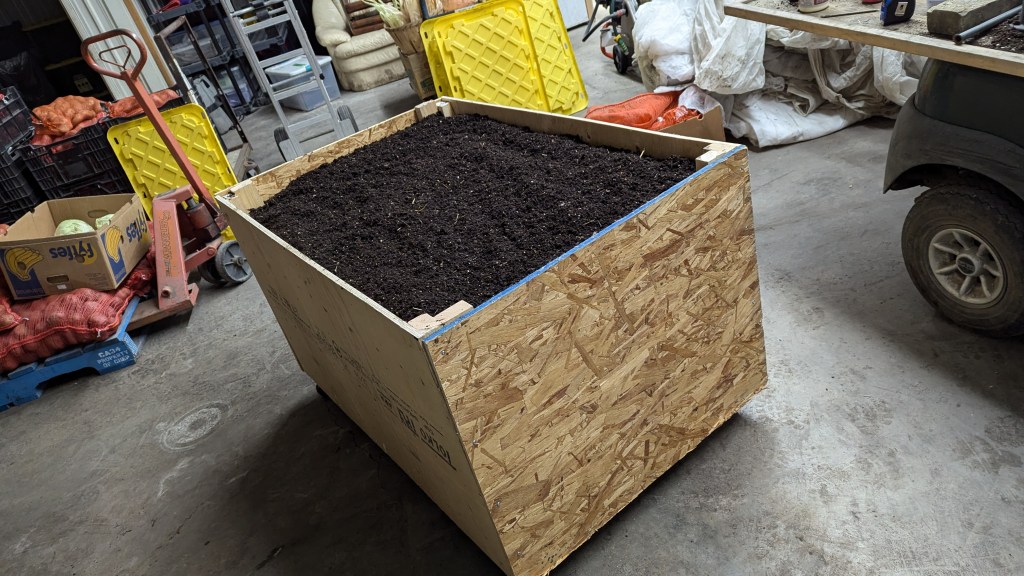
Not only did I get a cool 600L, but almost no waste went to the “backup” pile which was last year’s failure pile (I have also made improvements to that and will allow it to continue).
The trick was to keep everything close, simple and streamlined, with a schedule: every Sunday afternoon I dealt with all the farm waste that was accumulated that week. I dumped it in the worm bin, watered it, and left a layer of leaves on top.
When the bin finally got full, I first utilized black plastic compost bins, the kind you can likely get from a City composting program. After the worms went through more, the next week I would fill it up again.
It took me an entire day to sift it, but the result was fantastic, fluffy, spongy compost, full of all kinds of stuff, including largely leaves as my carbon source. There were also so many worms they were uncountable. I started in springtime with a small handfull.
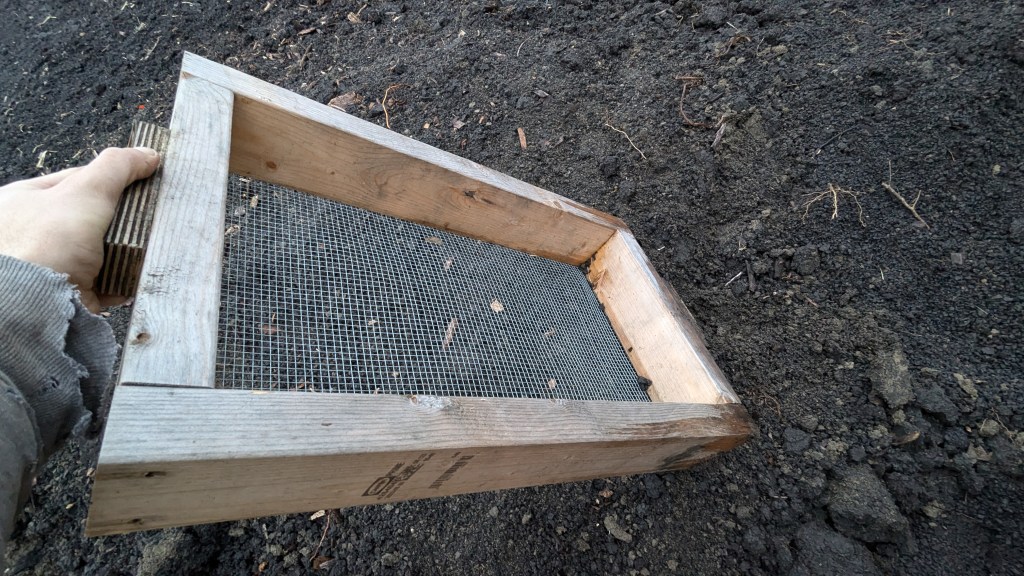
I paid a lot more attention to what was going into the worm bin this time, including making sure there was plenty of carbon source material, in this case, leaves, which would add a lot of carbon and minerals to the mix. Occasionally things with our parent clay material on them went in as well, and just about every vegetable we farm here. The finished stuff with stay above 0C all winter such that it can continue breaking down as much as possible before next season.
So what to do with 600L of worm compost?
For this first year, I think it will be strictly for greenhouse use in the springtime. Greenhouse soil mixes are tricky because they are soil-less, and come with no available nutrients (unless they’re added into the bag). So for us, we’ve been adding our compost mulch into the mix, and that’s about it. We have fairly good results with this method, but each year there are minor issues here or there. Having this worm compost included in the mix will give the seeds instant microbiology inoculation, and also have access to a very wide range of plant-available nutrients.
The second application might be to learn how to make our own compost extracts for foliar applications. But I think I need to get a bit better at this before a compost is good enough that we can effectively use it as a compost extract.
Next year I’ll start off with a lot more worms and food sources, and continue with the leaves. I might even expand the bin in the hopes of getting more, and eventually have enough surplus that we can begin an ageing pile for extract use.
This was a great improvement this year and there’s still lots of room to get better at it. Can’t wait to see how this affects our seedlings in the greenhouse next season.
Graham
thanks for reading complimentary blueberry juice


 Complimentary Blueberry Juice
Leave a comment