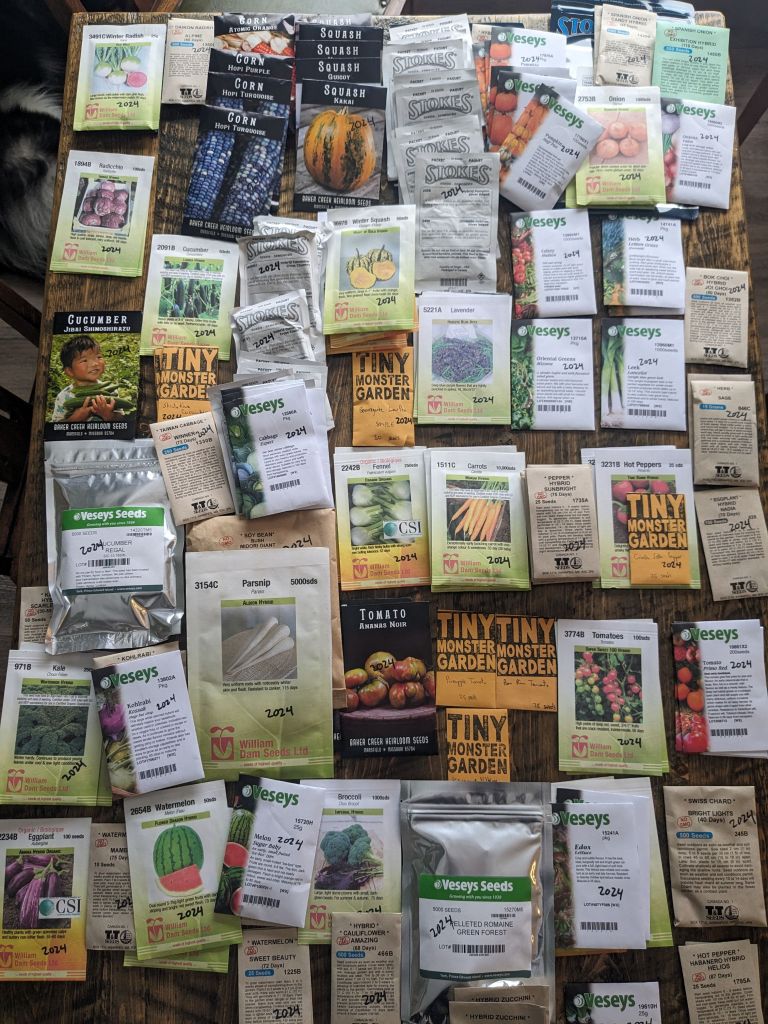
A new season awaits us, and as I always say, this is the best time of the year – nothing has gone wrong yet! While we peruse the seed catalogues (and always on the hunt for new sources of seeds) I am also taking the first two months of the year to study up and analyze all of the data from the previous season, rolling it all into an always-evolving best-practices model for the farm.
One thing always stands out among that analysis year-in-year-out: all our biggest problems are consistently grower error.
More than weather (by a longshot) the #1 thing that comes to haunt each growing season is probably my own fault.
The thing with weather is that it can affect you, sure, but more times than not you will end up harvesting that crop. Maybe later than expected, maybe smaller or lower yield than expected, but it’ll get there. The great thing about mother nature is the resilience inherently built into the system: living things want to survive and reproduce despite the odds.
But planting in thistles, planting too tight a spacing, forgetting to water, not addressing the plant’s biological needs, or thinking you can get away with not putting that row cover on, that’s all on me.
The only insurance against grower error is a combination of good note keeping, scientific method rigor, a cloudfull of documentation photographs, and the ability to try again and be sure not to repeat the mistakes that will lead to the same fate. Through good documentation you can also claim a soil crumb of control of the farm and try to solve large-scale issues that appear slowly and can only be solved by closely studying what is happening at an ecological level.
Of course Nature will always give you a new wall to run into and a new lesson to learn, regardless of how well prepared you go in. Slowly but surely the accumulated lessons mean that over time, we are succeeding at more than ever.
2024 was about taking a few steps forward and a few steps back at the same time. But in those backward steps were the most valuable lessons (we tried to save a lot of space in the greenhouse by direct-seeding and our squash had a really hard time in cool wet spring weather). So now going forward I’ll take dealing with greenhouse space issues over panicking (we still got a low-yield crop).
For 2025 I’m going to take a few varieties of things off my plate (seed catalogues are my candy store) to focus on doing less better, more methodically, and always putting past lessons to current planning.
Back to seed catalogues!
(If you have any favourite seed companies, let me know down in the comments)
Graham
thanks for reading complimentary blueberry juice


 Complimentary Blueberry Juice
Leave a comment