What does it look like when everything goes well?
Last week I detailed everything that went wrong with our onions. When you run into problems like that, it’s almost comical how many Grower Errors can stack on top of each other, compounding all the issues.
On the other side of the coin, the side all farmers strive for, is hitting all the points, executing every step, and ending up with a standout crop. For us last year, that was carrots.
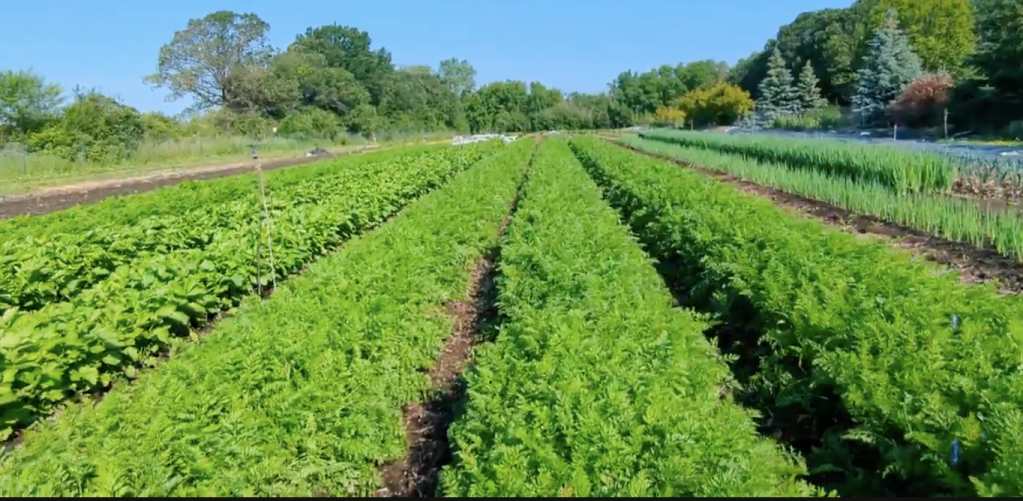
Not only was it a stunning crop to look at, the quality of the carrots was off the charts. We harvested well over 90% of these beds, with very few grade-outs or damaged carrots (and if they were damaged it was probably my fault). We got carrots early, and we harvested carrots late.
The difference between this execution and our onion execution is simple but makes a profound impact on the outcome: for carrots, we have carefully considered every aspect of growing them, and catered completely to the needs of the carrot. For onions, we planned with our anxieties of previous years.
These carrots we grow in zero-till beds primarily for ease of harvest without machines and for irrigation access, as germinating carrots requires consistent moisture for a long period. A day or two before these carrots germinated, the beds were flame-weeded, which took care of the initial wave of weeds. They were then weeded twice more before the canopy closed, and no more weeding was required.
I’ve learned over the years that any weeds in the carrots results in a lot of carrot deformities and makes it hard to pull them out of our clay without breaking them, both leading to a significant decrease in harvest %. To get that right, you have to hit the beds before the carrots germinate so the delicate cotyledons get a chance to establish, and twice more at regular intervals of 10-12 days apart get the rest.
Growing the carrots this way allows the carrot roots to dominate the bed, and most importantly, the fine hair carrot roots, the ones that grow laterally from the main root, seem to be the key to making our clay malleable and crumbly, making harvest easy. Weed roots interfere with this and it is very obvious when you use a broadfork to harvest them: a cross-section lets you see it in real time.
As far as nutrition goes, I find that the layer of mushroom compost mulch is all that’s required to get carrots on their merry way. These carrots had no fertilizers, and no foliar applications. The beds were well-established and have been zero-till with mostly continuous crops for several years.
These carrot tops got so vigorous that they also closed the gap of our 18″ path walkways!
And crucially, we know for a fact that Canada Thistle is not a problem in this section of beds. There are no established rhizome colonies here.
It is theoretically possible to have all one’s crops at this optimal level. If I was to plan our next onion crop: I will take the soil health and thistle status into account, I will make sure we are addressing the onion’s nutritional needs especially at transplant time to promote root growth, and if we can go through the field three times for weeds, we should end up with at least an average or above-average crop. Planning beyond this season for onions means we are preparing our soil a year in advance…for carrots, I already know which beds I will be using, and they are already set up and ready to go.
Often in the chaos of the farming season, trying to get everything done, we don’t always execute all steps as we should. It’s worth the advance planning to get there. The more thoughtfully we can consider fields, plots and beds a year in advance (or perhaps more) the better the outcomes will be, and the less stress…on both the farmers, and the plants.
Graham
thanks for reading complimentary blueberry juice


 Complimentary Blueberry Juice
Leave a comment