We received notice from our RM of all the wonderful chemicals that may be applied during the season, a run-of-the-mill PSA. It proceeds to list 9 different herbicides and 4 pesticides. At the bottom of the PSA comes the kicker: if you don’t agree, you have to write a physical letter to the provincial government asking for exemption.
I find this chemical-laden world we live in absolutely absurd. The default is chemicals, and if you don’t agree to being exposed to chemicals on your property, in the year of 2025, you must send a physical letter to opt out.
Otherwise, you are out of self-protectionist letter-writing luck in public areas. Areas you may take your kids, areas you may go for a run, or walk your dogs. We live in a chemically compromised world, and these are only the ones we are told about, or physically witness being applied.
Since it is seeding time, the question of chemicals is front in my mind. Common practice in agriculture is to coat seeds with all sorts of chemicals. Fungicides, pesticides, trademarked and patented secret sauces for protection against this and protection against that. I have seen bags of seed labelled with poison symbols, with warnings not to eat, or, not to let your livestock on the applied field within 45 days after planting. Because with all these chemicals, there is also conveniently a magic period of time after application that makes it all safe again.
And those are vegetables that you end up eating.
We are assaulted from chemicals on all sides, without even knowing. And the default is to accept it as unharmful. This isn’t the case with say, cigarettes, which everyone understands your right to enjoy a smoke stops at also polluting the lungs of those in the room or in the car with you.
This topic really hits my ecologist-wired mind hard. I find this remarkably sad view of our planet and our world. I find it unfathomably short-sighted. I believe it to be utter hubris, and peak human ignorance and futile exercise in reductionism. The idea that we can insert a chemical into a seed and magically produce resistance to a perceived threat ignores every biological reality known to science. There are thousands, hundreds of thousands, millions of genes in a seed, all getting switched on or switched off, according to environmental pressures.
But we humans know better than the developing embryo and genetics of a seed. And, after inserting chemicals into seeds to protect the crop from this and that, we then proceed to spray more chemicals while the plant is growing, to prevent this disaster or that.
The default.
This sort of thinking is so pervasive it seems impossible to go against it. But I am incapable of seeing the world and everything in it as a threat. I am incapable of seeing my crops this way, like they are being attacked from hordes of funguses and insects and diseases that you only hear about from poisonous seed labels. The incubated fear is real. The response is to grab the chemical. It isn’t even questioned. There is no effort made to understand the plant, understand plant physiology, or think of a plant as anything other than stupid, a sitting duck, lying in the open with no cover or defences, thank goodness there are humans around to protect them.
The informational input to the human mind is largely one-dimensional and increasingly aesthetic. We can see one problem and one problem only, and it is almost always perceived as a threat. A weed in a lawn, is a threat to the lawn. A worm eating a tree leaf is a threat to the tree. But what we don’t see is the million, billion, trillion other factors that are contributing to the situation. We don’t see the entire food web. We don’t see the genes switching on and off to environmental stimuli. We don’t see the changes and responses by nature over time, because we live on a time scale that can only compute annual growth. We don’t see the stimuli, we don’t see the synthetic chemical molecule interacting with the cell membrane, we don’t see any of it. The most profound factors effecting gene expression are invisible to us. The peaks and valleys of predators and prey are reduced to a flat stable line, trap counts and budgets for spraying chemicals.
I came across this photo recently of Toronto, Yonge and Eglington, circa 1922. I shudder to think what we have lost in our relentless pursuit to make our environment “clean.”
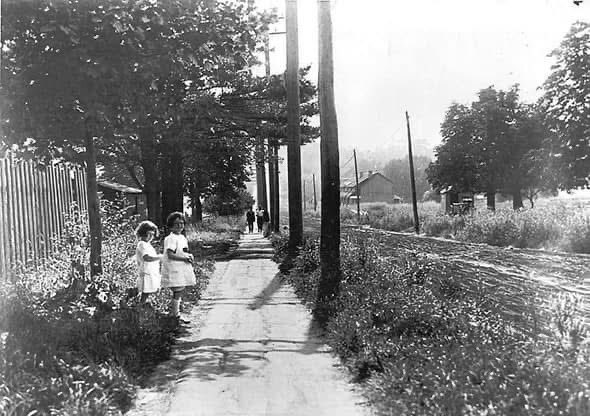
There is nothing more clean than the natural world fully expressing itself through diversity.
The problem is that our chemicals are not specific. They target all. Thus the effect to the environment is total. Thus begins a cascade of environmental failure that creates further reliance on chemicals. We create the imbalance through our actions and our desire for a certain aesthetic, then we pour billions of dollars into chemical warfare to keep it imbalanced.
The biggest buyers of chemicals? Farmers and governments.
The default is an infinite hamster wheel, and we can only get off the manic single-minded ride if we choose to see our amazing world and everything in it a different way.
Graham
thanks for reading complimentary blueberry juice
See Also:
Butterflies Decline in US by 22% since 2000.
Pesticide Use in Canada Soars.
Widespread global decline in insects.


 Complimentary Blueberry Juice
Leave a comment