Well that was quite the couple weeks there, hitting 35C and 30C+ on multiple occasions. We’ve had, in total, approximately 25mm rain since the beginning of May, which isn’t much. And for us, 90% of what we grow is not under irrigation (or what is known as “dry farming”).
So here’s an update on all thats going on this 2025 spring season.
1. Holding Back When It Feels Good To Go.
It’s deceiving when the weather is in heat wave territory in May. Because the first wave came so early we couldn’t jump ahead, it became “slow and steady wins the race.” We waited out the heat waves for planting: transplants get extremely stressed if you relocate them under good conditions, never mind relocating them to the desert.
Over the last month we’ve waited out the heatwaves and planted when it was cooler, as well as taking the decision to delay further transplanting to water (by hand) the crops we had already installed. We are again in a cooler period, but it’s already June 4th so we can’t wait anymore. It’s go time, rain or not.
We will go slow, use liberal amounts of water with the transplants, and set them up with full nutrition as this week of cooler and less stressful temperatures sets in.
2. The Smoke Is Really Getting Annoying
I’m very sensitive to changes in what’s going on as I spend all day every day outside…there is a sort of flow of energy one can follow. But lately we are downwind from horrendous wildfires, and the air quality reading from Environment Canada has been over 10+ multiple times this past week. I’ve taken to wearing a mask as my throat and lungs are feeling it.

Wildfires are at one hand, a part of a forest ecosystem’s journey, and on the other, exacerbated by human-caused climate change. This is now the 3rd on-fire-hot-above-normal-very-dry season start we have experienced in the past 5 years.
3. Experience Helps
Because this is now the 3rd on-fire-hot-above-normal-very-dry season start we have experienced in the past 5 years, we are now adapting to the decision-making process that follows. We’ve put in many safeguards to make sure things don’t fail in the event this sort of thing happens over the years, as the worse outcome is to simply lose the crop (which we’ve lost plenty of).
4. The No-Till Field Is Amazing
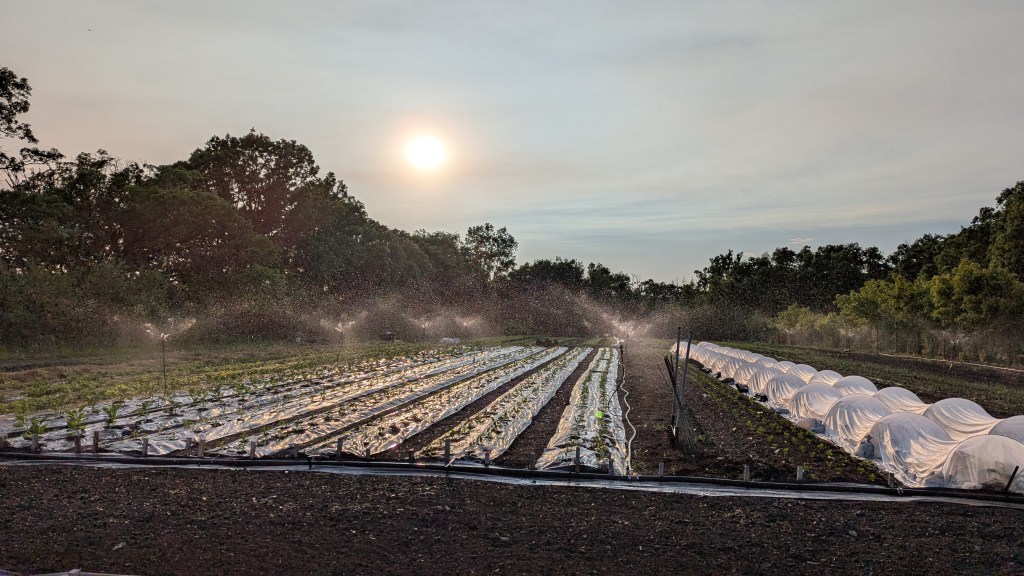
We are now at full-capacity over the 2-year rebuild project with the bed system, deploying a total 58 beds. The irrigation has been re-installed and optimized (learning from our previous design’s faults), and we have finally succeeded in moving many field crops into the no-till beds which both eliminates our maintenance problems and also allows for irrigation.
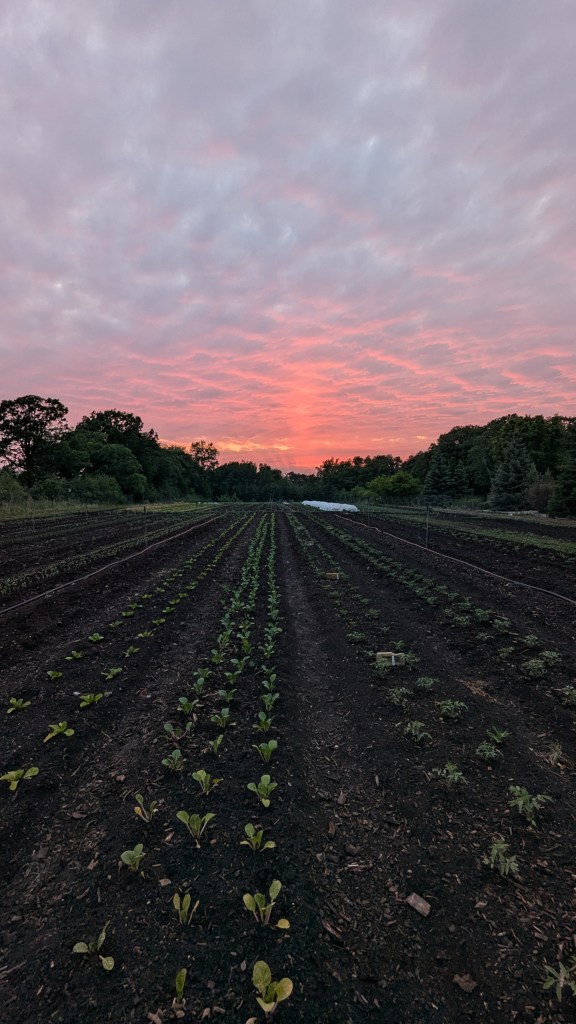
Things like Eggplant, Tomatoes, Peppers and Onions were always things we wish we could have accomodated here but we had to take a few years of beatings from nature to get to this point in time.
This year we were able to reduce the number of eggplants and peppers favouring full nutrition program over bet-hedging, and it feels really good to be on the path of understanding what these plants need to succeed at a higher level. We also have for the first time, specialty, cherry and heirloom tomatoes in the same situation. Let’s hope there’s a big payoff this year for all the many changes we’ve made to how we manage these crops.
5. The Bees Are Insane
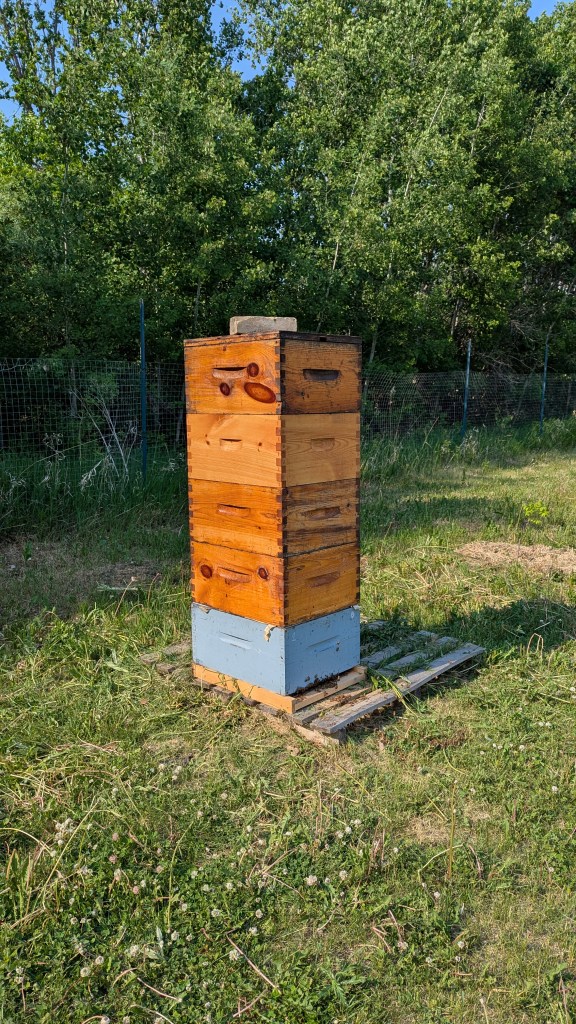
We survived our first bee winter, with only seeming to lose a queen. We combined the two hives, and used the queen swarm cells to make a split, bringing us back up to 2 hives. But the queen that survived the winter has been absolutely gangbusters awesome and we’ve got ourselves a giant hive ready for honey production at the beginning of June. Last year at this time, we had only had our tiny 5-frame nuc for two weeks!
This big hive capitalized on the early flowers out there. And that includes dandelions. I’ll never understand the near-universal hate for this so-called “weed” and the immense drive people have to eliminate it (even though it exists liberally on 6 continents) but it’s a big source of nectar and pollen in the spring.
In addition to that, the bees are also taking advantage of the massive amount of naturalized area around the farm. There exists a pocket of near-untouched forest, meadow and wetland for several square kilometres, full of all the things, like dandelions, that are not deemed desireable species in suburban settings, or in rural settings dominated by commodity agriculture. This naturalized area around the farm has wild plums, wild apples, dogwood, and all sorts of flowering bushes and plants that I have yet have time to identify. On my second season of beekeeping and seeing strong success out of the gate, my only conclusion is that this large area of biodiversity has a very abundant and strong source of resources for the bees.
This colony had already plugged out 2 honey supers, and each box weighed easily 60 pounds. This hive needed room fast, as both vetch and alfalfa are just starting to bloom now, which will fuel the honey flow even more. So I added 2 more supers in anticipation of the hive’s ability to keep going.
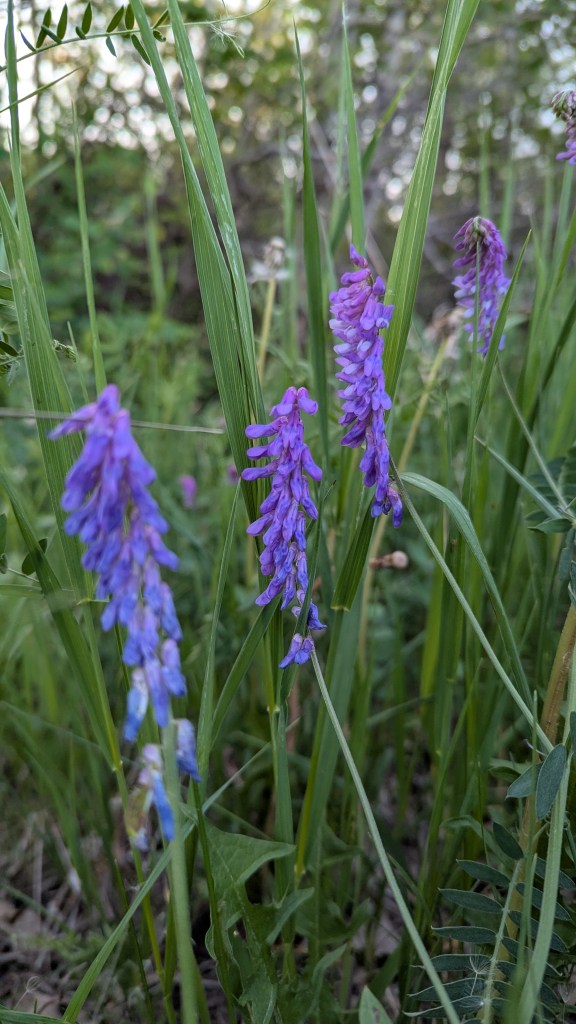
Here’s some Vetch…it’s a pretty purple flower with a sort of vine leaf. The plant appears delicate but, if you try to pull it out, you will be able to feel how strong that little vine-like stem is.
6. Light At The End of the Tunnel
Transplating season is almost over….just a couple more days and it’ll be on to Weeding Season.
Graham
thanks for reading complimentary blueberry juice


 Complimentary Blueberry Juice
Leave a comment