It’s been an amazing first year in the new greenhouse and while we’ve been blown away by what we’ve been able to achieve in our first season, it’s come to the time when we need to think about turning it all over for fall production. And it’s necessary to go through this process so that we can see for ourselves, again, what is possible, and where we can improve for next season.
But as soon as I started working on getting it all ready for fall, a major issue showed up. The soil in the greenhouse, if it were left as is, and we continued growing in it in this manner, would face major problems in the future.
It was time to put the brakes on and stop immediately what we’ve been doing all summer.
We got one half-season worth of trial and to see how it goes, and it’s obvious we need to stop.
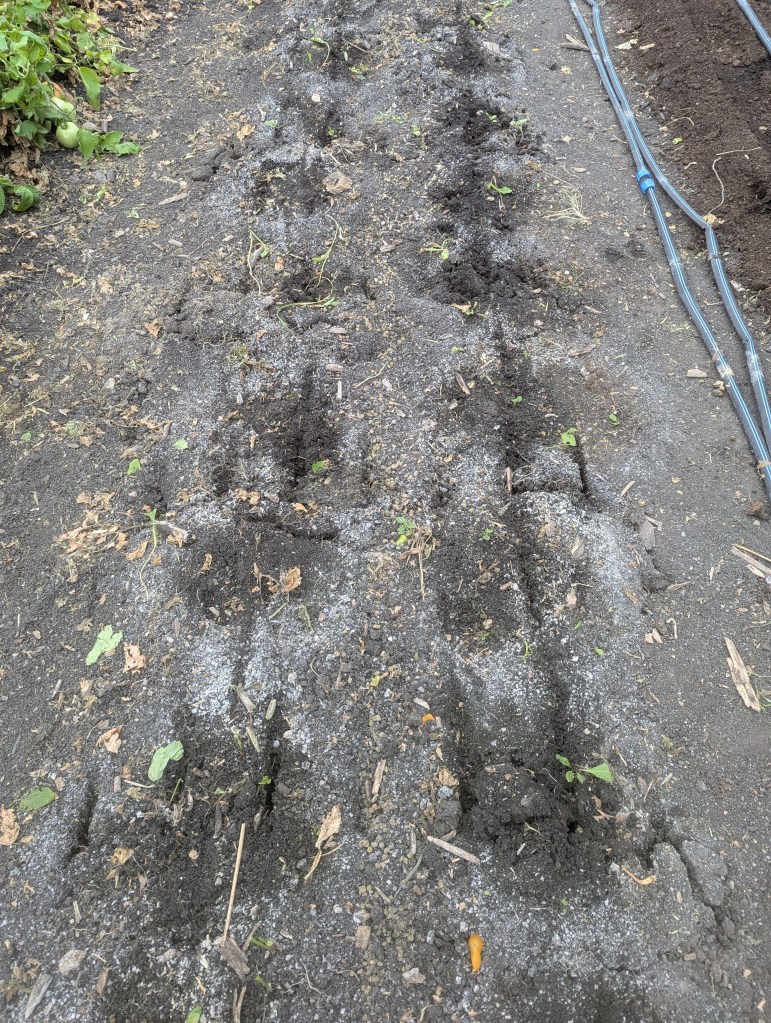
This is where our cherry tomatoes were until yesterday, but all of the beds are in a similar state.
There are two major issues here that need addressing ASAP:
1: The clay is exposed, which is to say, the soil is not covered. Being exposed means it dries out quickly, and in the greenhouse, that means we are responsible for watering it, but also that the water doesn’t go very far, as the moist soil evaporates, dries out, and compacts. It also means the soil is devoid of obvious life. Lastly, it makes it difficult to add amendments or fertilizers to help the plants continue cranking out fruit.
2: We must stop using our well water as irrigable water in the greenhouse immediately. The well water is leaving rings of calcium and magnesium salts all over the place. And we know this…our groundwater is over 1000 TDS, which, if you don’t speak units of water hardness, means our water is extremely hard. These minerals are not helpful for the soil or the plants, and over time it will cause major issues.
So…how to solve?
Moving forward, I decided the best course was to set up the greenhouse in a similar way that we set up our no-till bed system: to prioritize soil biology, and soil health, and to re-orient all of our efforts towards that goal.
For the greenhouse it means:
1. Broadforking each bed to alleviate compaction.
2. Spreading liberal amounts of alfalfa/gypsum.
3. Soil drenching with compost extract and AEA Rejuvenate.
4. A thick layer of mushroom compost mulch on top.
5. Watering with rainwater or RO water only.
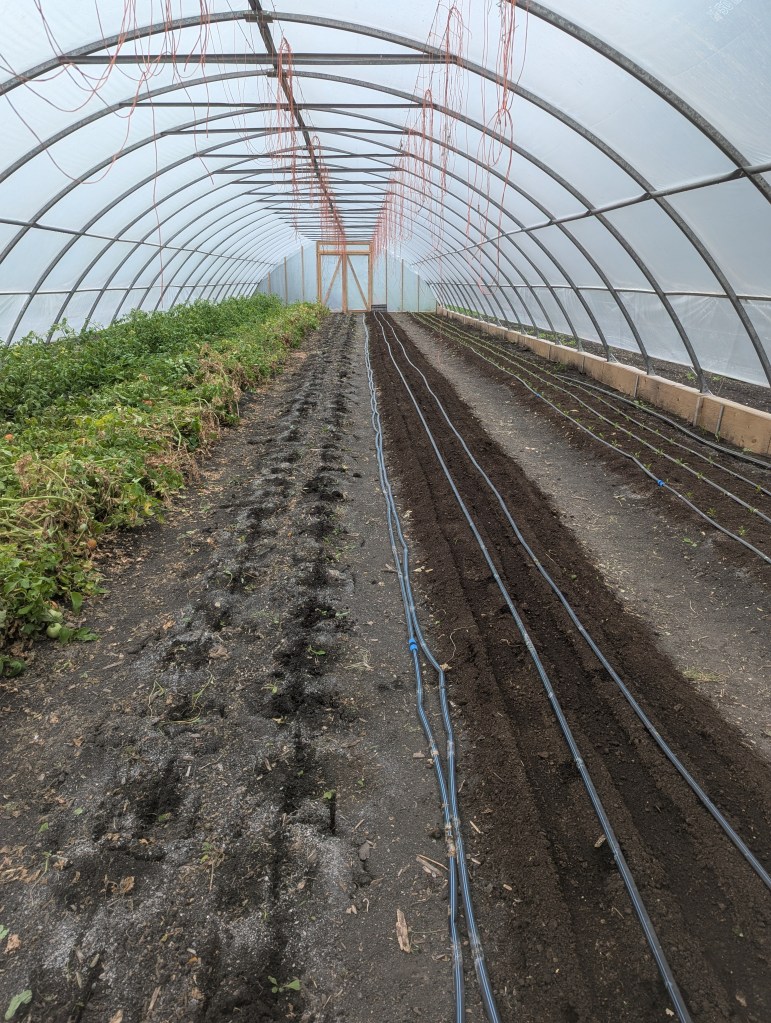
This is what it looks like as of time of publishing.
The difference is already noticeable…the spinach, on the far wall, about a week in, the clay under the compost mulch cap has softened and I can stick my fingers in and pull some nice, moist, soft clay up. That is a far cry from the salt-stained open clay bed on the left.
I am thinking now till next season: keep living roots in the ground in these beds as long as I possibly can. This will allow photosynthetic root exudates to continue populating the soil column, and with it, hopefully bringing some life, earthworms, and all sorts of stuff along with it. It will be an experiment to see how long we can keep greens in the greenhouse anyway!
When those crops are done, I plan to apply compost extract and Rejuvenate a second time, and to cover the mulch with a layer of leaves.
Right now I am really thinking about tomatoes and cucumbers next season. I want to be able to apply fertilizer easily, so I may even keep a layer of leaf mulch intact all summer, to cover the soil, and cover the mulch. I know from experience roots of plants will actually grow on the surface of the soil provided it is covered. This means the plant’s roots are able to respire and spread over a much wider range to obtain nutrients and plug into soil life symbiotically.
It would also mean, if we were to run drip tape under the leaves, that our rainwater or RO water would go a very long way. Not only would we conserve more water, but it would be more available to the plants.
Lastly, it would mean an application of fertilizer on a bi-weekly basis would be easy….move some mulch out of the way, and sprinkle on top. The soil life will bring the fertilizer down and the plants will be able to absorb it. No wondering how to get plants to uptake dry fertilizer on top of rock-hard baked clay.
The greenhouse has been an amazing addition to the farm and for us to achieve high-level results, we need to work toward developing and taking care of our soil in the greenhouse, so it takes care of our plants. In an environment that relies 100% on human input and action to sustain plants in a controlled environment, soil health is even more crucial.
Graham
thanks for reading Complimentary Blueberry Juice


 Complimentary Blueberry Juice
Leave a comment