The “apex” of the season is always a tough one I find, psychologically. It’s a point in the season when there’s nothing you can do, no action you can take, to get things to turn around or do a little better. It’s all baked into the cake. On top of that is the accrued mess of the season, as the busyness of the harvest season dominates unpicked weeds and unkempt areas become the work for the next month. The apex is a time that shifts from what is this year, to what is next year. It’s time to look forward to improvements for next year, and to work towards that goal.
1. Early Frost. The chill from the arctic blast arriving last night was enough to turn in all our open-field dry farming crops: cucumbers, field tomatoes, squashes. Not super great, especially this early into September.
The good news is that the frost-sensitive crops in the no-till beds seem to be entirely unaffected. Did the patchy frost just not hit the field? No it seems, there was ice on the bee feeding buckets, and the neighbour’s squashes also say that it did get cold enough to do damage.
I believe more and more that we have achieved a higher level of plant health and biological resilience in the no-till. I have witnessed many examples of insect pest resistance, and now this morning, that tomatoes and peppers are still vibrantly green showing no signs of frost damage. This is a stark contrast to the open field, with pest pressures about and widespread frost damage.
This early frost will push me further into the no-till. It isn’t just the ability to take care of soil more intentionally in a smaller area, but also the ability to irrigate, and to continuously take care of plants through their life cycles, as opposed to hoping for good weather.
Biological resilience is not 100%. I still have insect pests, but they are not decimating the crops, so the plants can respond. There is still frost damage locally, but that 0.3C or 0.5C buffer zone – whatever the biological resilience is worth – was enough to stave off last night’s frost and keep fighting for another day.
2. The new hoophouse, turned over for fall production.
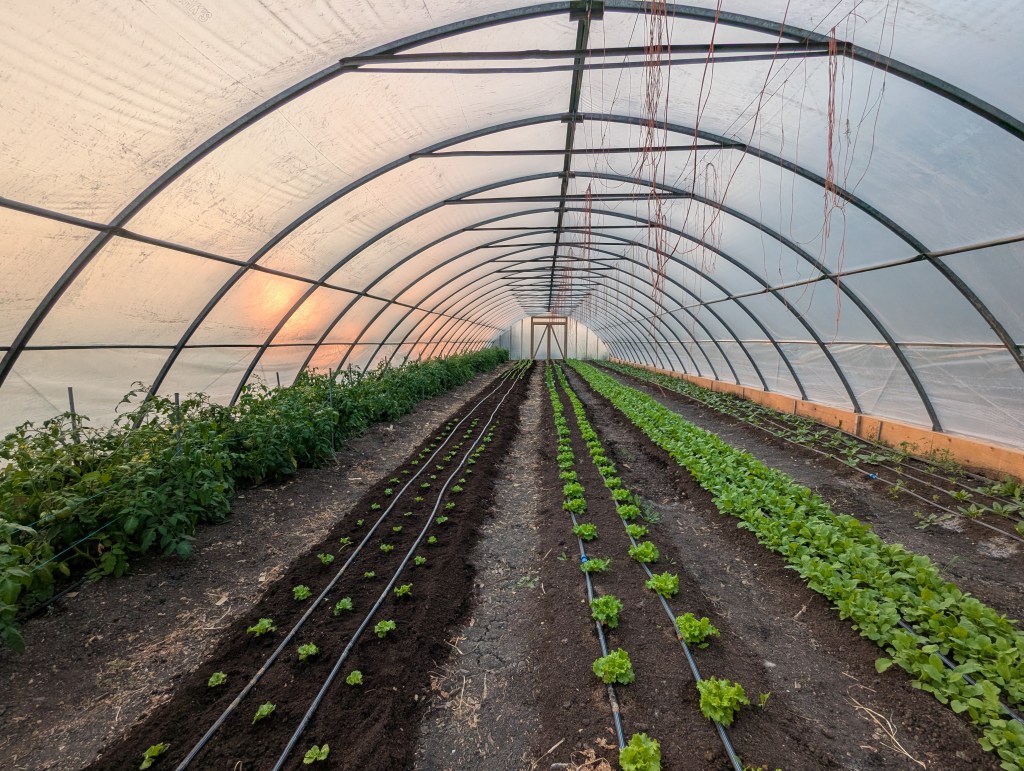
Update to the recent post about going in the wrong direction in the greenhouse, all the beds have been turned over, broadforked, amended and capped with compost. We were also able to take advantage of the rain a couple weeks ago and switch over from well water temporarily.
Already the clay under the compost is now consistently moist, and will not dry out with the compost mulch layer. The lettuces are off to a great start, and a full bed of radishes that is growing as if it’s not September.
Even with the frost last night, the greenhouse stayed at a comfortable 4C.
3. Great success with the tomato trial.
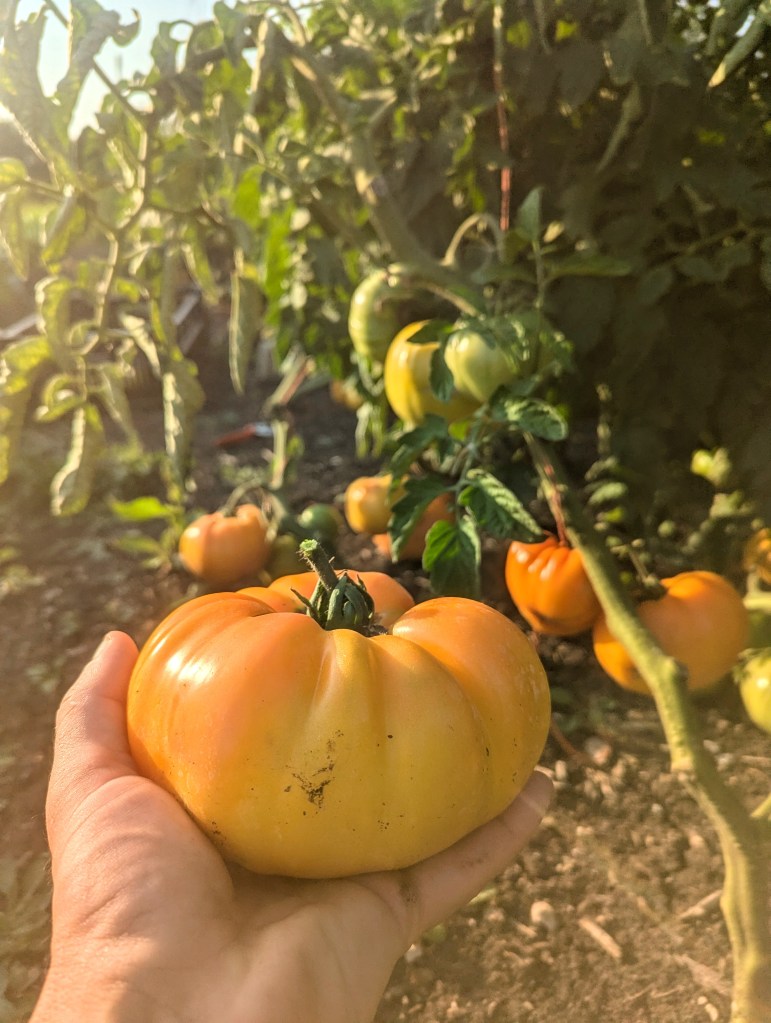
Two trellises of tomatoes in the beds have shown us a great way forward, and what the potential is. We didn’t get the harvests that would’ve been nice, but we learned what is possible with this system.
While I’ll have to move the trellis to a better location without overhead irrigation, the proof of concept worked beautifully. I really can’t be disappointed with this big leap forward. I’ve already started selecting varieties for next season, which may feature as many as 10 specialty varieties, and moving the entire tomato crop to the bed system.
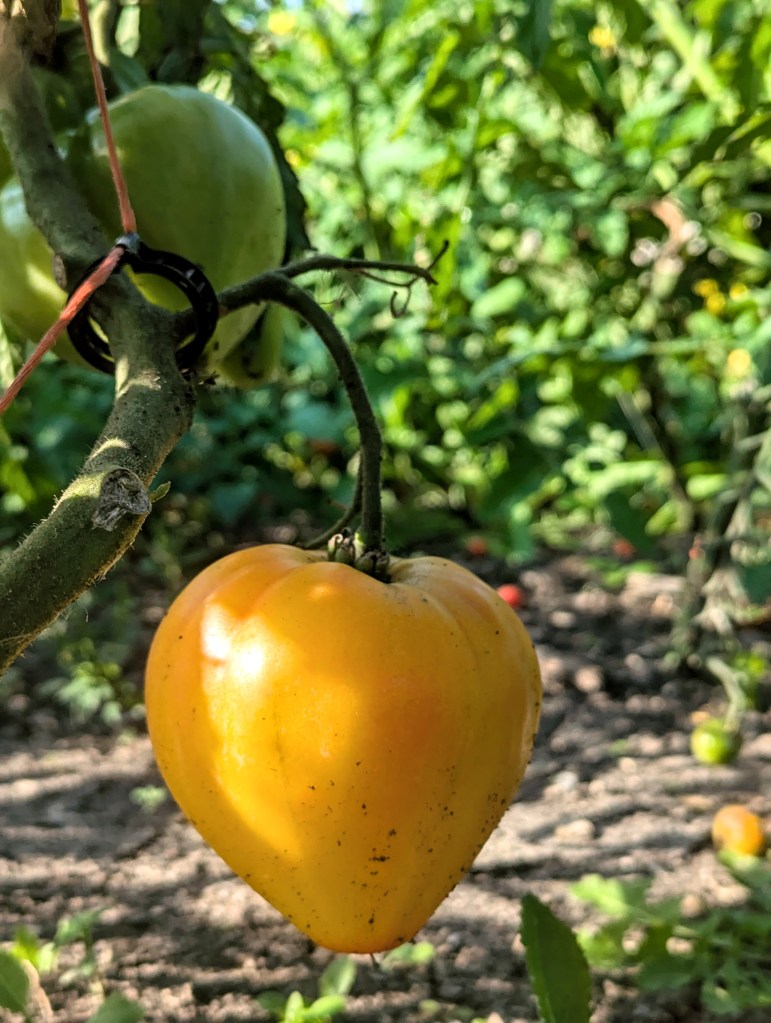
Above is a Buffalo Sun F1 AAS winner (winner for a reason!) and below is Sonnenhertz F1, a beautiful and delicious Oxheart type that has won me over and is now my favourite specialty tomato.
4. Fantastic Cover Crops.
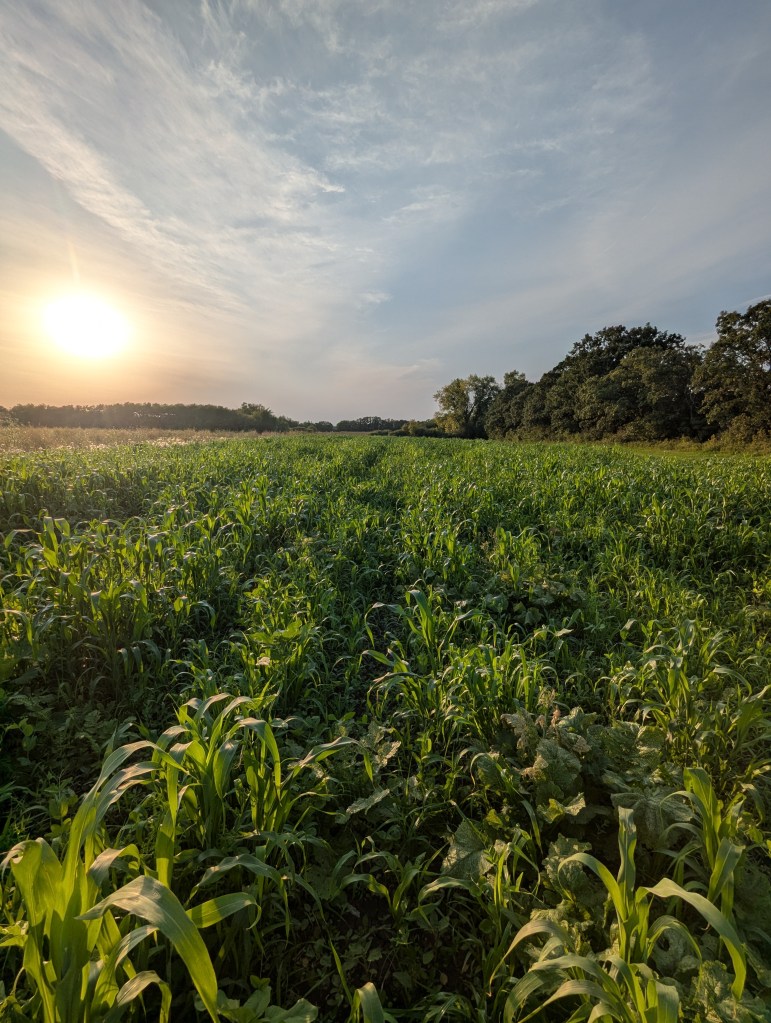
We got the cover crops in late, but then we got the rain, and then we got the heat, and they exploded. All 4 acres of them…up from just our 1 acre trial plot last season. Also worth noting the Sorghum, which is very frost intolerant, also survived last night’s little frost.
In the next week or two expect a bunch more updates on this. We applied calcium and sulphur in a biological form, and just letting the biology on this 10-way mix go nuts.
Shortly we will shred it, add more calcium, compost extract and soy hydrolysate. The results from last year’s cover crop was great, and we look to improve on our methods for this season, which is primarily shredding and incorporating it much earlier before the cold weather sets in. The goal now is to mix this all into the top layer of soil and allow the microbiology present to decompose and make available a lot of nutrients for next year’s crop, as well as developing our soil structure.
Graham
thanks for reading complimentary blueberry juice


 Complimentary Blueberry Juice
Leave a comment