Last year I was able to successfully harvest 600L of worm compost and repeat that this season. It worked pretty well, and if you want to read about why we’re running our waste ProMix through a worm bin you can read that post here, and on the second go-round I tried to make some improvements with what was added to the bin, and had some surprises along the way (…snails?!)
The main protagonist here is worms, which are the only intentional organisms in the bin, but the goal with the worm bin is to foster as much life as possible in the decomposition process. That should give us the widest possible array of life, and result in the widest possible array of both macro and trace elements in a biological form ready for uptake and integration by our seedlings via the invaluable decomposition process.
To accomplish this, I take it upon myself to add random extra stuff as habitat, using the “if you build it they will come” strategy. In an ecological framework, there are unknowable amounts of life happening to break things down, and recycle organic material. This means that strategically, we can add different groupings of things to the bin to target general groups of decomposers.
Some examples here are:
1. Leaves: which act as carbon-rich bedding substrate for the worms and are chock full of all sorts of trace elements wise old trees procure with their extensive symbiotic relationships. Leaves last a fairly long time in the bin and attract various molds.
2. Sticks/Branches: Being made of cellulose and lignin, these complex carbon-based polymers give wood their strength and as such take a long time to decay. They can provide a house for various fungi that slowly release this carbon into our finished soil mix. They last years and years in the bin and also retain moisture, which means we can always maintain a good fungal population, and who knows what else is slowly eating that wood.
3. Vegetable waste. These are going to break down quickly as they are mostly made of water, and attract a range of bacterias, and need to be continuously added through the season.
Those are our invisible allies in this game, but the worm bin supports an enormous tree of life. There are all sorts of arthropods and insects scurrying about the bin, consuming things and cycling nutrients. The most visible of this macro group of decomposers in the bin are isopods, our friends the sow bugs. But there are tons more if you look closely, the substrate in the bin comes alive. These bugs secrete their own enzymes that break down plant material.
There is an interesting paper on the often-overlooked effects of invertebrate decomposers on plants and soil here.
Also in the bin is a predator class, spiders and centipedes. All these insects additionally molt their shells as they grow from instar to instar, chitin being another complex carbon polymer that gets broken down in the bin, and additionally they all harbour their own nutrient packages, full of stuff that gets further recycled when these insects themselves die.
It’s really satisfying to see the amount of life in the bin at this point, and that this rich substrate that is getting broken down over and over is of enormous benefit to our future greenhouse seedlings. So…mission accomplished.
And now for a bunch of photos on what this all looks like in practice, though maybe in the future I will be patient enough with my macro lens to capture all the tiny life.
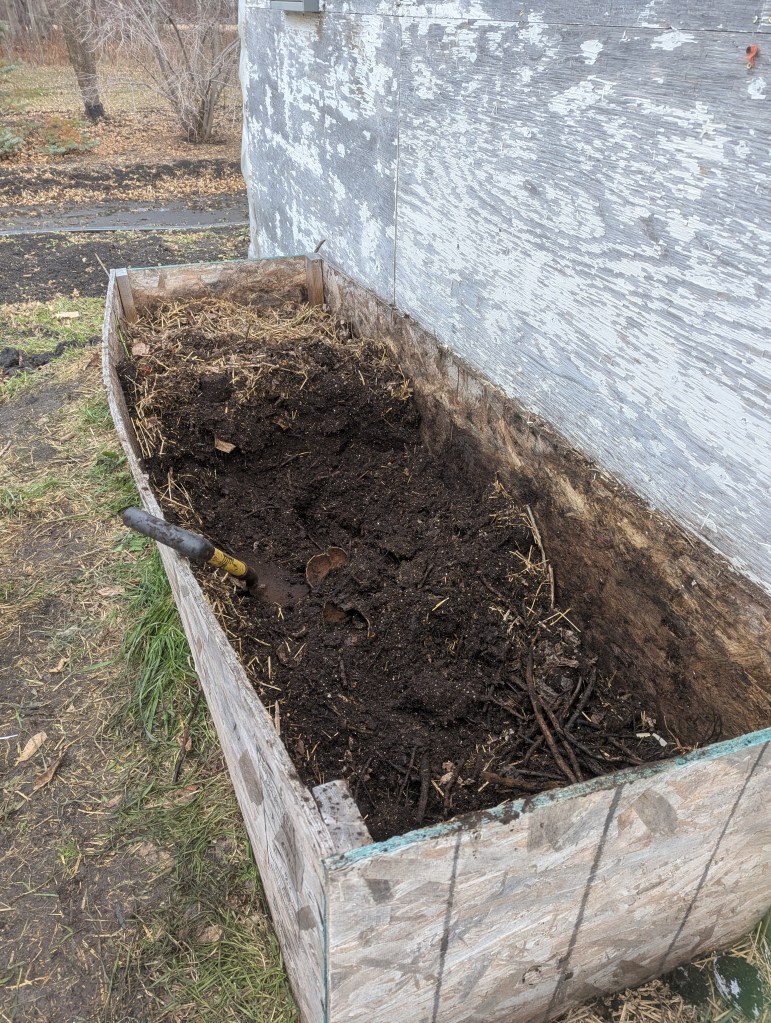
First, the glamorous bin itself, 8 feet by two feet, situated between our two greenhouses where it stays out of direct sun and is easy to access. Now to get enough of this stuff out to fill the 600L overwintering bin, which will stay at about 5C for the winter.
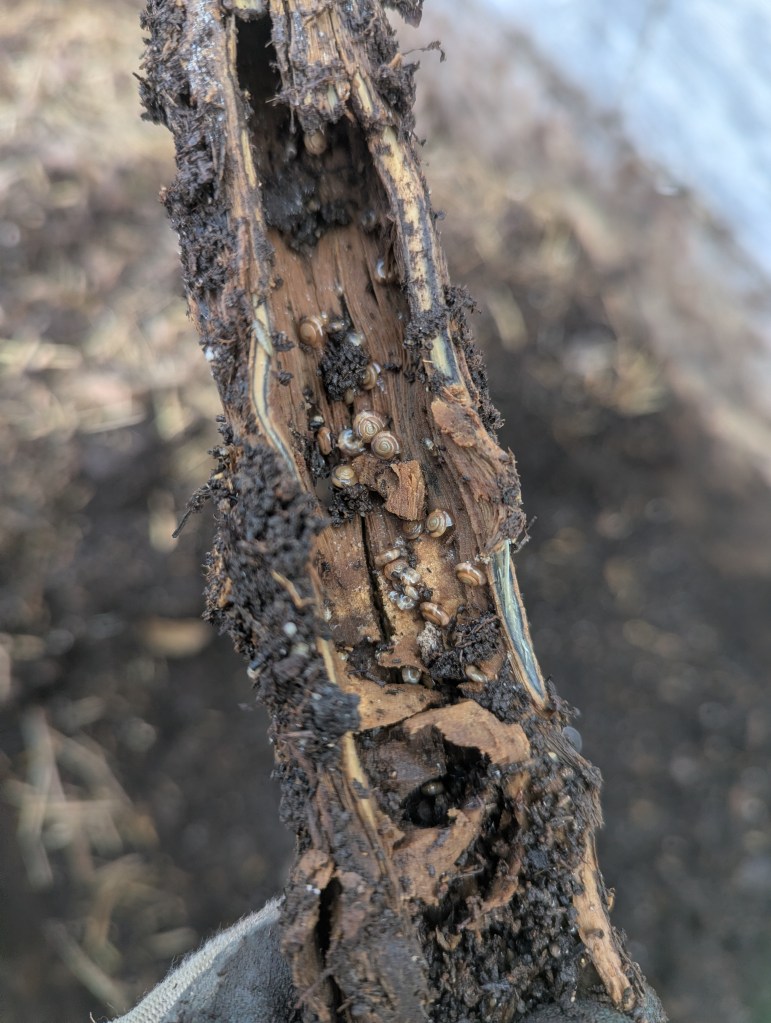
Next was a big surprise…snails! I guess I threw some kale stems in there at some point (I don’t remember, I do a lot of this on a whim when odd materials become available). After all, who knows what decomposition benefits or habitats various materials will provide.
I noticed they were hollow inside when I picked them up. When I broke them apart, I expected to find sow bugs (I did) and had my mind blown. They were full of snails. How did they get there? What species are they? I have absolutely no clue. I don’t live in a place known for snails that do not live in water. All I know is they are eating away at that kale stem and turning it into good stuff. Their shells will also be full of calcium, which is also always my #1 priority nutrient.
Every kale stalk I broke apart had dozens of them. Fascinating!
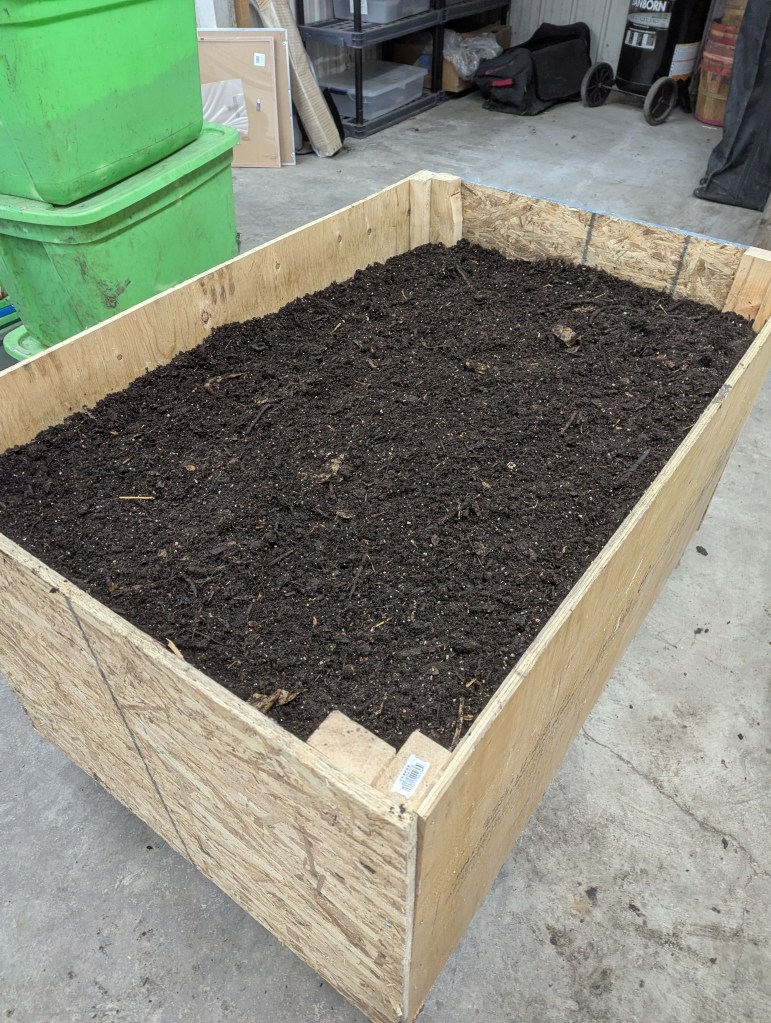
This year, I didn’t do so great on my overwintering worm husbandry. I actually ended up purchasing worm reinforcements by midsummer. They overwintered well enough, but I didn’t do my job after that part.
Here’s the 600L bin filling up, but I didn’t pre-sift it this year, opting to leave more intact chunks of stuff in there as continued food sources. I’ll sift it next spring as I go.
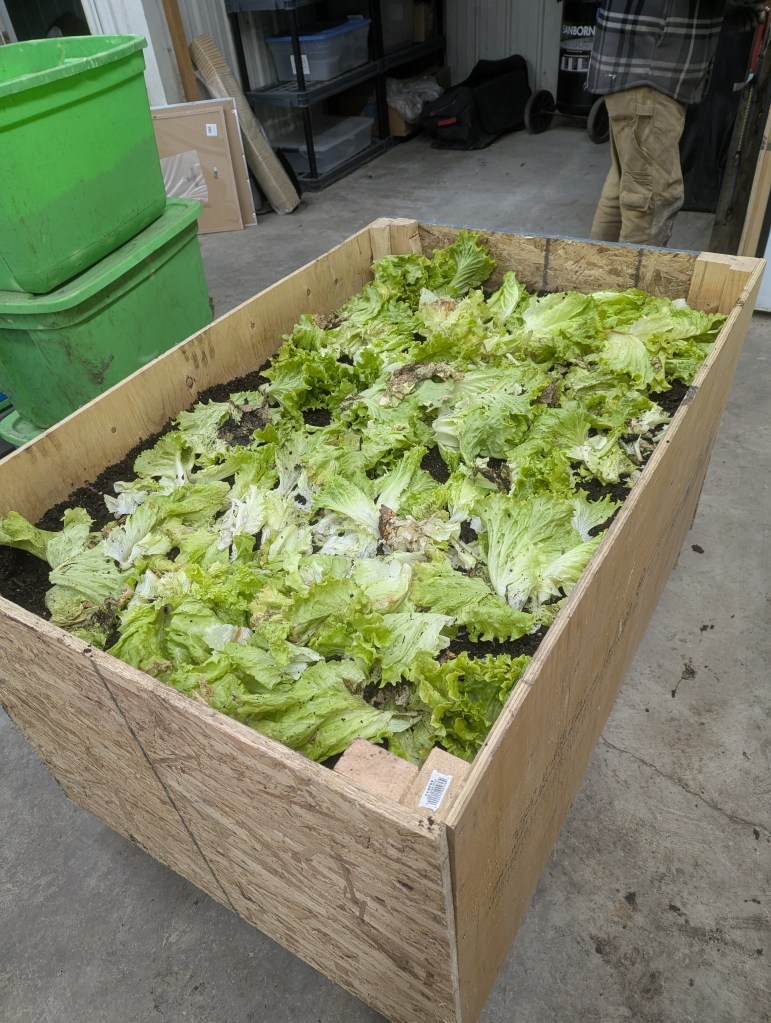
So to further that end and keep it going, I layer-caked some lettuce and leaves into the 600L bin, hoping to have more worms and keep it more biologically active. I think I made about 5 layers throughout the process.
And then more leaves:
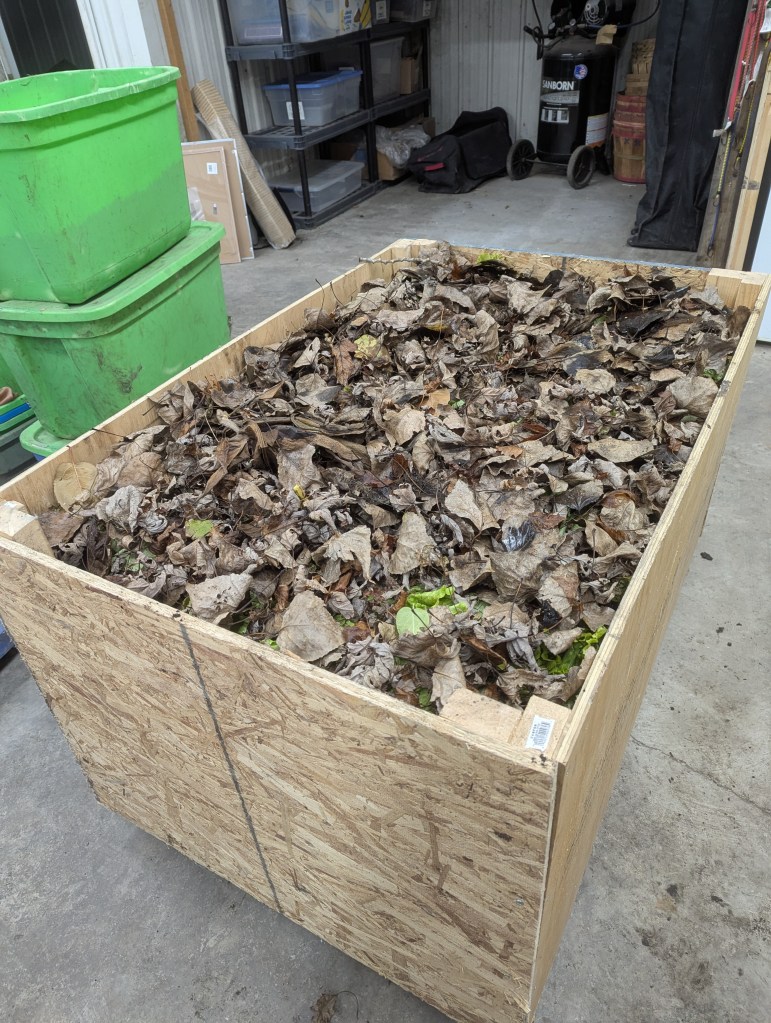
….and then more finished compost.
I don’t expect this all to break down over the winter, but it should be easy to sift out. Or…well, what do I know? Maybe it’ll all disappear by March. We’ll see what happens with this next spring.
Until then, we’ll let this process play out. Decomposition is a process that is fundamental to ecosystems around the world, and it needs time. There is no replacement or way to speed this process up. Biological process work as they work…and this one has been working for billions of years, taking organic material and reconfiguring it for new uses.
We can use that process as ecologically-minded or biologically-minded agriculturalists or horticulturalists to supplement our plant’s symbiotic relationships, health and immune system responses.
If you’re nerdy enough to have reached this point and you want more decomposition knowledge, and you don’t yet know about Whale Falls, there you go.
Graham
thanks for reading Complimentary Blueberry Juice


 Complimentary Blueberry Juice
Leave a comment