At no other time in the history of humanity have we had easier access to information than we do today. From the greatest thinkers of antiquity, to the diaries of Roman emperors, to the dizzying collections of letters and papers strewn about, to the vast numbers of scientific leaps that have changed the game so much, their authors attain household name status.
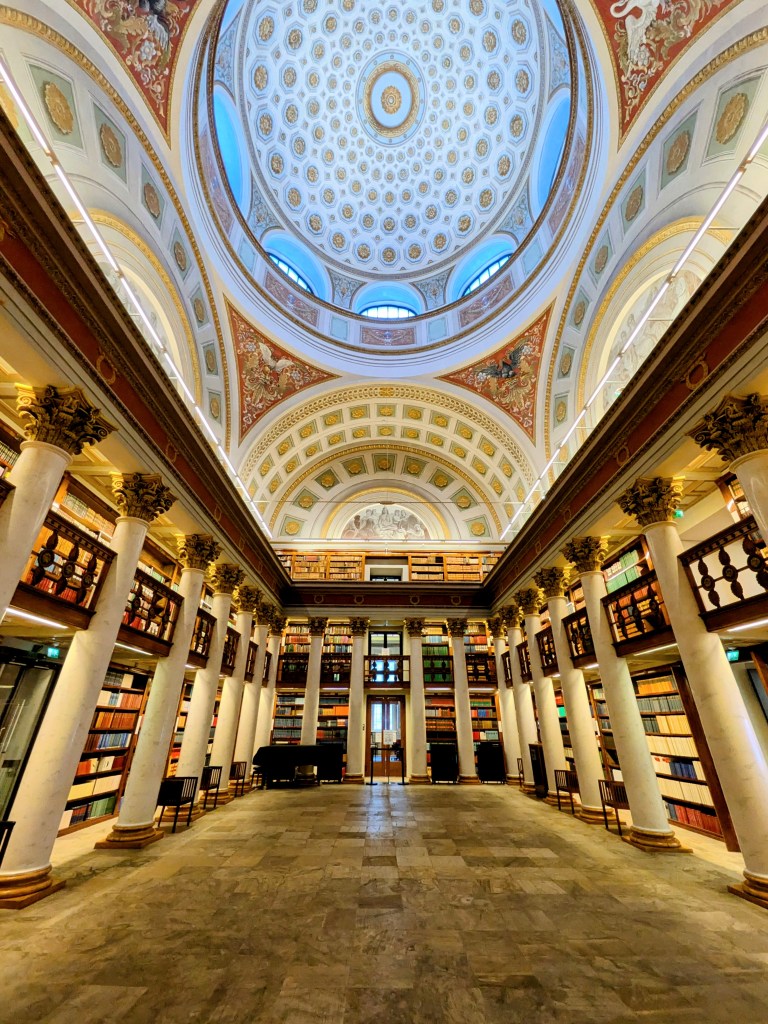
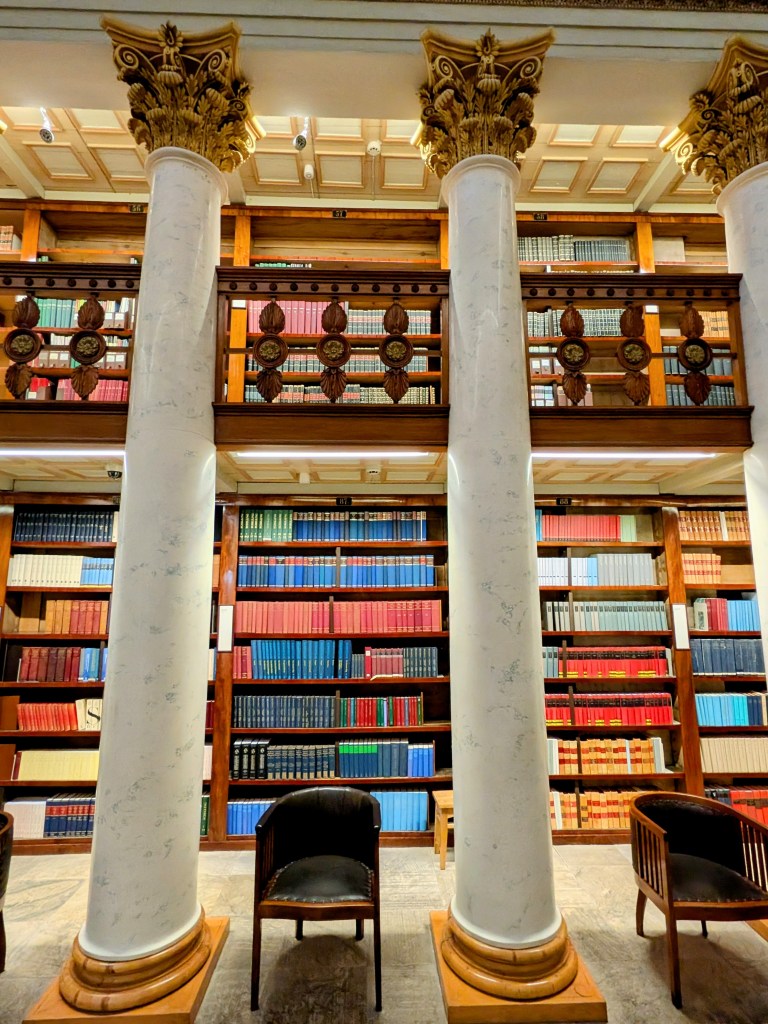
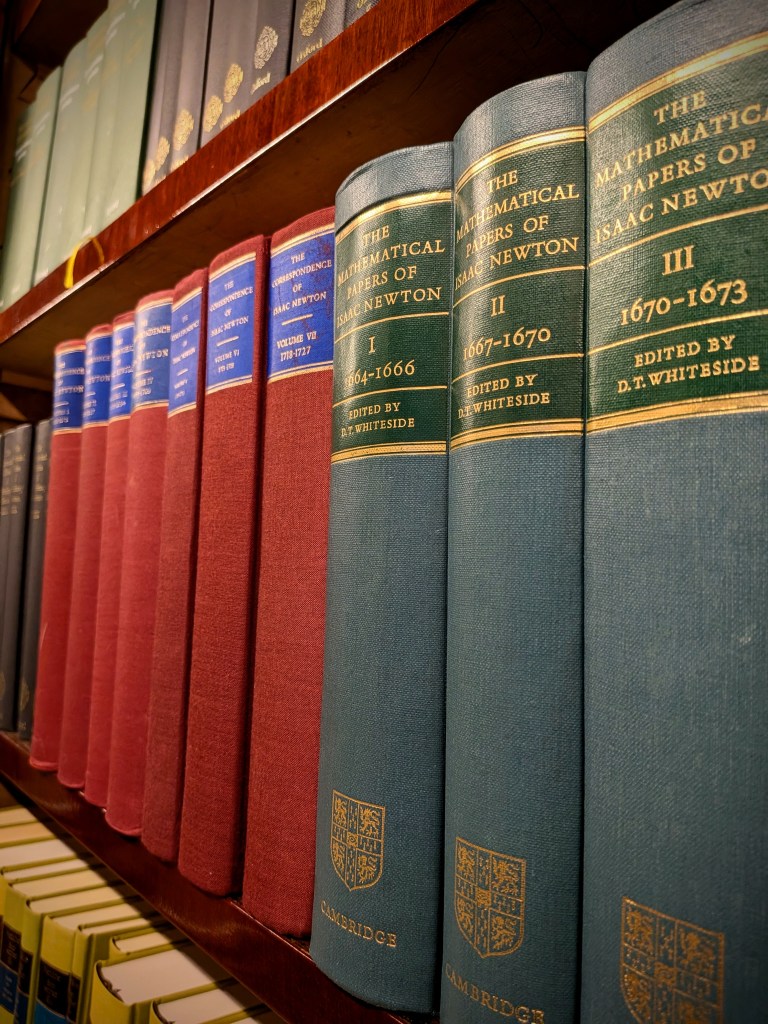
This is the National Library of Finland. When you walk into this library, you are required to check your coat and bags, there is no food or drinks allowed, and you can only bring with you a phone, laptop, or notebooks. In the first room you encounter, there is a collection of the most recognizable names across all subjects, volumes of their correspondence, and their work. The shelves are lined with the likes of Napoleon Bonaparte, Friedrich Engels, Rene Descartes, Isaac Newton, John Ruskin. It is a beautiful room with an astonishing gravity. Every author and figure is recognizeable, and every next section of shelf holds what feels like a never-ending amount of history. In another building lies the Special Collection Reading Room, where you can request to view rare and unique material. An archive is drilled into the Helsinki rock some 18 metres below.
This feels like an odd place to be in the year 2026. It feels like an inoculant against the daily deluge of social media, AI slop, and algorithms controlled by billionaires. We are seemingly told daily by our tech overlords that a new wave of knowledge prosperity awaits us. The world pushes faster every day to realize this bizarre dream, where everything is done for us and all the answers just magically appear before us.
The people who wrote these volumes of correspondence and the works in this one room in this one library of course did so without the aids of computers. In many cases they worked on things that were completely unknown, and in many cases they worked wondering out loud why we do things, or what it all means. Their work, and the record of their work, stands as something richer and more meaningful.
I like being in these buildings because it feels like time slows down to the pace at which you can humanly absorb knowledge and allow it to saturate your brain. Even with all the access to everything ever, we are missing something. It is like we only get the highlight reel.
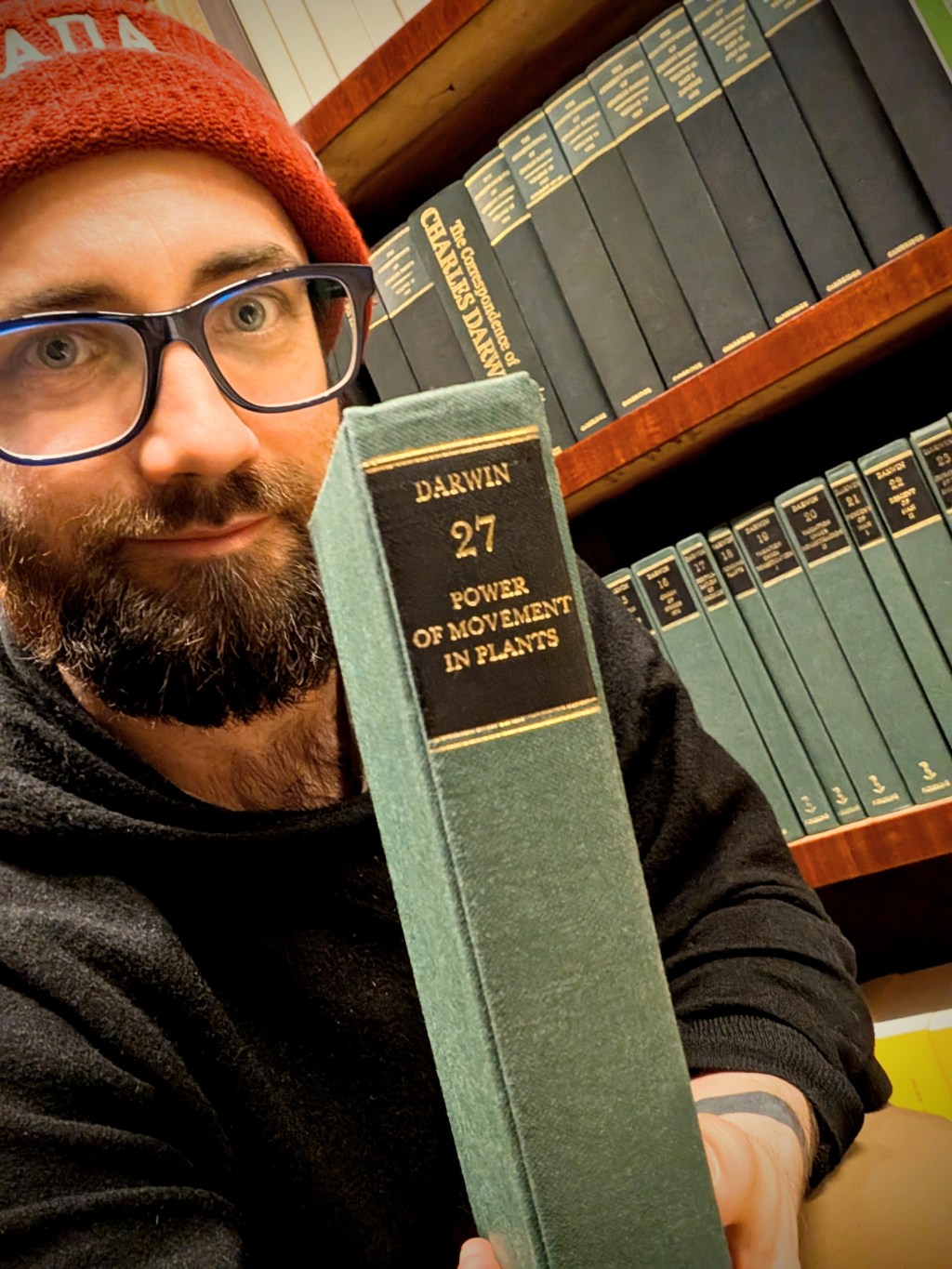
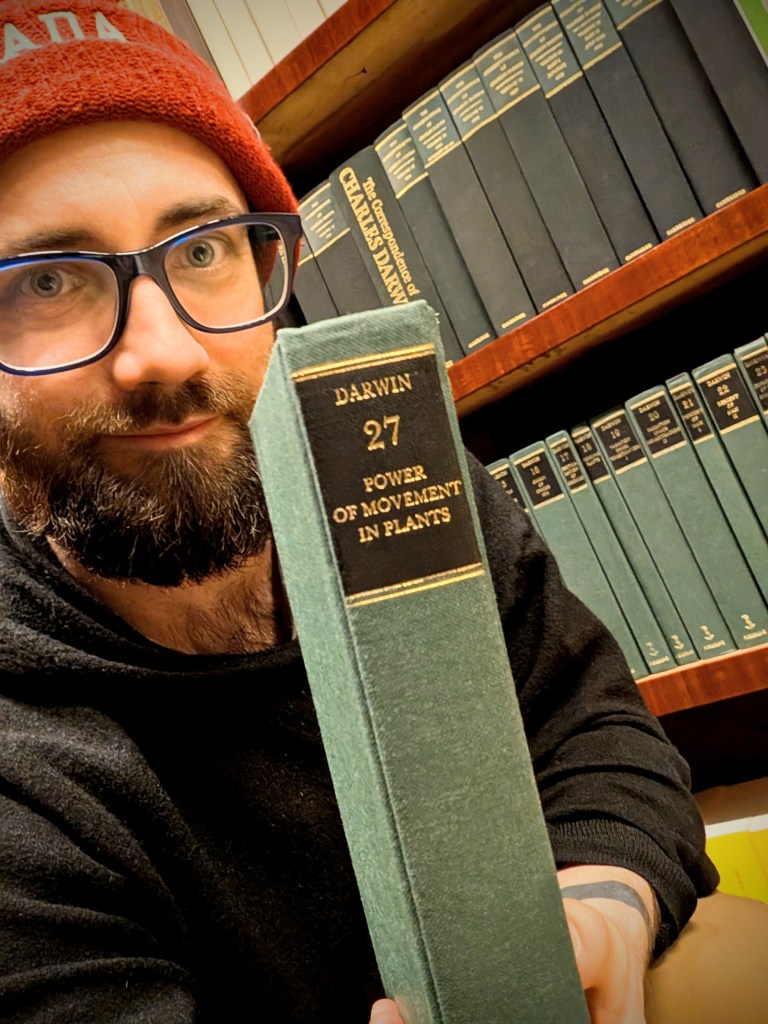
Did you know Charles Darwin wrote more than one book? Here they all are, in the National Library of Finland. Beside all of his correspondence, are all of Darwin’s other books and writings, in a 29-volume set published by William Pickering in 1989.
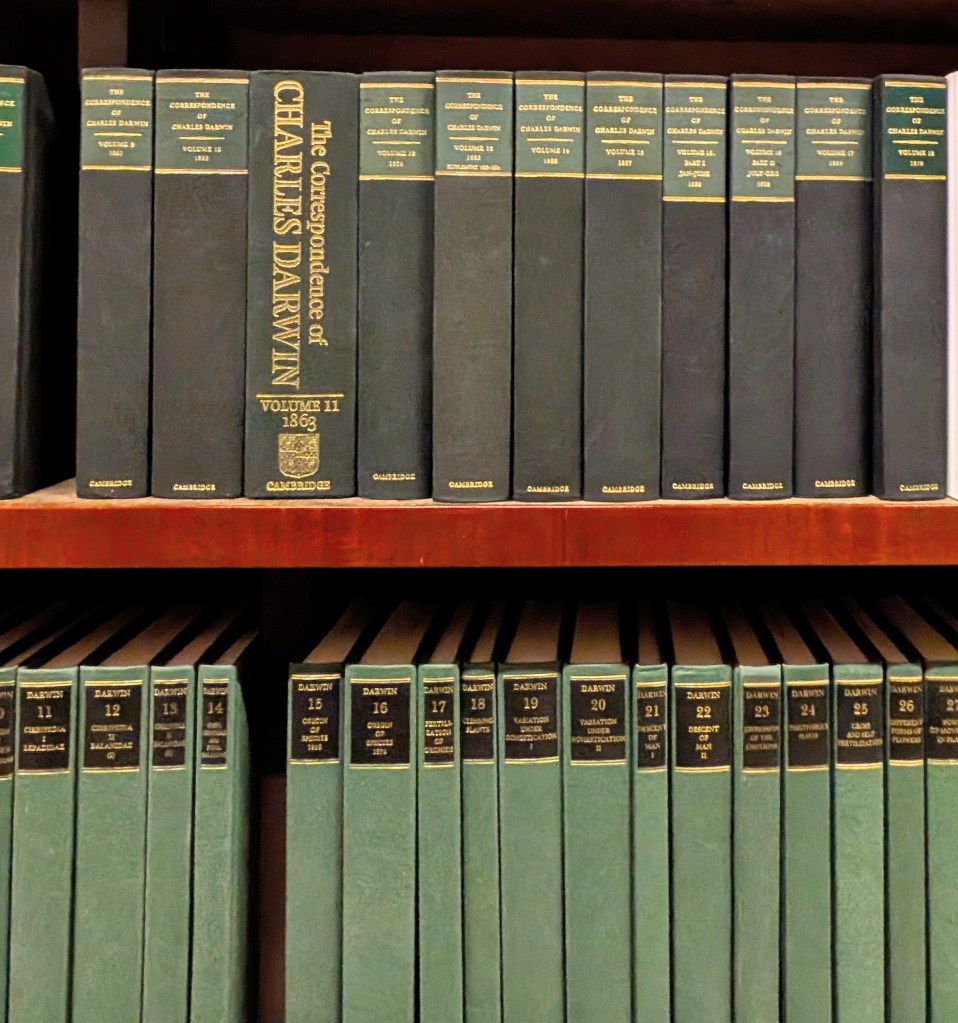
You might think it should be easy to find all of these in today’s world. But your local library may not have them. Or you may need to go to a university library, in which you may have to be a student to access. Type in Darwin’s name and you will sift through endless results of “On the Origin of Species” and the myriad biographies and deep dives into the man’s life (and no doubt some fiction too).
You might think it should be easy to find anything in today’s world but this is sometimes impossible. I cannot tell you how many times I’ve been paywalled by a scientific journal because I want to take a brief look at something esoteric (I’ll be honest though I usually use up my free articles on astrophysics). On the bright side, more and more papers are getting published as open access (RIP Aaron Swartz).
I have been searching more and more for “old thinking.” Darwin commented on plant intelligence, plant movement, plant genetics, worms and mold. There is something enticing to read something from somebody who pushed many boundaries of understanding, with little to go on. It is a different sort of thought process, curiosity. It is a different approach and worldview that leads one to seek, and a courage to write it down and share thoughts that may be correct or may be proven wrong.
In modern agriculture, what we experience is largely the result of an industrially applied methodology. It has been perfected, with the help of monied interests, and bought into by insecure farmers, desperate for someone to tell them the answer. We aren’t sure where the knowledge came from, we aren’t sure why we know these things, and instead of asking questions to learn more, often we just agree.
Over and over and over I see people surrender their own agency to learn things and reach a deeper understanding, or give into fear at the idea of trying something new or unorthodox. In a library like this you can read the thought processes of so many people who were clawing forward into the avant garde of domains of knowledge that today we take for granted.
We can learn more, and we can seek knowledge from people who have come before us. There is so much buried in the deluge of time, that someone, sometime, probably thought about it. Someone, somewhere, might have come up with a novel answer. And novel answers or ways of thinking have a funny way of staying hidden under the powers of industry.
But not in the library, where its all available, if you know where to look. Since you can’t take these particular books out of this particular library, I guess I’ll just have to stay here to read them.
Graham
thanks for reading Complimentary Blueberry Juice
if you like this blog, please consider subscribing via email to get a post in your inbox every Wednesday, or sharing it with someone you think might enjoy it too


 Complimentary Blueberry Juice
Leave a comment