One of the infrastructure projects for this season is an on-the-fly re-design of our no-till experimental area. It’s a ton of work and it’s adding a lot of hours tot he weekly schedule, but on the whole so far it has been very rewarding and we’ve been able to keep up.
For several years we had configured everything to fit 30-inch-wide beds by 150 feet long. These worked great and we learned a lot from them. But it had many downsides: we were never able to keep up with the weeds it created, the 150 feet lengths meant 150-foot row covers which are difficult to manage, we’d be waiting to finish that last 20 or 30 or 50 feet before we could re-use the bed, which in a short season matters a lot. But mostly, we decided we just were not going to win the war on the weeds we had let out of our control over those years and all the various growing methods and mulches we had tried. I wrote about this last fall while collecting thoughts about where to go next.
This spring we realized a bunch of things things:
1) We could change the configuration to 100-foot bed lengths and eliminate many wide walking paths that were wasted spaces we used to separate our irrigation sections.
2) By doing so we could fit as many as twenty beds of 100′ length per section, with 3 full sections, giving us a total of 60 beds of 100′ length.
3) By using a combination of tillage and silage tarps, we could start the journey right now, and by the start of the 2025 season, have all 60 beds built, all problem areas eliminated/mitigated/dealt with.
4) There is additional spaces at the margins for all sorts of permaculture items, which not only act as space management tools, but double as productive crops.
5) This leaves a remaining ~5000 square foot section of empty space after this conversion, which we can install a variety orchard with clover cover crop for easy maintenance and a honeybee food source.
If it sounds exciting, it is!
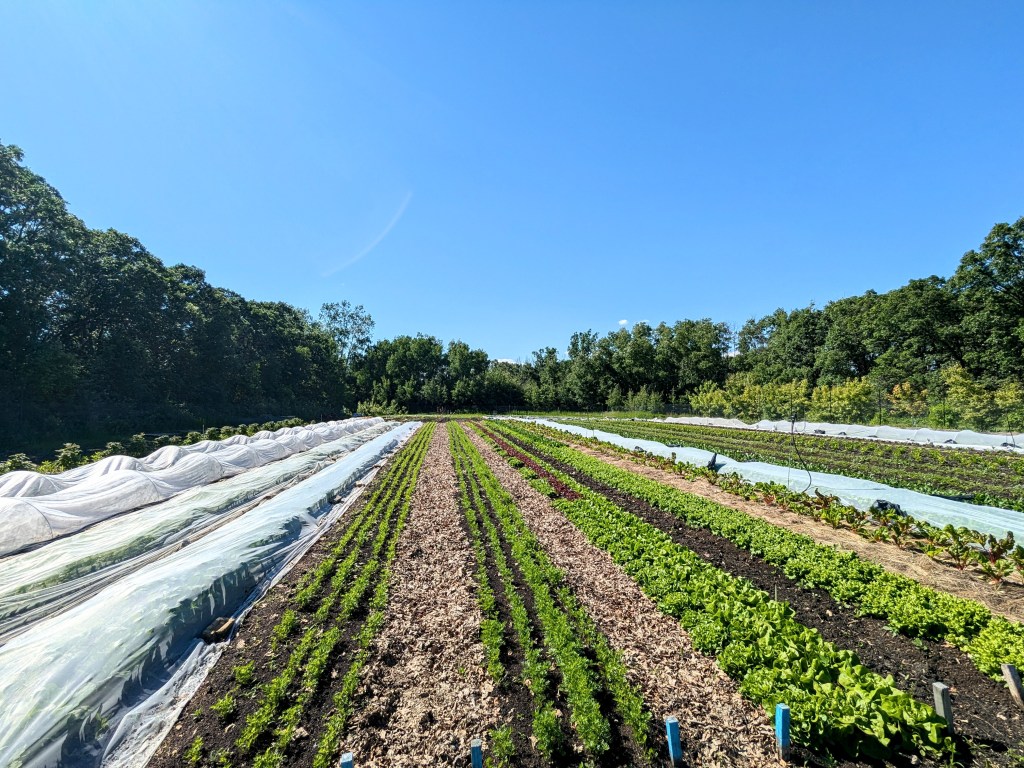
As of writing this post, we are at 26 beds, with 5 more to be built in the coming days. Half of the orchard has also been planted and we are now working on the clover cover crop area.
We are now using all the tools we have in the box to stay on top of the weeds as we construct our new zero-till system. This includes tilling areas out of use before building new beds, mowing, and constantly moving tarps to areas we won’t get to for some time.
So far, so good.
It was a challenge to ignore the sunk cost of several years of doggedly maintaining a no-till zone. But at the same time, it is natural to go through a disturbance period. One time in several years doesn’t seem bad, and we don’t seem to have lost much of what we have built before. It is picking up where we left off, and resulting in a far more organized and manageable system.
It is absolutely remarkable what you can fill in a 30-inch by 100-foot space. That’s 450 heads of lettuce. Also 450 leeks. It’s thousands of carrots. 133 kale plants. 200 swiss chard. 255 celery. 500 row-feet of radishes. Hundreds of bunches of Green Onions.
At this point, it is very exciting to look into the future of what this field can provide, and last year was a record season for us. Incorporating fruit crops into this mix is the biggest reward. Watching trees, bushes and rhizomes grow out and get closer each year to fruiting seems like a very big, very long-game win.
There’s also another entirely empty acre waiting to be designed that we haven’t even started on yet.
Lots to look forward to.
Lots of work to do.
Graham
thanks for reading complimentary blueberry juice


 Complimentary Blueberry Juice
Leave a comment