-
Leaf Mulch and the Water Cycle
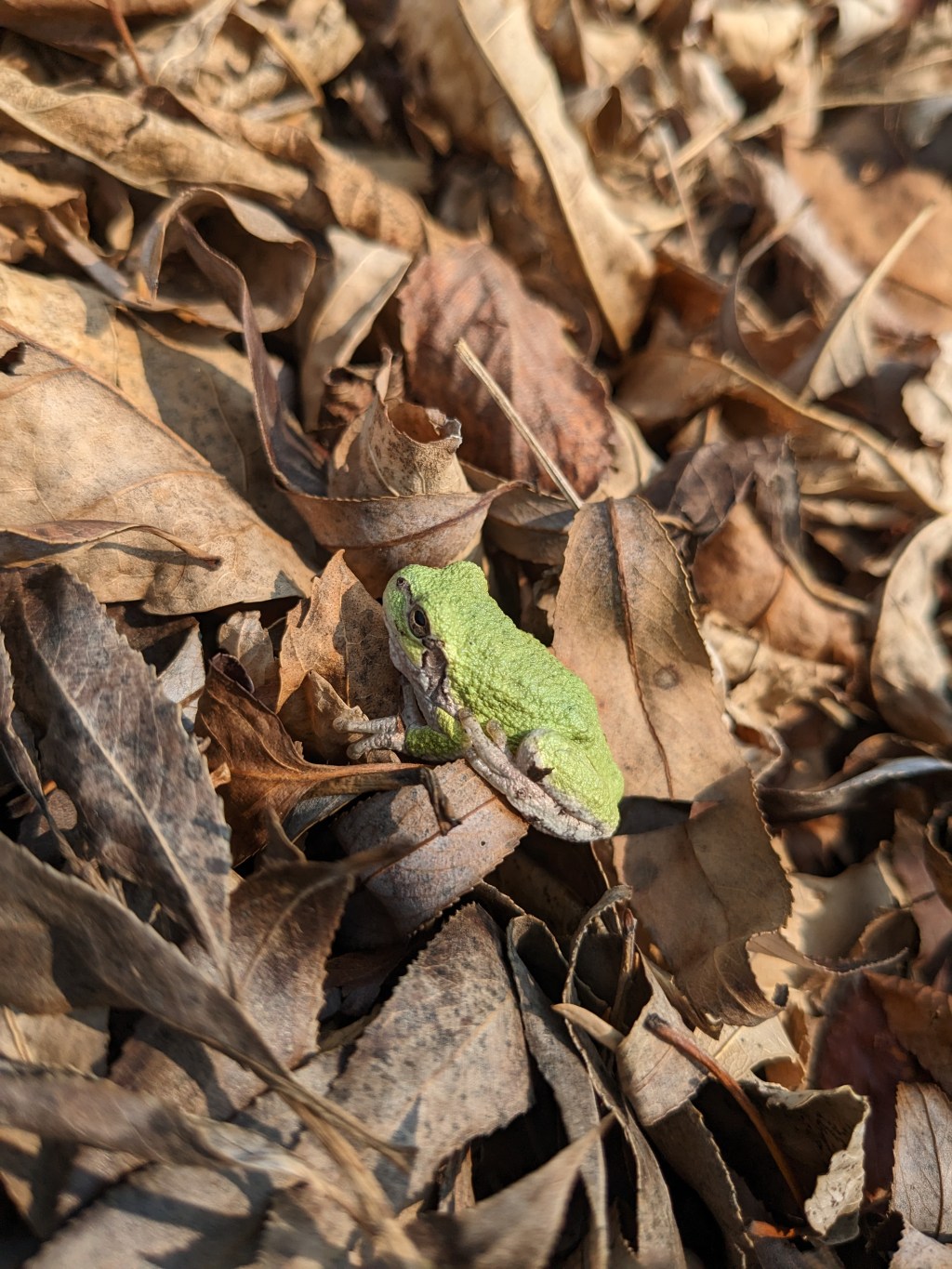
This past week we planted 800 Peppers (bell and hot) into leaf mulch.

It’s been hot this entire spring. We’ll be getting close to an extra 30 frost-free days this season from our anticipated average. The heat dome sits over Alberta as we speak and there is no rain in sight for the area of our farm in central Canada. Climate change is already here, and resilient systems are the best way to protect against these wild swings and weather trends. There is nothing more resilient on planet earth than nature.
Under the leaf mulch, its cool and damp. The soil is soft and rich. You can scoop up a handful and look at it…and you can see many tiny little things moving around in it. Spiders scurry away if you remove the mulch layer. Frogs like to hide underneath the mulch as well, staying cool and keeping their skin moist. From the invisible to the almost-invisible to the frog, there’s a lot of life going on.
It is very exciting to see all these different critters as we transplant, and its a very good sign of a healthy and biodiverse system.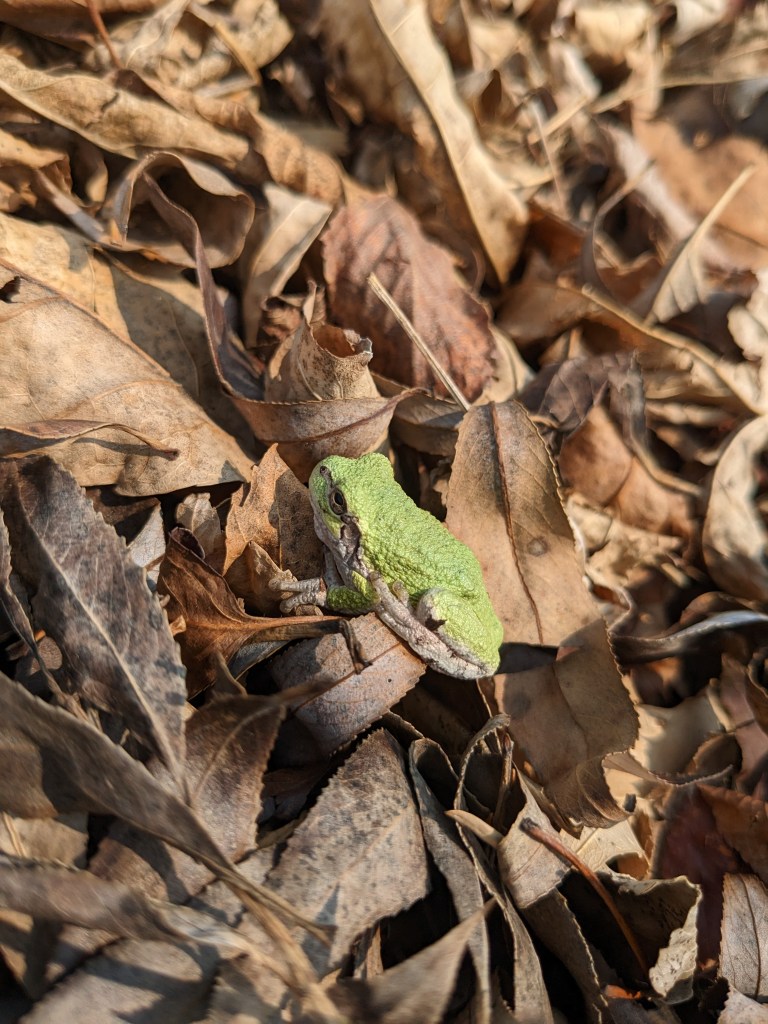
(That’s a Gray Treefrog)
It’s very easy to see and smell and feel that there is a whole system of life going on under the mulch. We all need water to live. And we all need to stay cool.
Exposing this valuable resource – soil – to the elements is one of modern agriculture’s biggest problems: actively changing the water cycle. Precious water evaporates into the atmosphere and leaves the soil dry and cracked, devoid of the rich life we want to see our plants growing in. By stripping the systems nature has built to retain water from the landscape, we run great risk of putting ourselves at a cascading set of problems: the soil dries out and stresses or kills soil life, plants become stressed, and stressed plants are highly susceptible to pests, diseases or will not produce high-quality fruit.
During a prolonged period in which no natural rain will fall, our goal is to to preserve the rainwater that does fall. Mulch is an easy way to achieve that, while helping all the diversity that lives underneath the parts of the plants that we can see.
Looking forward to our little section of peppers filling in and looking like they’re growing from the forest floor. -
The Coyote and the Farmer
Recently I have taken up the hobby of wildlife photography.
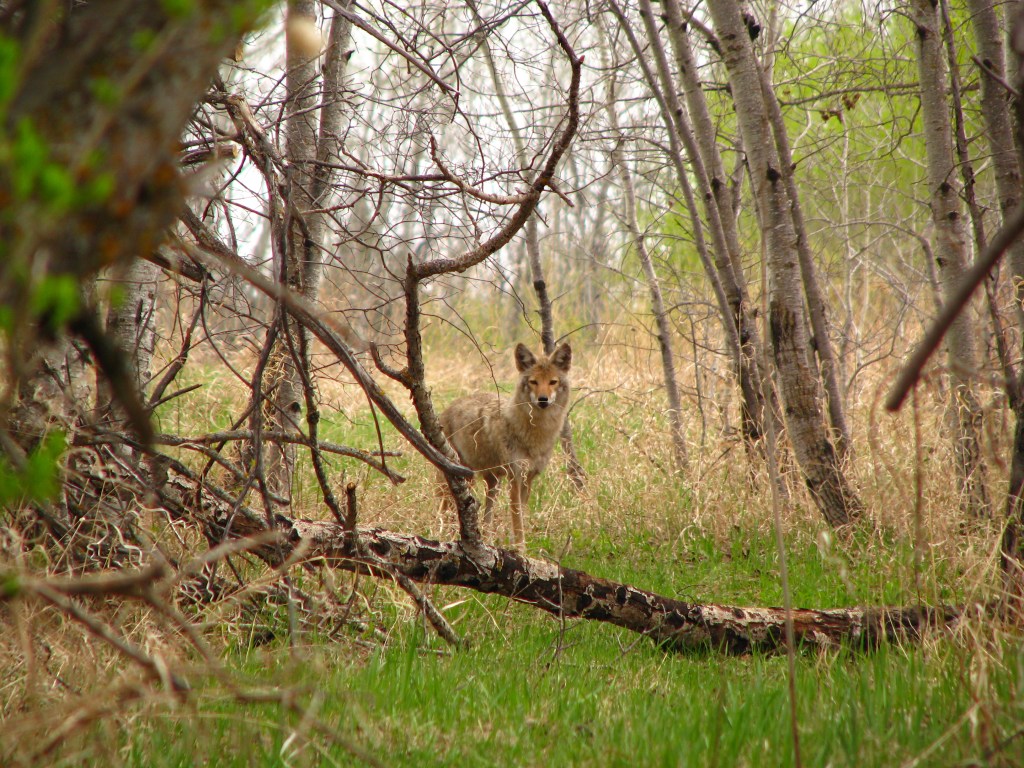
I was out practicing and crawling around to try and get a photo of some ducks when I got treated to an incredibly lucky moment….with a coyote. He looked right at me. I looked right back. We stared at each other.The experience of tranquility and peace and intimacy with nature in this moment left a mark on me, and I’ve gone out every day since. And I’ve looked at this photograph every day since as well.
I can’t help but think and feel when I look at this photo that this is everything humans are not. A coyote in a forest, emerging from spring. That humans are but one species on this earth, and we as individuals have but one singular consciousness, but that many billions or trillions of individual consciousnesses are existing right now on this planet, and humans act and behave and govern as though we are above the reality that we are but one part of nature.
When I think about agriculture, I think of all the things that are missing from modern conventional agriculture….which is to say, everything that is in this photo. The trees, the grass, the log. The mixture of spaces and species. And the coyote, too.
Some crazy how, everything in this photo functions without chemical fertilizers, herbicides or pesticides or fungicides. It is beyond my comprehension why we believe so many things to be external threats, unsightly, unorganized or messy.
Nature is more powerful and more biologically productive than even the best and most advanced synthetic chemically-induced and cultivated-by-machinery crops we have today. It does it all with zero inputs.
We would do well to observe, listen and learn the lessons that nature has already figured out, and is already playing out, right in front of our eyes. If we choose to look for it, we will find it. If we choose to be brave and embrace nature, agriculture can lead the world out of our self-induced ecological and climate crises.
Diversity is strength. And we are destroying it, intentionally.
We live in a closed system. We would do well to learn how it functions before we go about killing all the things we decide we don’t like. -
Calculating Future Cost
How much will it cost?
We often see things in reductive monetary terms. Either it costs too much and we can’t make a profit, or its a very cheap no-brainer.
Where I’m from, one of the easiest places to see this dynamic is with things like road infrastructure. The project will cost $1 billion, the road will last for this long, it will move this many more cars, and it will provide some magic number of what’s called “economic value” (whatever that means), that makes the project “worth it” or “necessary.”
There are many things that are simply not on the table when considering what something will “cost.”
What is the cost to the same city to provide space for a million cars, that could’ve been used for tax revenue, parks, housing or businesses? What is the future cost of a city not investing in rails or cycling, and stratifying accessibility by income? What is the cost of the carbon we are burning and putting in the atmosphere? What is the cost to the city if we only have neighbourhoods accessible by big, heavy, expensive, individualistic transportation options?
What does it mean for our community?
Each year in agriculture, Nitrogen use goes up. What’s the cost?
Likewise each year in agriculture the amount of chemicals applied goes up. What’s the cost?
Dollars-per-pound-Nitrogen is probably not a useful metric when considering the effects of these fertilizers on our water sources and our soil (especially since these two things are necessary to grow crops). There is a cost to the effect of less nutritious food, and there is a cost to the reductive and widespread belief that Nitrogen is just something you need to add to grow things.
Dollars-per-litre of chemical is probably not a useful metric when considering these chemicals cannot be target-specific, that they kill everything, good or bad, the pest that is eating the monocrop or the honeybee that is coming to pollinate it.
There are major significant costs to all our reductive activities.
We can make better decisions if we decide other things that aren’t money are not worth the cost. Of course the irony is, we will all be richer…with nutritious food, with clean air, clean water, functional and productive ecosystems, and bustling cities that don’t have all their eggs in one mass production basket. -
How Do We Make Decisions?
Is it that we consider a profit, a loss, how easy it is to get from A to B, how we can drive there, park there or what there is for us to consume and entertain us there?
Or is it that we consider a whole and all its pieces, a community, the non-linear, the things we don’t see or imagine have any consequence?
The costs to our modern culture are far greater than just $$$. -
The Word “Atmosphere”
While lying in bed I found myself wondering about the word “atmosphere.” Of course these sorts of things are likely to have a Greek origin…But was the first part of the word”atmo” or “atmos?” Of course the second part of the word, “sphere,” has been added to the English language. What did that first part of the word mean?
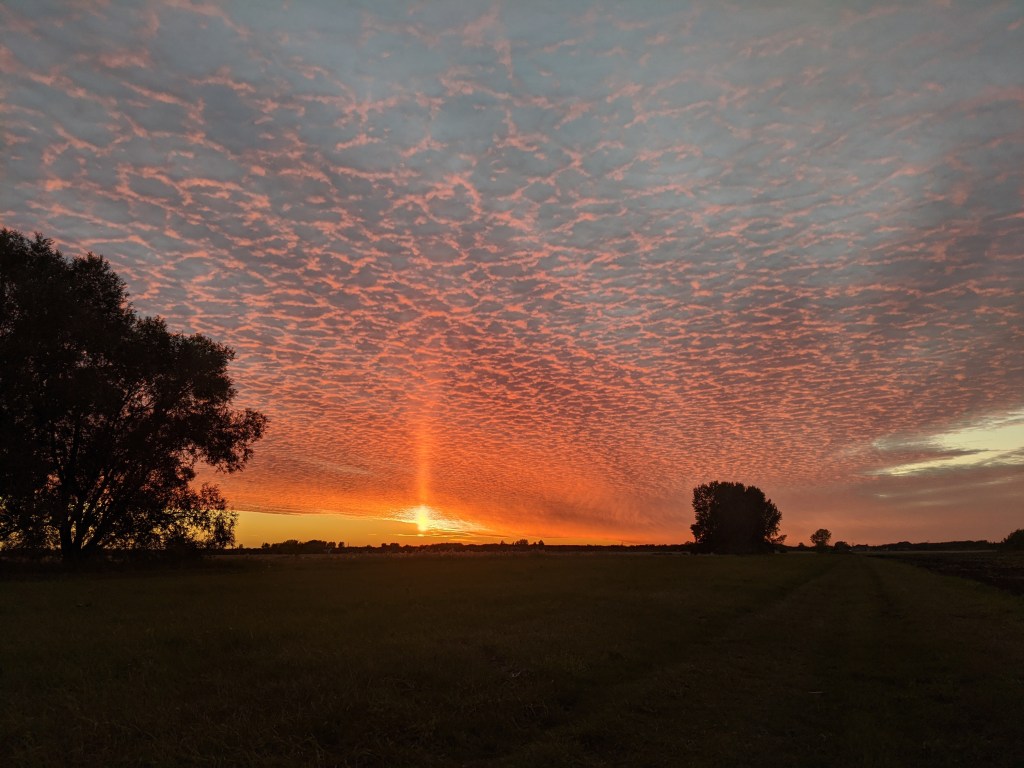
photo by Graham Hnatiuk 2022 This bothered me so much I got out of bed to go down a Wikipedia rabbit hole. Turns out “atmos” means “vapour” or “steam.” Okay, fair enough. Maybe my mind wasn’t blown by the etymology of the word itself. What made me stay up reading was the succinctness of the summary of what Earth’s atmosphere is: its properties, and how it works…not only the chemical makeup of the atmosphere, but the biological forces that contribute to it (emphasis mine):
The atmosphere of Earth is composed of nitrogen (78%), oxygen (21%), argon (0.9%), carbon dioxide(0.04%) and trace gases.[2] Most organisms use oxygen for respiration; lightning and bacteria perform nitrogen fixation to produce ammonia that is used to make nucleotides and amino acids; plants, algae, and cyanobacteria use carbon dioxide for photosynthesis….The current composition of the atmosphere of the Earth is the product of billions of years of biochemical modification of the paleoatmosphere by living organisms.
I found it profoundly refreshing to read such a condensed little paragraph that contained the physical, historical and biological reality of the makeup of our atmosphere. Maybe because the backdrop to that paragraph is a cacophony of nonsense in the media about whether or not climate change is real and inaction from governments around the world.
If we are to overcome climate change or change our food systems or agricultural systems or land management practices, it may help us to start with what things we are actually dealing with. To overcome these problems and change our ways, we need a significantly better level of basic “ecological” or “planetary” literacy.
At least it would help us ask better questions!
Like…why do we think Nitrogen fertilizer is so important for plants to grow if it makes up 78% of the atmosphere?
If a change in CO2 concentration from 350ppm to 423ppm in just ~30 years out of the Earth’s 4+ billion year history is enough to supercharge the oceans with enough energy to last for centuries, why are we burning more fossil carbon than ever to produce even more Nitrogen fertilizer for crops? Is this our best idea?
If nature has evolved organisms that do things like change the bond structure of atmospheric Nitrogen in a symbiotic relationship with plants, what other organisms are helping plants, and what organisms do plants help, and how does it all work?
We humans have a reductive problem….we demand everything be simple.
The part that has always bothered me most about modern agricultural practices focusing on applying chemicals to get a desired yield is that it completely ignores the complex biology of plants and their symbiosis with literally everything around them that contributes to the health of the plant.
It also ignores the (unbelievably fascinating) history of the billions of years of evolution that has resulted in the world as it exists now. The first photosynthetic organisms were dumping their garbage (Oxygen) into the atmosphere (they’re still dumping their garbage in the atmosphere!) The problem is that Oxygen is highly reactive and toxic. It took far far longer than humans have existed for organisms to evolve a way to deal with the immutable properties of Oxygen.
To ignore this global symbiosis and the miracle of engineering that is life and DNA creates a massive problem. Humans have become the single greatest biochemical modifiers of the atmosphere since the advent of using fossil carbon as an industrial energy source for everything from producing electricity to synthesizing Nitrogen fertilizers to powering personal vehicles.
And since humans are reductive, we like to make it about one thing, which is CO2. But a parallel truth is that we are also destroying unfathomable amounts of biological systems and reducing them to single-organism tracts of lands. Another truth is we are slow to change. Yet another truth, is we have never changed faster….if we are able to negatively alter the atmosphere in less than 100 years, we can fix our mistakes.
The other side of the coin of our current age of massive disinformation, is that we all have a Star-Trek-like device in our pockets with access to more information our species has ever had access to. You can even voice-activate your little pocket supercomputer we call a “phone,” just like in Star Trek. You can read about the composition and evolutionary history of our planet’s atmosphere (at 1am if you so want). You can learn about Rhizophagy or Mother Trees. You can find amazing photographs of mychorrizae intertwining with plant roots. The invention of the NPK model of plant health from the 19th century which still drives the majority of our reductive understanding of plant health today.
Our global ecosystem is a story of nutrient cycling…whether its a water cycle, a Carbon cycle or a Nitrogen cycle. Every organism has its place and niche, its function and services. “Carbon capture technology” that hasn’t yet been invented by tech bros working for oil barons will not fix our tapestry of issues, especially since nature figured it out 2+ billion years ago. Photosynthesis was first described in the 18th century. We’re a little late to this party.
We live in a closed system. A terrarium floating through the vacuum of space wobbling on an axis and falling around the sun at 29.78 kilometres per second. Full of life in all its beauty and complexity.
It’s all we’ve got.“It was among the strongest feelings of grief I have ever encountered. The contrast between the vicious coldness of space and the warm nurturing of Earth below filled me with overwhelming sadness.
“Every day, we are confronted with the knowledge of further destruction of Earth at our hands: the extinction of animal species, of flora and fauna … things that took 5bn years to evolve, and suddenly we will never see them again because of the interference of mankind. It filled me with dread.
“My trip to space was supposed to be a celebration; instead, it felt like a funeral. Everybody else was shaking bottles of champagne, and it was quite a sense of accomplishment. And I didn’t feel that way at all. I was not celebrating. I was, I don’t know, shaking my fists at the gods.”
William Shatner, 2022 -
Soil Temperature Measurements I
It occurred to me that I had never taken a soil temperature reading, so I’m going to start and see what we find. We use these row covers quite extensively, but I’ve never measured just how much they increase the temperature – and specifically soil temperature – underneath. We have also never applied mulch in this way before, and with no sunlight hitting bare soil, we expect the soil temperatures to be a little bit lower.
Whether or not it makes a great deal of difference if row covers are put out prior to seeding or transplanting, or if the soil is covered or uncovered, is what I’m trying to find out.
It would just help to be aware for my own specific context approximately what soil temperatures can be expected in different times of season and different types of bed configurations we use in our system (bare soil, mulch, row covers, or a full canopy).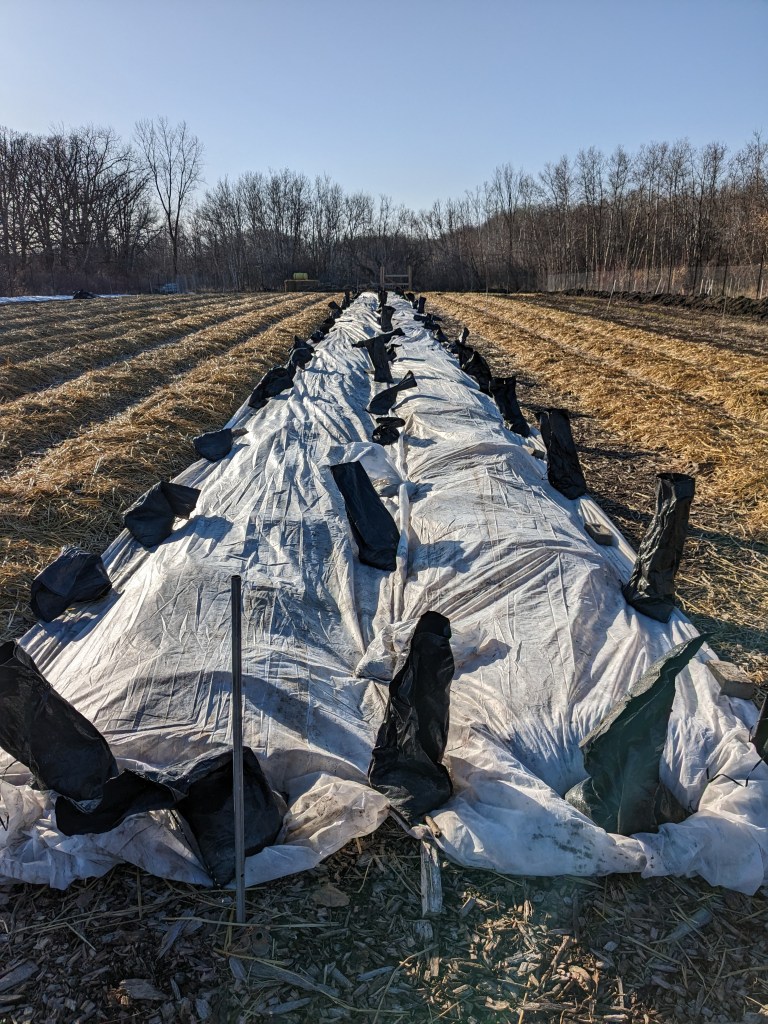
Last season we had a lot of difficulty with cold soils affecting germination rates. As a response we are instead putting row covers out first for a number of days prior to seeding to warm the soil up.
There were two initial temperatures taken for our first baseline. From one of the beds underneath the cloth in this photo, and another from a bed with no soil cover at all, receiving direct sunlight.
Temperatures were taken around 1pm. The air temperature was 10C. The top 5cm of bare soil was at 14C, while under the mulch it was just 5.5C. That’s quite a difference, however beyond 5cm was nearly identical at around 4C +/- 0.5C.
We will leave these covers on for at least 7 days and take a new reading (and probably put out more covers). -
Mulch for Soil Protection
This season we have really doubled down for mulch, which all of our long-season crops will have. Our goal is to keep as much soil covered as possible for as long as possible. We want to have a soil rich in life, provide a food source for decomposers and keep everything from drying out. Additionally it will help us a lot with weed control.
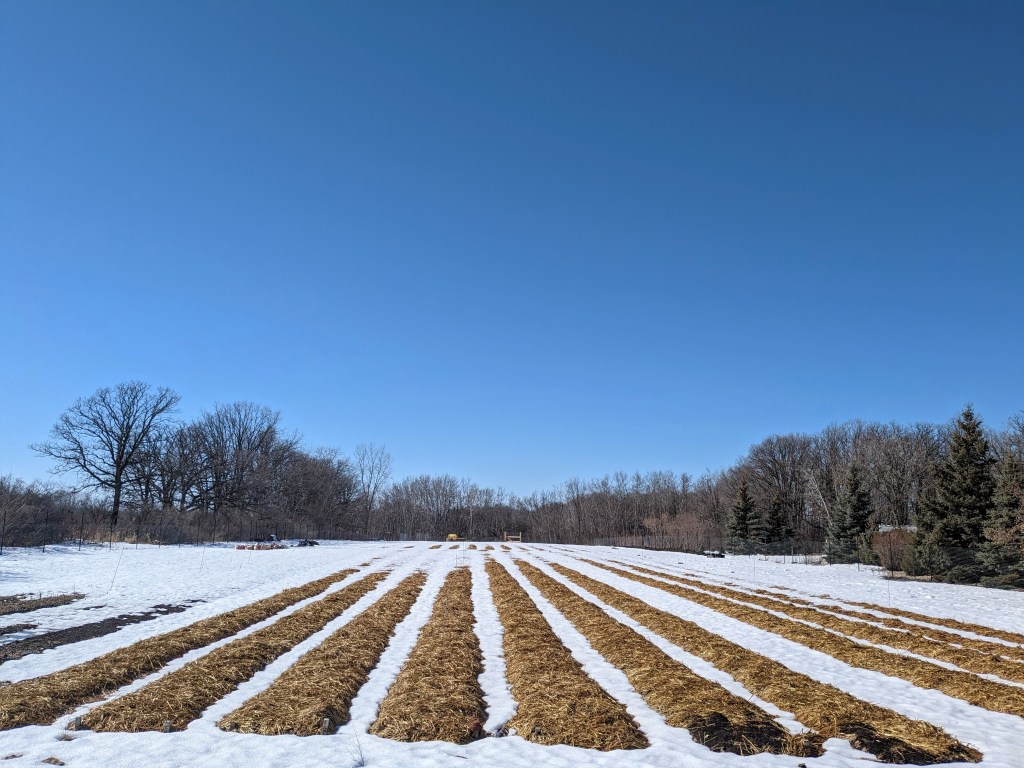
As the sun melts the snow, it sure does feel good knowing that our soil is not exposed to the elements and keeping all our tiny soil critters vital to intensive vegetable production protected.We’ll see how the beds perform over the season and see what we can do to improve the methods.
-
Major Shifts
Our farm received at least 10cm of snow over the last 24 hours, and in 5 days the temperature is projected to swing up to 16-18C. Winter will soon feel like it is finally over.
Spring is always an exciting time!
After a long period of snowy frozen days it is novel (at least in our cold climates it is) to feel things change. This is the one season where we can be acutely aware that we are on a planet that lives and breathes just as we do.
It is amazing to witness a natural system designed to hibernate come alive.
Take the springtime to be present with nature during this major shift.
Graham
thank you for reading
-
Too Wet or Too Dry? A High-Contrast Comparison
These two photos really sum up the difference between “natural” systems and systems that have been disturbed via human activity for the purposes of conventional agriculture. While one of these systems routinely grabs media attention, the other system continues happily without even being mentioned.
The two photos were taken June 3rd and June 5th.
Where did all the water go?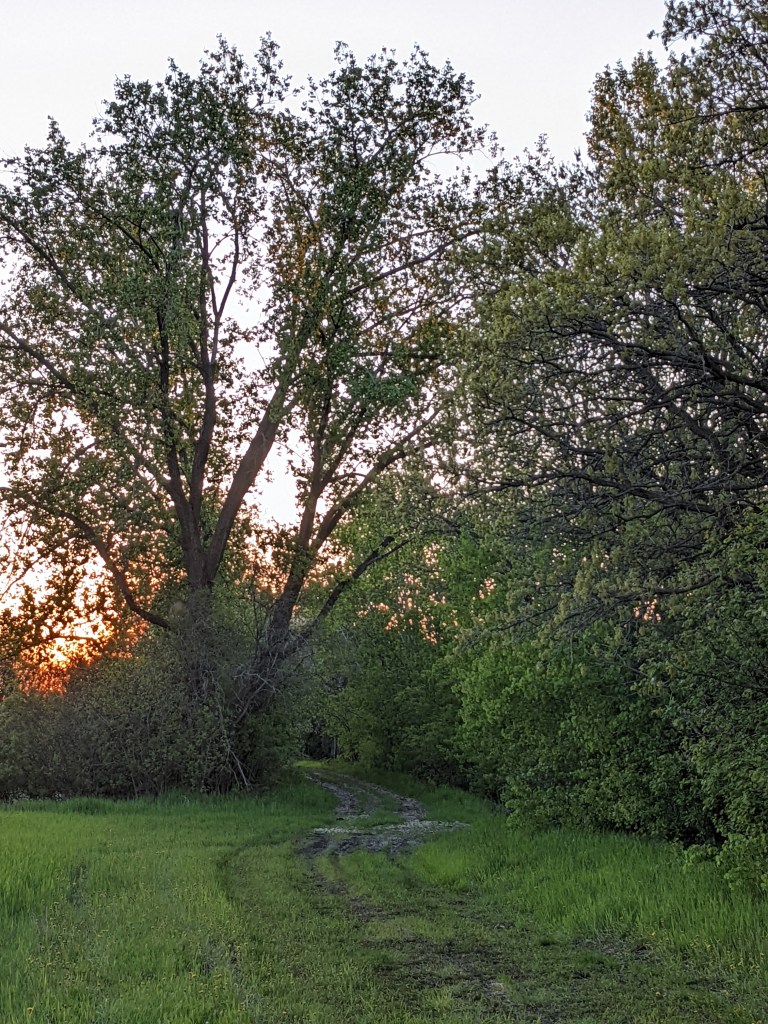

One of these systems is designed to hold water.
One of these systems is designed to lose water.When we remove the life from the land, we get consequences: we lose water rapidly through the exposed surface, we lose soil itself to wind or water erosion, and we get increased temperatures from the sun baking the hardened surface. We pray for rain to save our crops.
Nature does not know when water may or may not be coming next: She has designed methods to hold onto as much of it as possible, for as long as possible. We can learn these principles and these methods.
I know which picture I would rather be in.
Graham
thank you for reading Complimentary Blueberry Juice -
Capturing Carbon
Have you ever looked at any climate data?
Most of us, probably have not. Many industries take advantage of this knowledge gap to sow disinformation, whether it be fossil carbon industries, forestry industries or agricultural industries.
The new report released by the Intergovernmental Panel on Climate Change [1] has compiled data (a lot of it), and reveals precisely why industries like these ones work so hard to shift the narrative and our focus away from the problem at hand, into a zone of frivolous debate.
Summarized in this chart for policymakers, [2] the #1 actionable thing we can do right now is to reduce conversion of natural ecosystems. As stated in the previous post, many of these industries that rely on destroying the environment for profit have successfully convinced many policymakers that their industries are “sustainable.” Combined with improving sustainable forest management, there is no better thing we could possibly do than to simply let nature be and help nature be. But how does this help our atmosphere cancer problem?
Often it feels like the media and popular culture believe there are (or will be) magic technological solutions to this issue of radical increases to atmospheric Carbon…perhaps there is some “Carbon capture” technology that could help us deal with the issue.
There is nothing better that humans could possibly invent that is more efficient at capturing Carbon than….nature.
In fact, nature is designed to do this very thing.
The brilliant and incomparable design of nature, where every living creature plays an ecological function, is centred around Carbon: A tree splits Carbon away from a pair of Oxygen molecules, uses the Carbon to build its structure, and gives the rest of it to the underground microbial world. A grass does the same photosynthetic trick, and when an animal (perhaps a Bison) comes to graze the grass, the plant is damaged, and in being damaged, it increases its photosynthesis to build new tissue, and in doing so, discharges more Carbon into the ground to inspire microbial and fungal support.
We humans are excellent at interrupting this “Carbon capture technology”: we cut the trees down, we spray chemicals to make sure only what we decide is best for industry grows there, and we have removed nearly every grass-grazing animal from every grassland available, replacing sprawling grasslands with near-infinite sections of monoculture commodity crops, often managed with an ever-evolving arsenal of chemical concoctions designed to kill things.
Capturing and drawing down Carbon is what ecosystems are designed to do. They’ve been doing it for hundreds of millions of years, co-evolving with fungi and the microbial world in order to move Carbon from the air, to somewhere that is not the air. It does this every day, as long as the sun is shining.
There is no more elegant solution to the beautiful movement of Carbon than what has been designed by nature and evolution.
“Nature, to be commanded, must be obeyed.” Francis Bacon (Novum Organum, 1620). There are many a great philosopher with astute and profound observations of the natural world. It seems that in our times, the philosophy of observing nature or holding her in reverence and wonder has been rejected, in favour of the idea that we as humans can control our environment by eliminating nature without consequence.
Graham
thanks to everyone reading
plant a tree, or pass some complimentary blueberry juice to a friend
Home
About Graham
Graham is an ecologist-farmer from Canada working on educating about the wonders and beauty of the natural world, and how we can design biodiverse food production systems.

 Complimentary Blueberry Juice