-
Shifting the Culture of Food Systems
We live in a world with more choice than ever.
We also live in a world with an enormous amount of near-monopolistic corporate power and over decades, have conditioned consumers into certain purchasing habits. Many of these purchasing habits are sold with the language of convenience.
The same world allows for a movement of counter-culture.
I believe most people generally understand our food systems are broken, whether it is factory farming or chemical-laden vegetables. I also believe that if an alternative can be offered – even if it is slightly less convenient than the near-monopolistic store – there is more incentive than ever for the consumer to switch.
When the value of the product purchased exceeds that of the supposed convenience and dubious or dishonest quality of the supermarket is when the counter-culture can win.
It won’t happen overnight, but it is certainly happening. While our food systems may continue to be broken for some time yet, there are many viable alternatives of hard-working and honest folks delivering product of very high quality and value.
It exists for those who seek it.
It also exists for those who wish to create it.
There has never been a better time than now, to start a small farm, to start a small ranch, to start a community. There is always more resilience when people come together.
Graham
thanks for reading Complimentary Blueberry Juice -
Underwater Photosynthesis
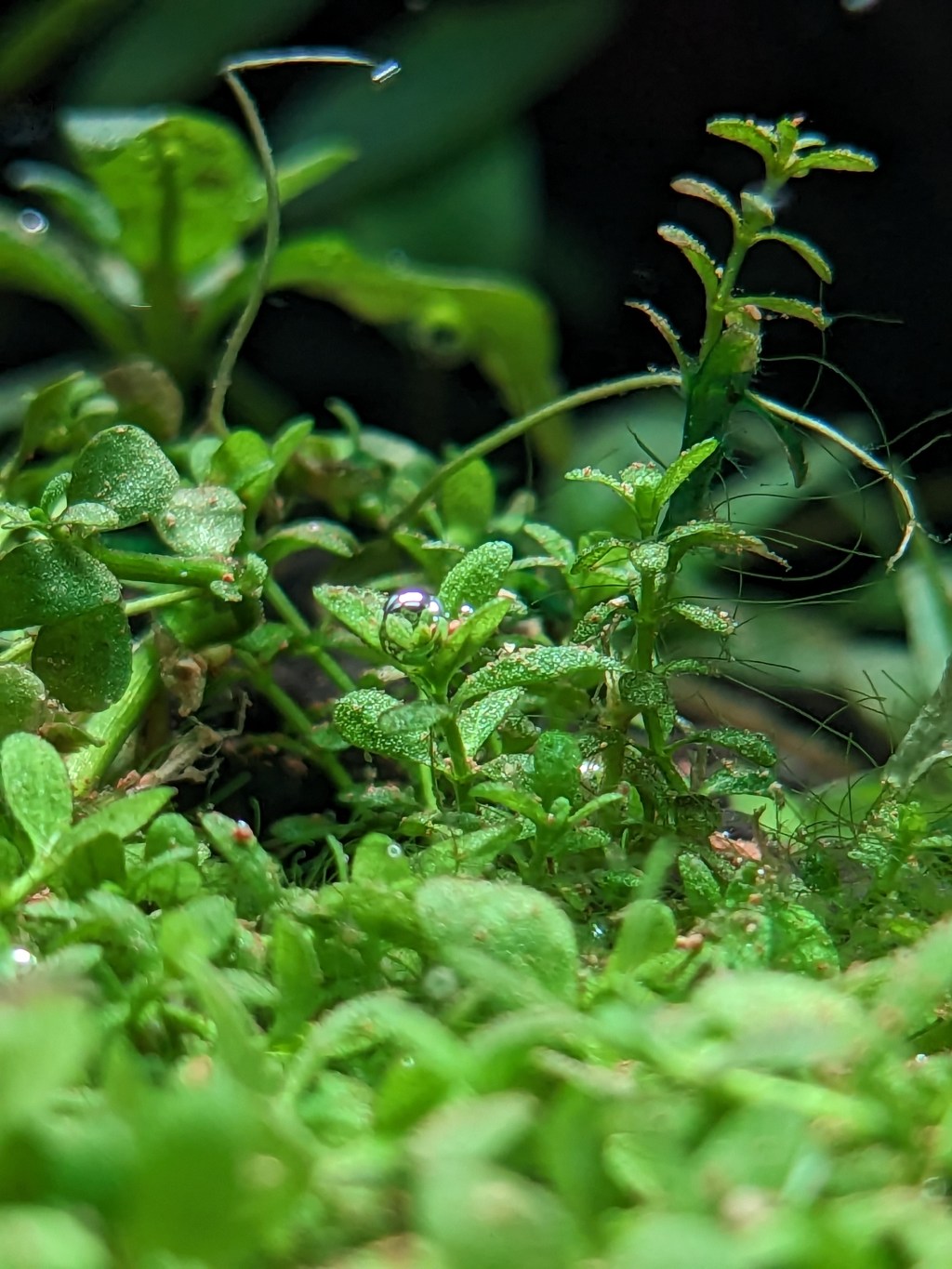
In underwater plants observed in a planted aquarium, it is possible to see oxygen pooling on the leaves and releasing a mosaic of bubbles into the water column.
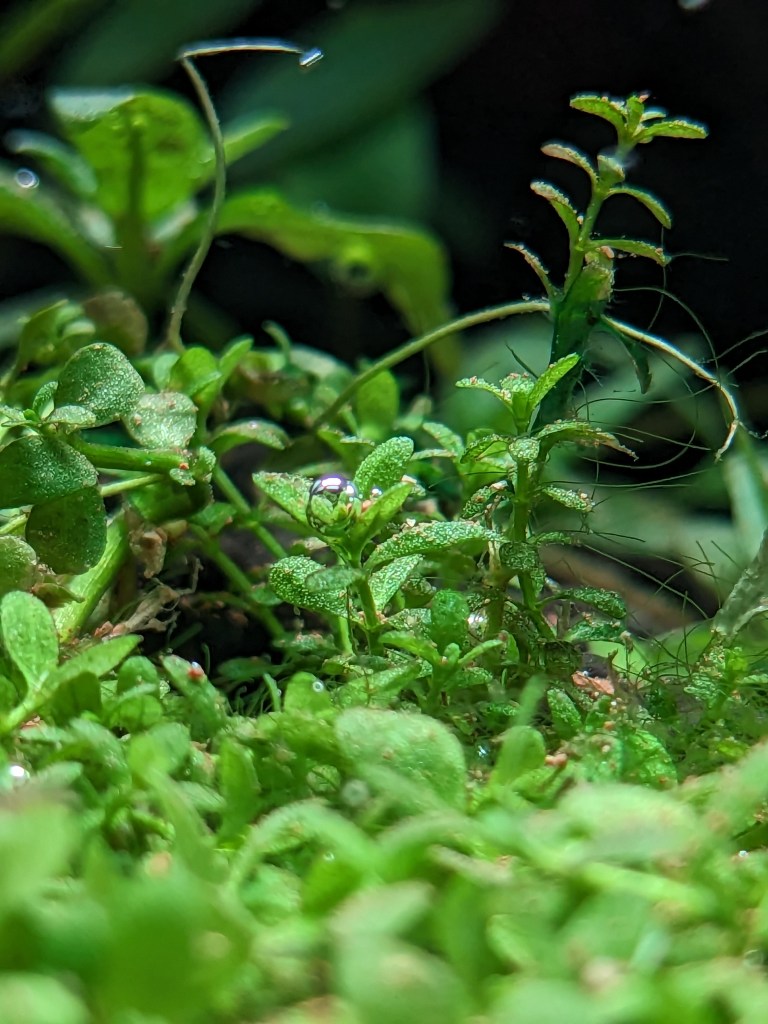
Even underwater, we can literally see that plants use light to drive the splitting of Carbon from Oxygen, and even underwater, plants harness microbial communities to survive and thrive as a symbiotic system. It turns out that the more plants you have in the system, the better. The more microbes you have in the system, the better.
This process is endlessly fascinating, and as it begins to be more understood it has broad implications for how we approach everything humans use as a resource, from agriculture to forestry.
Grahamthanks for reading complimentary blueberry juice
-
4th Time Is a Charm: Growing Parsnips
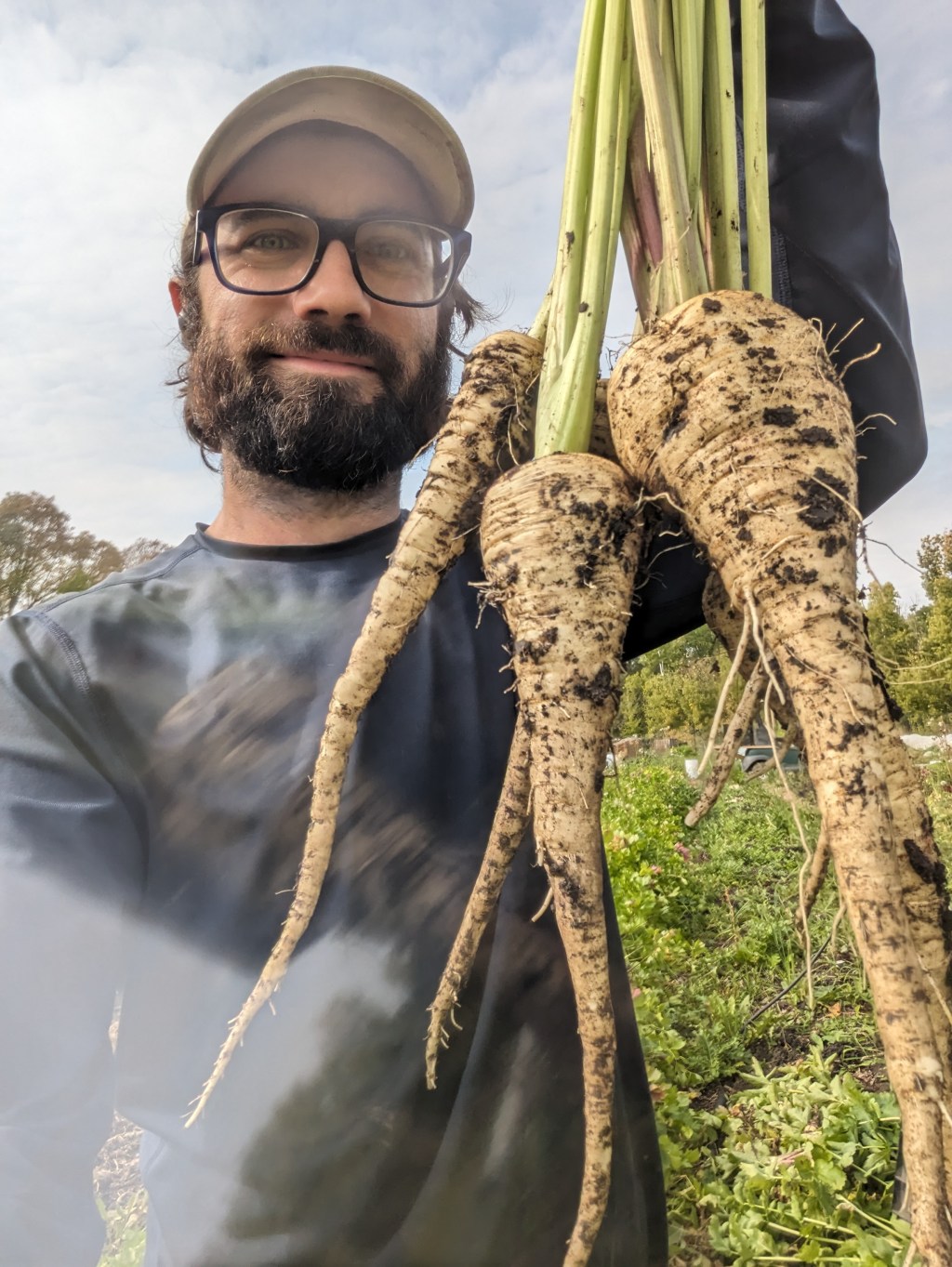
Once upon a time I had a grand idea to grow Parnsips in a no-dig system.
The first attempt I used some old seeds lying around, and none came up. I would learn later that to get good Parsnip germination you need fresh seeds.
The second attempt I succeeded at germination, however our hard, thick clay was not broadforked, and giant parsnips grew in what was effectively concrete. A broadfork handle broke while trying to get them out, so we gave up, and decided to just leave them. Since Parnsips are biennial, they continued growing the following year and we had to deal with them anyway.
The third attempt we lost a battle with weeds, the bed was not properly prepped, and tiny Parsnips were laboriously dug up to prevent the biennial mistake from happening again. I also learned that other farmers similar to us are not bothering to grow Parsnips, so despite the failures I was determined to make it happen.
And now here in 2023, on the fourth attempt, we’ve harvested about 100 kilos of Parnsnips. We used fresh seed, we had a good bed, we kept the weeds down and although we lost a second broadfork handle to the Parsnip, we have emerged victorious with Parsnips.
As I said recently in Trials and Errors, “More often than not we are our own problem. The trick to a green thumb is to try again, with open eyes.”
And now…to enjoy some delicious Parsnips!
Maybe next year our Parsnip game will be even better. Working repeatedly and closely with any living thing grants you an intimate understanding of the nuances of what works, what doesn’t, and why.
Just keep growin’
Graham -
Life Finds a Way
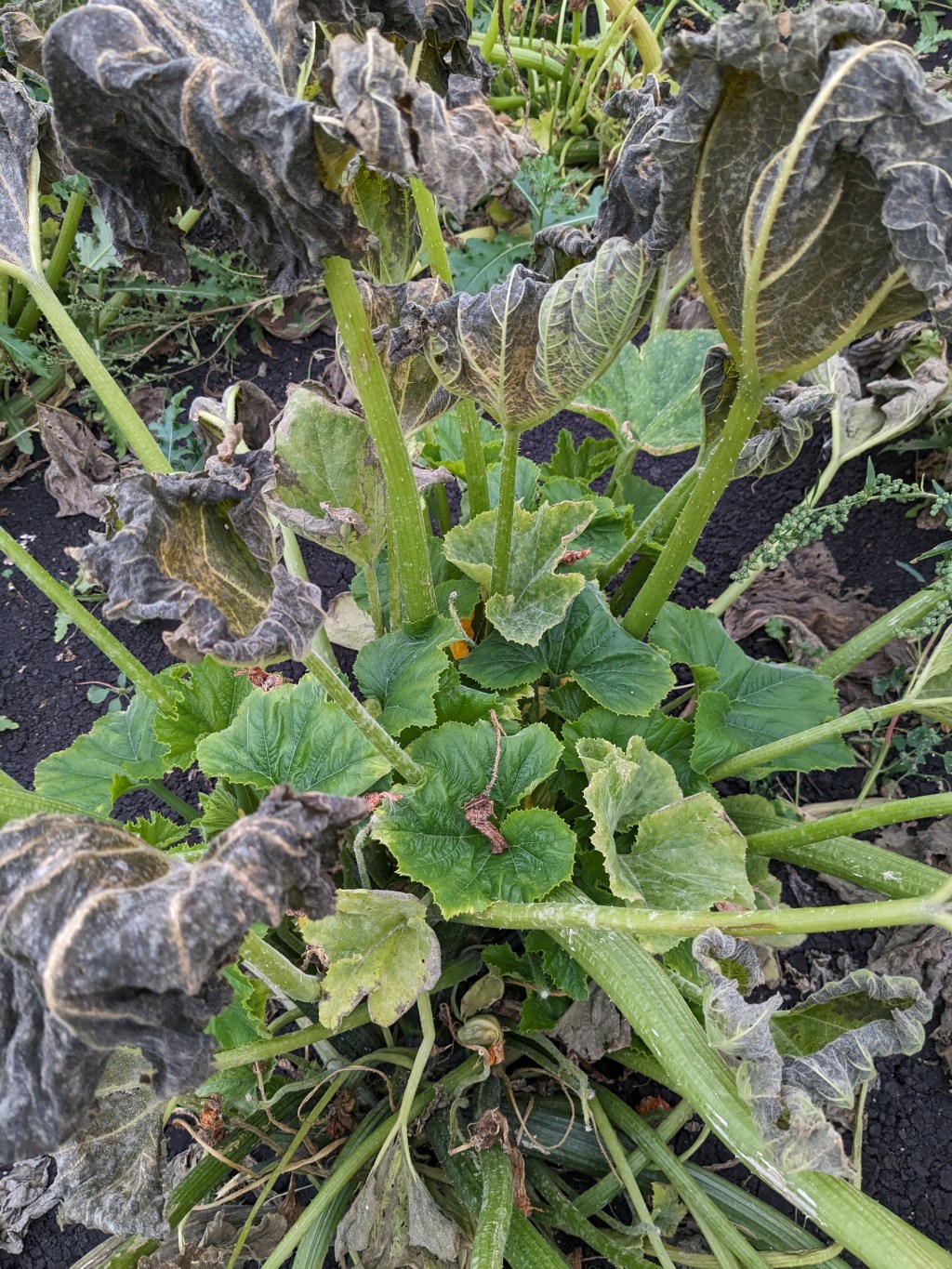
Even though we had some very light frost….not all plants are down and out, even sensitive ones. Though the top leaves of our Patty Pan Squash crop was damaged by frost, the rest of the plant was able to hang on. With some nice weather following, the plants are starting to rebound….we may even get one last pick of fruit.

Resilience is a beautiful thing.
The best news is that we can build resilience into agriculture to tolerate a wide range of climatic stresses. Plants are phenomenal engineers and are amazing at solving problems if we are patient and give them the chance to do so.
Graham -
Life Without Sun
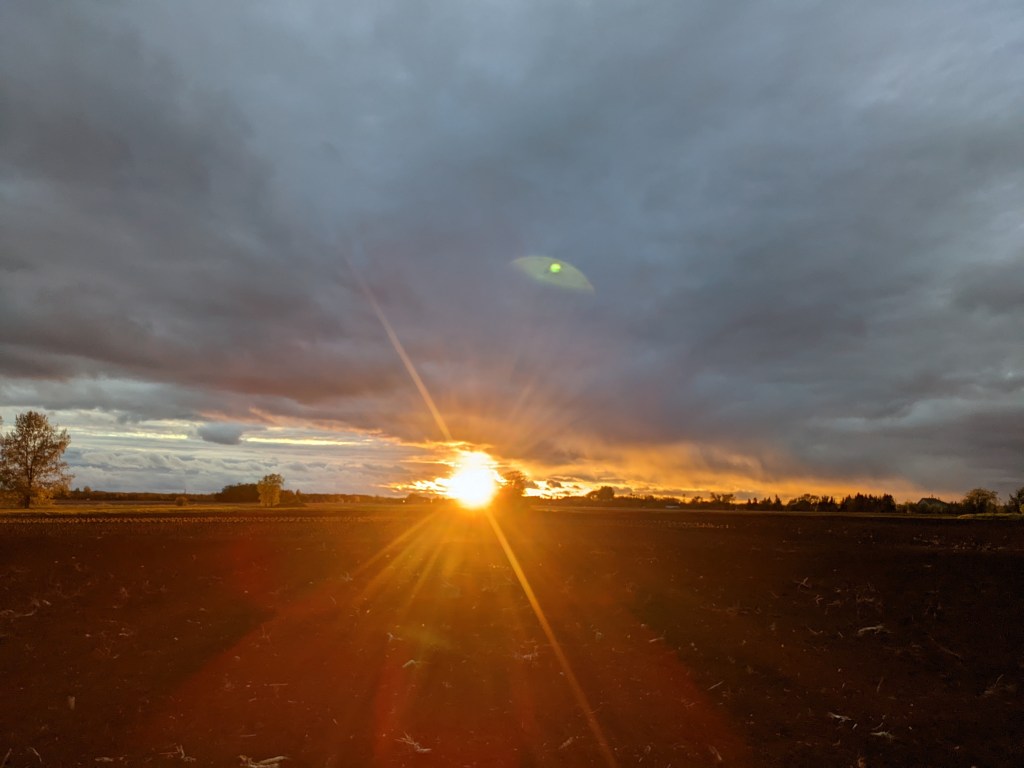
The last two nights we’ve had a very light touch of frost. All it took was 11 hours without the sun to freeze. To go from 18C to 0C.
We live on a precarious edge at all times. The only planet we know that exists to harbour life as we know it does so because of the energy of the sun. Without it, life would retreat back to small zones occurring around hydrothermal vents, utilizing other chemical pathways to synthesize energy. The conversion of solar energy into carbohydrates via photosynthesis is a beautifully elegant invention of evolution.
The sun is a powerful gift. We as a species have yet to fully comprehend the implications, and we have little time left to act.
Graham
sunlight even makes for great blueberry juice! share the gift of tasty fruity sugar with a sun-loving friend -
Trials and Errors
Regardless of how many books you’ve read, YouTubes you’ve watched, and examples you’ve heard, there is no substitute for doing the work, making your own observations, and trying again.
All the theory in the world only helps us understand what we’re seeing.
More often than not we are our own problem. The trick to a green thumb is to try again, with open eyes. -
Nature’s Economic Paradox
Several times this summer I have come across comments or opinions relating to fertilizers (specifically Nitrogen) on various social media platforms. Usually these comments are in the realm of needing to feed the world, the high cost of the fertilizer to the farmer, or how emissions from producing nitrogen are necessary and therefore shouldn’t be part of climate solutions.
In a world where everything is a commodity, it is easy to forget that we live on a planet which is based on a very firm rule set that doesn’t care one iota about any sort of invented mumbo jumbo humans made regarding the fictional world of our economy (I mean to say there are no natural laws that govern how money behaves).
We do a great job of denying we are a part of nature. We put an enormous amount of resources into making sure that that denial is inextricably linked to the economy…so much so that any reversal or course correction is loudly opposed.
Sooner or later we need to admit as a society that every natural system – be it a forest, a prairie or a bog – does not depend on however many bags of chemical whatnot are applied to force it to go. That what makes agriculture possible is not the application of invented chemicals, and that the success or failure of agriculture is not based on the price of said chemicals.
There has been no more urgent time to understand in greater detail the intelligence of plants, and how they communicate with their surroundings to obtain what they need to grow.
Graham -
Bumblebees Love Oregano
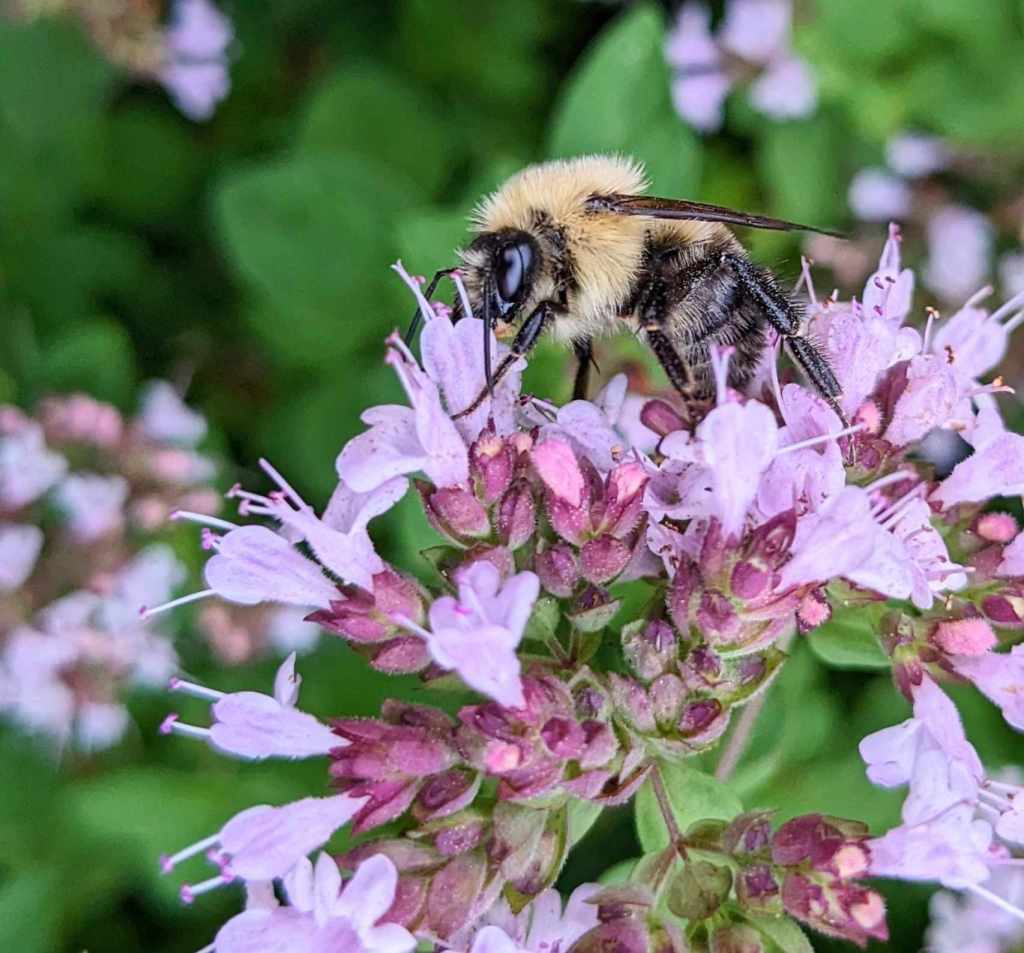
Was delighted to check on the herb garden and see an enormous amount of Bumblebees having a great time on Oregano flowers…and not just one species of Bumblebee but two. Nothing is more fascinating than watching bumblebees in late summer. They are easy to approach, and slowly walk all over each flower.
Having a wide diversity of plants is of great benefit to pollinators….and not always the types of plants or flowers you expect.
Stay curious!
Graham -
The Human Scale and Our Recent Past
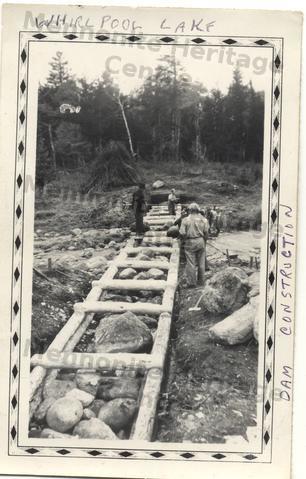
At Riding Mountain in Manitoba, there is a bridge and low-tech dam built by conscientious objectors in the early 1940s at Whirlpool Lake (more archival photos here).
What is striking to me about these sorts of things is everything absent from modern life. This bridge was built by hand. There was no trip to the department store for wood: they cut trees and designed their own planks. There was no fleet of giant F150 super crews hauling people and tools to the work site. And so on.
These things happened less than 100 years ago.
These things are stark reminders of the accelerational pace of consumption of our planet’s resources. We have gone from something that took a lot of time and effort, human-scale projects, to massive infrastructure projects and machines and technology – whether civil or agricultural – in the span of a century or less. In the coming decades we will need to reflect on if the speed and convenience was worth the consequence.
The span of one lifetime was enough to see the widespread use of human-invented chemicals for everything imaginable, the adoption of fossil fuels, the proliferation of plastic, the felling of nearly every ancient tree on the planet, and a giant patch of garbage swirling in our biggest ocean. These problems were not known to the world prior to the last 100 years.
Yet in a few special places – like a hand-built bridge at Whirlpool Lake – you can catch a scent and a view that serves as a reminder of what the world was closer to, less than a century ago…and how little of it remains.
Graham -
What Ghost Pipes Can Teach Us About “Nutrients”
Recently I was lucky enough to see some Ghost Plants aka Ghost Pipe on a hike. These creatures are fascinating enough but when I got back to farming, I noticed some in my own back yard.

One of the things I hear most when talking about farming is the topic of
“nutrients.” The Ghost Pipe is something that really forces us to think about what “nutrients” are and where they come from.
For the Ghost Pipe is not a mushroom. Nor is it a flowering plant that photosynthesizes…hence their white colour. Ghost Pipes are parasites linking up with a mycorrhizal network connected to trees.
To understand how the Ghost Pipe is getting energy without photosynthesis, we need to understand that the fungus the Ghost Pipe is plugging into is in a symbiotic relationship with trees. The trees photosynthesize, creating sugars from the Carbon in Carbon Dioxide. The trees release that through their root systems to many symbionts, one of them being mycorrhizae. The mycorrhizae help the tree obtain the many things or “nutrients” its root system could never possibly reach.
When we use the term “nutrients” we are often imagining something inert or singular elements such as Nitrogen.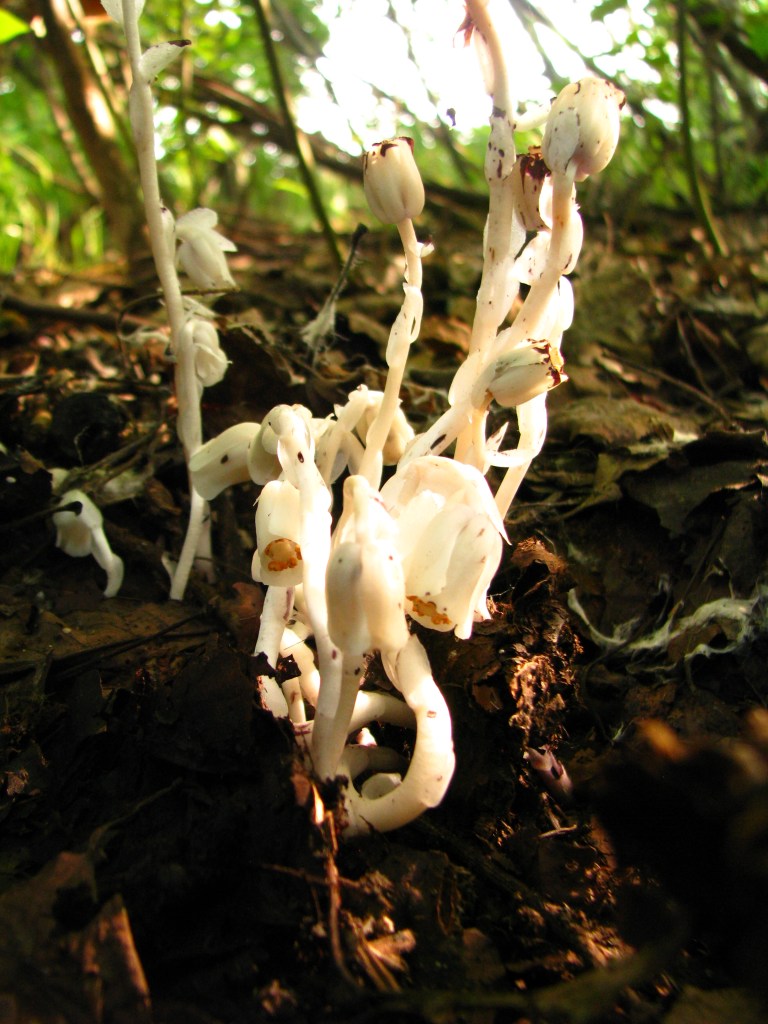
In pondering the Ghost Pipe, it becomes apparent that things are not so simple. That there are many metabolic processes going on, with many organisms involved, creating many complex molecules, which move throughout an ecological system in many directions. Plants are high-level communicators. These molecules and movements happen at the atomic and cellular level…all invisible to us.
Stay curious!
Graham
if you’re enjoying Complimentary Blueberry Juice, consider sharing your favourite post
Home
About Graham
Graham is an ecologist-farmer from Canada working on educating about the wonders and beauty of the natural world, and how we can design biodiverse food production systems.

 Complimentary Blueberry Juice