-
Tree Swallows and Anticipation
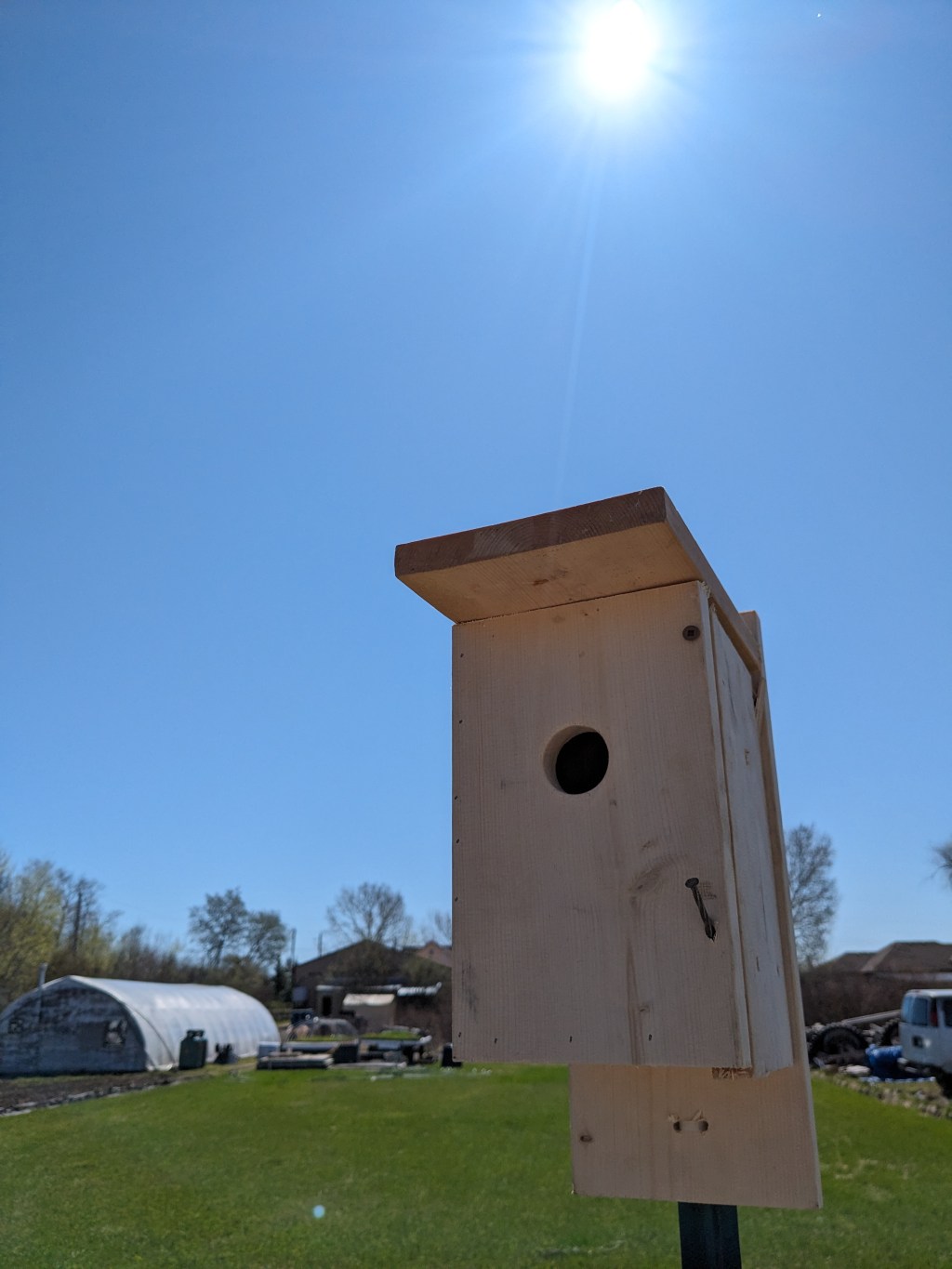
Lots going on and it’s a very busy time of year for us, in addition to seeding we have tens of thousands of transplants to go out. It’s a big three- week push and it gets our whole season underway. If that wasn’t enough for us we also have two major infrastructure projects on the go, which will also be (mostly) completed in the same three-week time frame.
What does that have to do with Tree Swallows?
Weeeeell
The big spring push is all about planning, and part of that this year was also putting up nest boxes. Granted, this isn’t the biggest of tasks but it was one I was really looking forward to.
I have loved Tree Swallows and more generally flycatchers (which for our farm includes Barn Swallows and Eastern Kingbirds) for quite awhile. They are very recognizable from their flight patterns and acrobatics, and all of them are stunningly beautiful. I have always wanted to build nest boxes and put them all over the place just to attract more. With an over-abundance of insects on our biodiverse no-till plot, it all seemed like a win-win-win. So last winter, after years of just thinking about it, I built a bunch of nest boxes.
Unlike seeding schedules and infrastructure projects, the timing to put up these nest boxes involved a little more attention to nature. Being insectivores, these birds don’t overwinter here…putting up bird boxes as soon as the snow melts will result in nesting sparrows (which is fine, not hating on the humble sparrow!) Which means I had to play a waiting game, and pay attention to what birds were arriving when.
This was enjoyable in a way I don’t think I’ve really experienced before, as I was hyper-focused on noticing which birds were arriving. Juncos, Ducks and Red Winged Blackbirds, Rails. A few days ago I saw a pair of Barn Swallows and I knew the time was near.
Today, I saw my Tree Swallows.
And up went the boxes!
It was both really enjoyable to pay closer attention to the migrating birds as nature wakes up for spring, and seeing all the nest boxes around the field is really cool. I’m hoping they all get filled with my target bird and I can enjoy the sight of them flying around as I’m working and harvesting.
I also hope they find the Cabbage Butterfly to be a real delicacy.
Farming with nature has a lot of benefits, but the best kind in my opinion, is that you get to enjoy all these amazing creatures that surround you, be it birds or amphibians or insects or mushrooms. Being surrounded by abundant life has an amazing psychological effect, as everywhere you look, if you care to look, there is something to notice. Knowing that it was your agricultural choices that allowed all of this life to thrive makes one feel really good about said choices.
Humans as ecosystem engineers have the ability to create space for abundant life and allow them to thrive, to no detriment of our lives or businesses.
With any luck we’ll see some Tree Swallow babies, and with a little more luck, I’ll get some nice photographs.
Back to transplanting.
Stay curious!
Graham
thanks for reading Complimentary Blueberry Juice -
Farming Requires Empathy
An errand for some supplies. The product we usually get was sold out, or awaiting delivery. We were offered a similar product as a replacement. Upon closer inspection, this “similar product” included some odd trademarked “additives,” which were of mysterious patented origins. The package also included this very helpful note:
WEAR GLOVES WHILE HANDLING THIS PRODUCT.
WASH AND RINSE AFTER SKIN CONTACT.
Now I don’t know about you, but for a growing medium, that seems a little much. The whole conversation I had with the sales man around this product left me a little bit bewildered.
Why are we growing plants in things that we shouldn’t touch?
Life on this planet of earth is all cut from the same molecular cloth. Humans and plants use the same Adenosine Triphosphate to derive and carry cellular energy. Our forms and functions may differ but as far as molecular metabolism goes, there are a great many similarities, across all the rest of the creatures under the very broad umbrella of life on earth, from insects to fish to fungus to moss to human.
In the line of work that is farming (or agriculture, horticulture, growing plants for a living) I encounter a lot of things that make me raise at least one eyebrow. Advising against skin contact when talking about potting soil is one of them. Soluble fertilizers is another (you’re absolutely going to want to avoid skin contact with soluble fertilizers!) Herbicides, fungicides, pesticides, and biocides, molecules designed by humans in labs are yet another. At the same time, I wonder what it is that has embedded itself in our broader culture that the most widely accepted theory about how plants grow is that they need a concoction of chemical ions. They need magic stuff, secret sauce, trademarked potions and, by the way, use gloves.
Plants are not aliens. They are life here, on our planet. They are our brothers and sisters, they are partners in this path that we call life on earth. They are symbionts, and we need them to live, to breathe. We need to eat them,so that we can get the necessary ingredients we need to metabolize. We may also eat animals, who became animals because they ate plants. We need trees for materials, and aesthetically pleasing plants for enjoyment. It is a very, very long list.
I would like to submit the following: if you can’t touch it, why would a plant touch it?
A little empathy..
A plant is a living, breathing creature. They are like you: they require water, they require air (and they require light). They also require food. But you and I don’t chug down a few litres of Essential Nutrients™ for every meal. Pretty soon you would be missing actual food.
These are remarkable creatures. There is so much more going on than we even dare to imagine, and much of it is yet to be described and articulated. Plant science grows by leaps and bounds every decade. But I would also submit that chemistry and science is only a part of the story. The other part of the story is what logic and deductive reasoning can tell us and illuminate about these incredible life forms that we co-habit earth with Itt will be a long time before we know the full story, and we might never know the whole story. The things yet to be discovered and understood about plants are as vast as the known universe.
We also happen to live in an age where consumerism and marketing consumer products inevitably leads us. Farmers and horticulturalists are also consumers of many various products and are also very susceptible to these things. We are all at least a little bit insecure about knowing the fact that we really don’t know how plants work, from famers to all of us who have rescued plants from certain furniture stores.
So it is easy to go for the Magic Potion™. The one that promises results. The one that promises productivity. The one that comes from the package that says please wash your hands. The one that says do not consume. But then we consume it.
Have you have ever seen a plant growing in a compost pile?
Have you have ever walked in an untouched forest?
Then you know.
There’s a lot more questions we need to be asking.
Stay curious
Graham
thanks for reading Complimentary Blueberry Juice -
Wetlands are Critical Agricultural Infrastructure
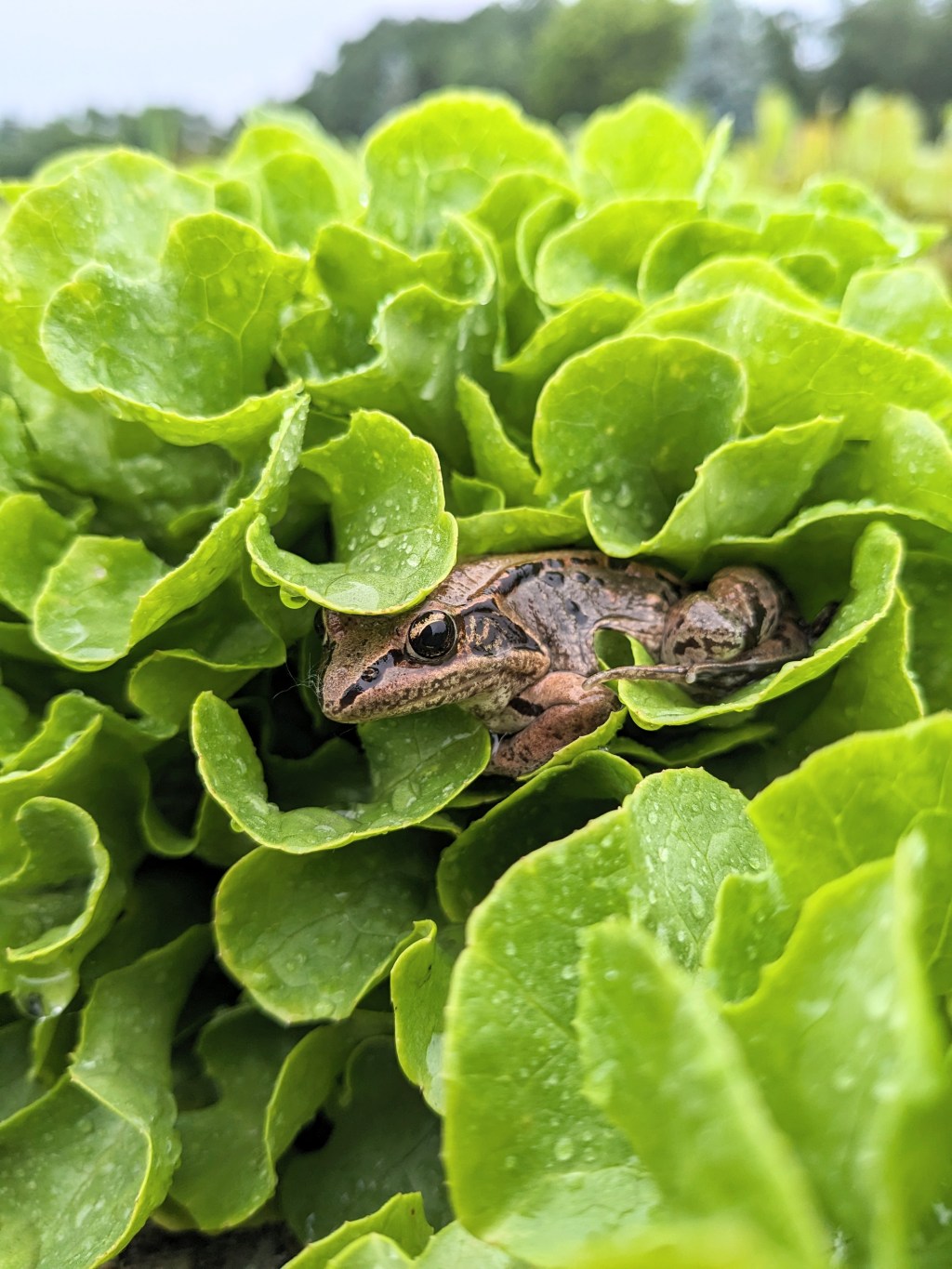
Like many other types of ecosystems, wetlands have had more-than-significant destruction and elimination over the past century. Where I live there was once a place called St Andrews Bog which covered some 116, 000 acres. It was nearly all drained, leaving only a small section of the south portion of Lake Winnipeg and, later, a conservation effort that culminated in the creation of Oak Hammock Marsh, which while beautiful, is it still only a small fraction of the original marsh. As with all extinctions and biome erasure, most people living here are not even aware this existed.
I have been lucky to grow up with what are known as “Class 3 Wetlands” in my backyard. These wetlands typically dry up in early summer, but right now, they are bursting with life, and the sounds of Boreal Chorus Frogs and Wood Frogs on a warm night are almost deafening. The water is teeming with tiny invertebrates, branchiopods…and a lot of frog eggs!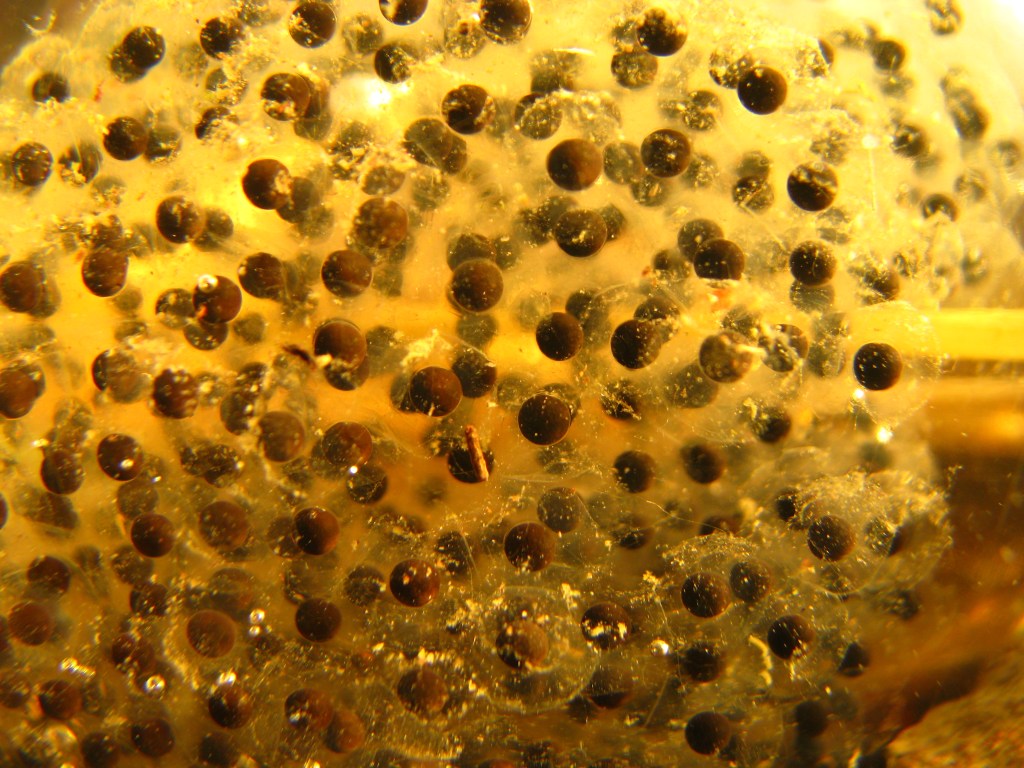
Soon ducks will begin nesting and within a few weeks there are sure to be warblers and flycatchers migrating back to these areas to nest. These wetlands are hubs of enormous amounts of life, and the bioproductivity of these ecosystems is of great significance.
This spring I have been full of anxiety over the early snow melt and quick settling of the level of water in the ponds. As an observer of natural systems and how they inform my decision making process, I would rather have full, overflowing ponds than ones that are quickly drained. I fear the ponds will not make it to early summer if we do not get rain.
The entire area surrounding us has been designed – on purpose – to “shed” the water and “move” the water “quickly” somewhere “over there,” at least “not here.” The water moves nearly completely unfiltered, to the river, to a shallow warm lake that (surprise!) suffers from massive algae blooms caused by pollution and agricultural runoff. This problem would be greatly mitigated by the protection and creation of more wetlands, slowing the water down, and using the abundance of life these systems provide to filter the water. As usual, nature has already designed the best system.
While farmers have for over a century been draining wetlands for agriculture, the contradictory logic stops me in my thinking tracks: we want to drain the water and move it…and later, we will complain when it is dry or there is a drought, that there is no water.
Nature has designed systems specifically to hold water. Even beavers are part of this process. Water is not just important to us to drink a few litres a day, it is important to all living things. Water begets life, and life begets more life. Why then, are we so eager to get rid of it?
Furthermore, I do not believe farmers in general understand the enormous consequences of this sort of land use change. Water does not fall from the sky because some deity made it so: the water must come from somewhere. Landscapes and ecosystems have their own critically important role in the water cycle. When we change lands to rush away such a precious resource only to cry when we need it, we are certainly at least the co-authors of our own misery. We cannot continue to change these landscapes and think there will be no effect. Most of what is discussed in regards to wetlands and agriculture is the nutrient cycling effects and filtering services nature provides. But large-scale, east of the Rocky Mountains, all the way to Manitoba, wetlands have been drained at an incredible rate. We are whisking our own water away, willingly.
Beyond the affects of water availability is the effect on nature. I have also witnessed the destruction and draining or filling of wetlands very close by the farm and it is painful to see a once-lush and vibrant ecosystem reduced to complete silence. This is another area where our collective actions lead to a global loss of biodiversity that, in turn affects our quality of life. I have no ability to understand why a farmer would be interested in the destruction of ecosystems as the profession is ostensibly about growing and taking care of living things.
We certainly need stronger protections and laws designed for the protection of the small amount of wetlands remaining. In my opinion, wetlands should be considered critical agricultural infrastructure. We cannot continue to erase the tiny fractions we have left scattered throughout the prairies.
At our farm we keep our Class 3 wetlands intact (I had also applied for a grant to expand it but was turned down). As such we get to enjoy the amazing benefits and nature that it provides…from it being an important observation tool, to the incredible amount of life it provides to our garden. We benefit from all the tree swallows, barn swallows, eastern kingbirds and owls that come to eat insects and pests. We also have thousands (perhaps millions!) of frogs (3 different species plus 1 toad) that hop with every step along our bed system. You even have to look twice to make sure there isn’t frog hiding in the lettuce!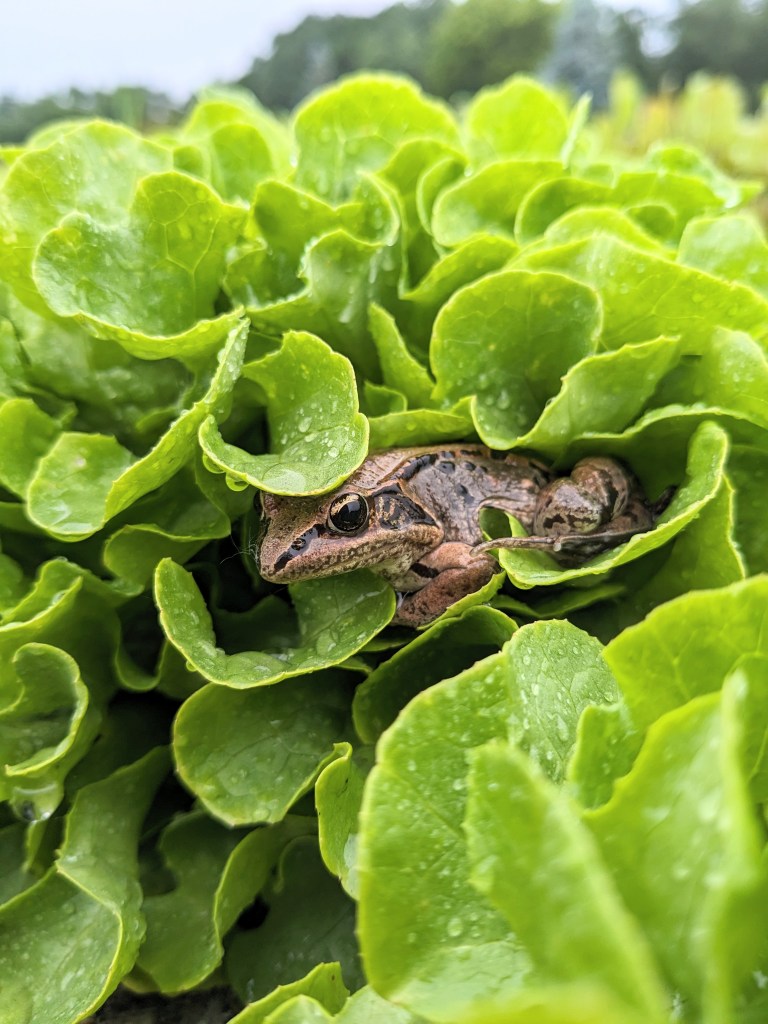
This level of life and biodiversity is, to me, a big giant sign that our agriculture is embedded within a healthy system.
It is one of the biggest things that gives me joy as a farmer: to walk back to where I work and be surrounded by this life. I believe a good farmer isn’t just one who stewards over their crops, but is a good steward for all the land they are responsible for. That means taking care of nature too, creating more space for it, adding to it, or helping it thrives. If nature wins, we all win.
After growing up the way I did, I don’t think I could ever farm anywhere that did not include a wetland.
If you would like to hear a good news story, there’s a really nice article in The Narwhal about this very subject right here in Manitoba published just a few days ago.
Stay curious…and go listen to some frogs. There are few such beautiful sounds on our world.
Graham
thanks for reading complimentary blueberry juice -
Spring, Nature’s Best Teacher
There’s a whole world out there. If we’re willing, patient, and we listen, we might learn something.
It might be the sound of birds signing, or the smell of leaves on a forest floor. Moss growing on the shaded side of a tree. A flower poking out from a sea of grass. Everywhere we can look in nature, there is a sight, a sound or a smell that we can absorb and process as information.We are also surrounded by products and marketing campaigns designed to take advantage of the insecure grower, to separate us from the path of seeking more knowledge.
Plants may seem complex because they are different life forms than us and we cannot communicate with them. It is easy to assume they are unintelligent and only need some chemical ions to miraculously grow. And with so many questions, where might you even begin to learn more about plants?
Spring, I find, is the most amazing teacher.
In Spring we can witness so much more, as Nature wakes up we have the opportunity to ask questions that might lead us to some insight (or maybe a book or two).
How do trees know when to stop sleeping, and release their buds?
If I plant a seed from a package at the wrong time, hoping for a bountiful harvest, it might rot, and I might get no harvest at all. But soon there will be billions of very productive weeds that grew from seeds that did not come from a warehouse and certainly did not rot! Why?
Why don’t forests need NPK fertilizer? What are we fundamentally missing about how plants obtain the food they need to survive and thrive?
And one of my favourites, the famous Dandelion, one of the first plants to bloom and fill our sights with vibrant colour. Why is one of the world’s most successful plants such a scourge to humans? What does the answer to that question say about us?
If you’ve got interesting questions about plants inspired by springtime, let me know in the comments.
Stay curious!
Graham
thanks for reading Complimentary Blueberry Juice -
Garden Planning
We spend all winter here at the farm planning our season, thinking about what worked well last year, what we should change, and new things to explore that might benefit us. We also think a lot about things we can plant or grow that are not crops, but have ecological benefits, be it providing a better home for soil microbes, fungi, pollinators or birds.
But you don’t need to run a farm to plan a garden!
Here’s a great TED talk that was just put out this week, with an inspiring message, for gardens of all sizes.Stay curious.
Graham
thanks for reading complimentary blueberry juice -
Why don’t we want to be close to where our food is grown?
Agriculture and innovation have always gone hand in hand. Indigenous American Three Sisters methods with corn, squash and beans. Incan terraces and potato cultivation. Anishinaabe food forests.
Many people not only don’t grow their own food, but food comes exclusively from the store. Land is a prospective real estate development, not for farming. And farms are sold and conglomerated as agriculture has evolved to become a tradeable commodity with margins with ever-increasing costs on equipment and amendments of chemical natures for monocultures.
A lot of what we are doing is simply unsustainable. We have long lost our way chasing the so-called ‘green revolution’ to it’s logical end. We’ve arrived at a fulcrum era. One where some will continue along the chemical path, others will find difficulty with drought or dust storms. Both scenarios will produce financially insolvent agriculture. Marketable technological gimmicks will be floated as solutions, like laser weeders or robots, but these will not solve the core issue.
We have entered an era where agriculture and food security have been removed from our human communities, just as we have removed the biology and nature from our food systems. Our food is less nutritionally dense. Our food loses nutrients over the distance it travels and the time it spends in warehouses. Even still, we don’t even eat it. We waste enormous amounts of it. The public health implications of lack of food security and lack of access to quality nutritious foods are enormous.
Here are some questions that can send us on a better path much quicker:
– What will agriculture look like 1000 years from now?
-Is there something we are doing today we will be embarrassed to admit we were doing at all?
– What can we learn from ancient indigenous cultures and the multi-species sustainable food systems they grew, without machines or chemicals?
– Why do we silo our problems instead of looking at a bigger picture?
– How have forests, plains, prairies, riparian zones, or any natural land-based ecosystems, survived and thrived without nitrogen fertilizer for the past 800 million years?
– Why are we so reductive in how we think plants work?
– Why don’t we want to be close to where our food is grown?
Graham
thanks for reading complimentary blueberry juice -
Journal Your Garden
For four years (going on five) I have been intensely journalling all the things on the farm. This is invaluable to all farmers, but also to hobby gardeners, backyard gardeners or plant nerds in general.
It is useful for many reasons…but most useful is that in my pocket field journal, it is full of emotional entries I do not remember writing. Reviewing this when I am assessing and planning the upcoming farm season is a powerful reminder of things that I do not wish to repeat.
And, so…they won’t be repeated!
Growing anything is a process that occurs over many months, and thousands of decisions later, it is easy to forget what happened that one time 30 days ago, 120 days ago, or 471 days ago, or 895 days ago. It is easier to remember great disappointment, a crushing realization, or super fun times when everything worked out.
This method of journalling, revisiting, re-assessing, planning, executing, and then the following year…journalling, revisiting, re-assessing, planning and executing again is a big ball of all sorts of things that result in continuous improvement. For a small or large operation with many moving parts, that means big wins each season.
Someone recently asked me for “garden tips” and I didn’t know what to say. A loss of words, if you will. Every family of plants you can grow is different and likes different conditions, the reason you are growing or experimenting affects how you view outcomes, and whether or not you need to make a profit or serve a community is something that has a major effect on your approach.
But the one thing that can apply to all of them is journalling: writing down your seed dates, first date of harvests, unexpected weather, your feelings that day, something you notice that seems odd, an idea you have, or a question that comes up, things you don’t know the answer to, or simply writing down problems that need to be solved (somehow), generally leads to you finding the information you need or devising new methods.
So if you’re a farmer, grower, gardener or houseplant enthusiast…get a little notebook and keep it handy.
If you’re outside all the time like me…getting a notebook with waterproof paper is something you will wish you had when you get caught in the rain (or leave it on the ground turn your irrigation on oops).
Stay curious!
Graham
thanks for reading complimentary blueberry juice -
To the Greenhouse!
Spring equinox happened earlier today, March 20th (because it is a leap year). It was sunny and a beautiful day to be in the greenhouse, hitting 29C. Vitamin D feels good on the skin after the winter, and the greenhouse air fills the lungs with the vibrancy of spring.
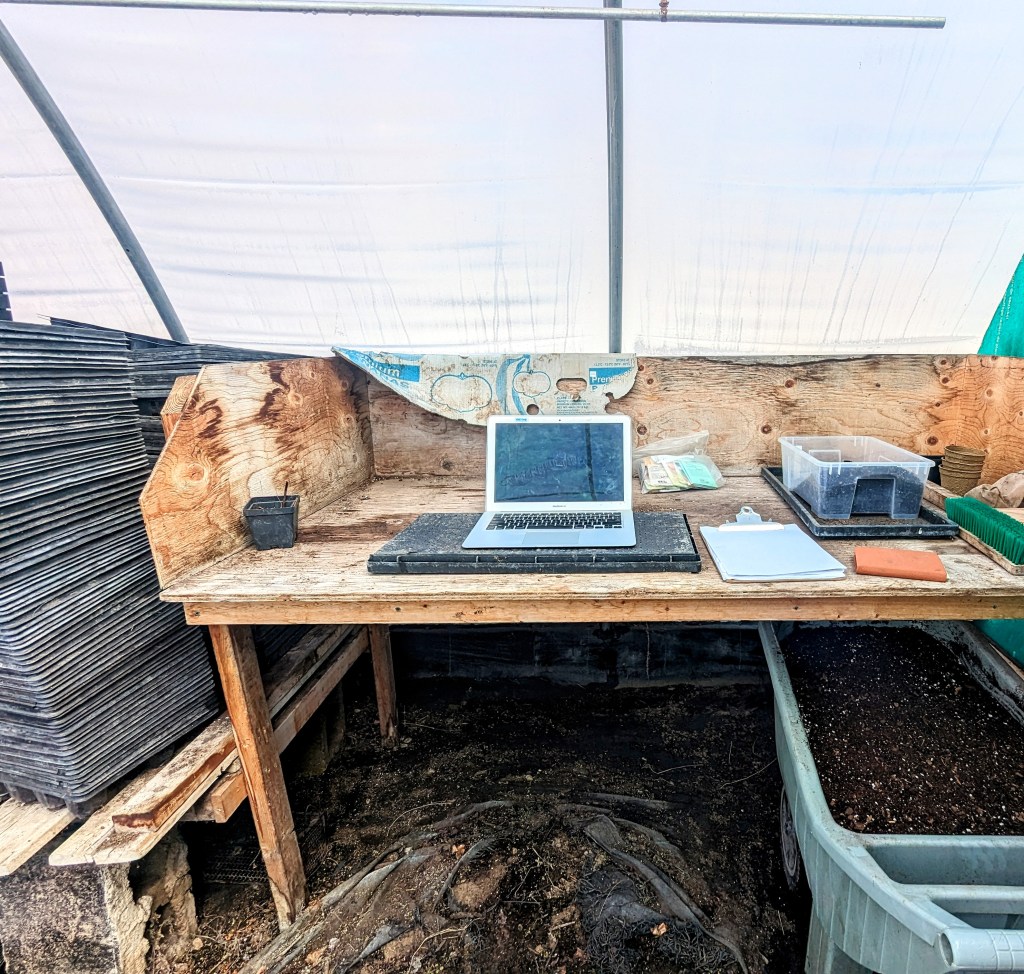
(Rate my office!)
Spring equinox is typically the big go-time for us at our farm, and is the time of greatest excitement and potential (nothing has gone wrong yet!) It is also when we start getting as many long-season crops into the germination table as we can. With a short 120 day growing season, greenhouses are critical infrastructure for us to begin the season early… when nights are going down to -20C.
The time of optimism also must come with patience. It’s far too easy to get ahead of nature and plant things too early. We’ve been keeping careful logs of seeding dates for years and we’ve been able to slowly dial in the best date ranges for our climate and context. For those of you with gardens, you likely know that slowing down and waiting is, in the long run, worth it and with better results.
Lastly, spring is a time to pay extremely close attention to Nature as she wakes up. Returning birds and buds on trees are, far more often than not, very correct in when it is safe to return or come out from the deep sleep.
Still waiting for the Juncos to make their way back and hop around!
Enjoy your equinox and get some sun!
Graham
thanks for reading complimentary blueberry juice -
Seeds
One aspect of plants is above and beyond, even magical: the seed.
The seed is promise, potential, hope and patience, all engineered into a tiny package able to withstand adverse conditions and wait them all out for the chance to start new life. Seeds come pre-packaged with everything the embryo requires to begin: protection, energy reserves and even the parent plant’s microbiome plays a major part in the health of the seed.
I’ve been fascinated by seeds all my life, and I even remember doing little “experiments” as a kid, planting something by the windowsill, just to watch it germinate. Today, I find them even more fascinating and a great example of the intelligence of plant life; from the development of the flower, to the fruiting strategy chosen to carry the seed, to the delivery strategy chosen to deliver the seed to its destination, to the seed’s ability to withstand many conditions, to the design of the seed coat itself, protecting the seed and permeating water to activate the enzymes that will catalyze the energy to get the germinating seed to put down a root, immediately developing symbiotic relationships with mycorrhizal fungi and bacteria, and put up the first “sun leaves” or cotyledons, which allows the plant, from that point on, to be entirely self-sufficient and produce all its own energy, and obtain all its own nutrients.
For us at our farm, it’s the beginning of the planting season, and over the next few months we’ll be planting tens of thousands of seeds in the greenhouse, and over the course of the year we’ll be seeding hundreds of thousands of seeds.
Seeds were not the first method of photosynthetic plant reproduction, this solution evolved some 300 million years ago as land plants became more complex. Today, flowering plants and seed dispersal is the most dominant group of living things on the planet. Without the seed there is no agriculture…and 100% of the kind of agriculture we do is seed-dependent.
This year I’ve ordered a few fun things for myself to try out. My livelihood depends on being able to germinate seeds, so I took on a few this year for fun that require a little more work and a lot more patience. I ordered four types of seeds that require periods of cold stratification (meaning they need to be kept at low temperatures for several weeks): the trumpet flower vine ( Campsis radicans), the eastern white cedar (Thuja occidentalis), a number of North American pitcher plants (Sarraceniaceae), and Ironwood tree (Ostrya virginiana). I’ve also got a bunch of cactus seeds on the go and some Camellia sinensis…otherwise known as the plant tea leaves come from. Some of these cannot be planted outside in a zone 4 but can be kept indoors or overwintered in the garage as bonsai.
Growing things is really rewarding and one of the most enjoyable part is succeeding at germinating some seeds.
Try growing something you’ve never done before!
Stay curious.
Graham
thanks for reading complimentary blueberry juice -
Brilliant Green
One of the more fascinating parts of science and science history (at least to me) is that the true nature of something can be ascertained by asking the right questions.
There are many many many examples of science (or society) rejecting a correct assertion dozens or hundreds of years before it is accepted. And since history doesn’t stop, we are currently living through a few such things that, one day, will be solved. Future humans will look back on the early 21st century and wonder at what it was like to live through the old days of cancer or climate change. Rejecting the correct assertion may play out as a political or cultural resistance, but it could also be an issue of needing a special person to connect some dots and sharply articulate something that is world-changing to our understanding. More often than not, it is both.
The way we view the world shapes what sorts of questions we ask about it, and over time, there is sort of an accepted boundary of what is or is not a valid question. These boundaries are precisely why certain subjects can get “stuck.” Science can become dogmatic. One of the best examples of this is the geocentric model of the universe: that the earth is in the middle, and everything rotates around it. It required both declining ecclesiastical power as well as great articulators (Copernicus, Galileo) to overturn the consensus, even though the assertion had been made approximately 1800 years prior to the 16th century by Aristarchus.
And so currently, we live in a time where we think of plants as a lesser form of life. This worldview shapes the questions we ask and the conclusions we come to. It also leads to a dismissive view of their over-arching importance…The way we treat our planet holds a nearly infinite number of examples of this.
It is not a wild stretch for me to consider plants to be intelligent life. While making a living working with plants and having been fascinated by them all my life, the mechanisms and design of plants are absolutely brilliant, and the more I learn the more I am sure this is true. Only since I left university, there have been an astounding array of findings by scientists all over the world observing and describing the remarkable things that plants do that have been invisible to us. Modern technology, cameras and microscopes have been at the forefront of this discoveries, and with each new astounding thing, it becomes more clear that we need new frames to peer through.
You can only know what questions to ask if you have the proper frame with which to ask them. Our world is in dire need of a new framework with which to view humans in relationship to the other 8.7 million species we share the planet with, a wide majority of which are plants.
Like other issues facing science throughout the ages, the idea that plants are a form of intelligent life is not new. It was first proposed by Democritus and over 2000 years later, Charles Darwin was making assertions about plants that seem remarkable in retrospect.
This post is really about a book, Brilliant Green by Stefano Mancuso, which is a really great read on the subject of plant intelligence. If you’re looking for an easy read and something that might stretch your consciousness on plants, I highly recommend this one.
Mancuso challenges the resistance to the idea of plant intelligence in both the scientific community and culture. He lays out the argument pointing out contradictions in thought, using well-known examples from the world of plants that surround us.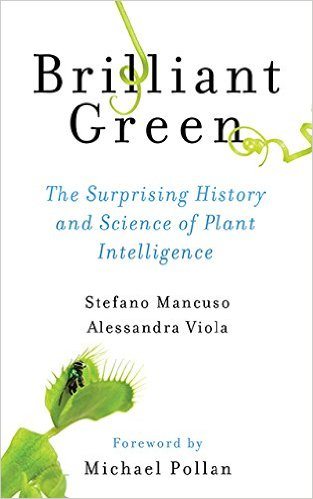
The implications of a paradigm shift in how we view and think of plants are too great for me to speculate on at this point in the post, but for the subject of agriculture I will: viewing plants as intelligent and collaborative and learning to speak their language would lead to the sorts of questions that would break the addiction and dependence on synthetic inputs.
Plants are waiting for us to understand their true nature.
Stay curious!
Graham
thanks for reading complimentary blueberry juice
Home
About Graham
Graham is an ecologist-farmer from Canada working on educating about the wonders and beauty of the natural world, and how we can design biodiverse food production systems.

 Complimentary Blueberry Juice