-
Lots of Ground to Cover
This season will be our first year implementing and experimenting with the use of cover crops. We aren’t really sure what to expect or how they will work with our system, but there’s only one way to find out.
The idea behind cover crops is simple enough: farmers go to great lengths to maintain empty fields, but nature doesn’t have bare soil, and bare soil causes a range of issues for agriculture. From evaporation and drought to wind erosion, compaction and weed proliferation. In the case of our farm, we leave a lot of weed species (weeds being plants that are uniquely adapted to colonize bare soil) out there which interfere with crops, and we spend a lot of time weeding crops by hand, or a lot of time on tractors keeping areas we don’t use “clean.” That is to say, bare, empty, and devoid of life.
As is the norm in many industries, we humans have put an enormous amount of energy and engineering resources into designing things to solve problems created by our actions. We spend considerably less energy and resources learning how to utilize the great machinery already designed by nature, or bothering to understand how it functions.
An alternative to cultivators and chemicals is to use plants. Some have fibrous roots, some have taproots, some harbour bacteria that make Nitrogen available, others form relationships with beneficial fungus. Some grow fast, some grow slow, some flower early, and some flower late. Some are C3 photosynthesizers and some are C4 photosynthesizers. Some are annuals and some are perennials.
All plants are incredible things that are actively inspiring and conducting change in the soil in which they are growing. All plants are fostering a unique bond with the life in the soil that surrounds them.
Cover crops require seeing various plants as tools…using what nature already designed to help us achieve our goals. With our inexperience we will keep things as simple as possible for the first season and consider very basic goals and see what happens. As of right now our considerations are:
1) Fast-growing plants that germinate early and out-compete weeds.
2) Plants that will be easily “terminated” by mechanical means.
2) Plants that will die over the winter, leaving a layer of organic material on the surface that we can plant directly into the following spring.
We have yet to make any choices, but I will likely have a lot more to say about cover crops over the course of the season as we experiment and see how things go, assessing progress along the way.
Personally I am optimistic about potential outcomes and excited to dive into using plants as tools. It’s been something I’ve wanted to try for a long while now and can’t wait to put our first seeds in the ground and see what happens!
Stay curious!
Graham
thanks for reading complimentary blueberry juice -
Intact Forests Within Cities
Sometimes when one expects to find a manicured park, one finds themselves in a dynamic forest. I stepped down from apartments and condos into a beautiful place and was amazed to find dead trees and tree trunks along with uneven ground, pooling water as the snow melts. On an island of just 3.8 square kilometres and a population of over 23 000 residents, an intact forest was growing and breathing.
Then there was a plaque that was something of an ecologist’s dream! Here is an excerpt from what it said:
“The exceptional drought in the summers of 2002 and 2003 seriously weakened the vitality of the trees in eastern Helsinki as well as the islands and coastal forests…Abundant and diverse decayed wood reflects the number of species of several biome groups as well as rare and endangered species.
More than 5,000 different organisms have been counted that live on decaying wood. Among the organisms that cause rot and decay of plant parts are fungi, insects, lichens and mosses, as well as the plants that live on them. Many burrowers take advantage of rotten trees and stumps. Hollow trees provide habitats, food, shelter and nesting places suitable for urban life.The birch that grew in the bend visible in front died in the drought of the summer of 2003. For this site, [safety fences] are being developed by cutting off the tops of birch trees. The basal parts of the trees are also left on the ground to rot. As you walked along the route, you could observe the rotting of the trees. It is most easily noticed on birch trees within a few years as the appearance of spore queens on the trunks.”
The Tragedy of the Commons was pointed out as early as 1833, and it is all too real. This area has survived because of the ferocity of its residents to protect it, along with a culture that supports both the leaving alone of natural places as well as public access to them. It put a smile on my face to see not only that it exists sometimes, but that thousands of people that were smiling too. Wouldn’t you, if you could just walk there?
We don’t need any more studies to tell us that nature and being close to nature and having access to nature makes our psychological well being significantly increase. Cities make reductive and facile arguments all the time regarding natural areas. It is imperative to keep them, to encourage it, or even to create them. These places make us healthier as people and our city environments healthier. The benefits are endless.
The economic value of leaving nature intact and publicly accessible is obvious when you’re standing in the middle of it, and the reality is terrifyingly frightening when you step past the last tree.
The way we design our cities is a choice.
Graham
thanks for reading complimentary blueberry juice -
Just Passing This On
Some of the most fascinating and important research being done in the area of forestry is happening right here in Canada by a Canadian scientist. Suzanne Simard’s work over the past decades in forest biology and tree communication has wide-reaching implications.
There have been many who have stated in some form or another that all life on earth is connected. Once in awhile we are lucky to hear someone articulate these concepts in a way that shows just how much more growth we have to do towards expanding our collective consciousness towards the world we live in.
I highly recommend Suzanne Simard’s TED talk.Life is far more integrated and communicative in ways that are currently invisible to us, from trees to whales to crows.
The power we possess to destroy can only be countered by our empathy to understand completely.
Graham
thanks for reading complimentary blueberry juice -
52 Blueberries!
I set up this website with a simple goal: to write and publish one thing per week farming-related for one year. The first few months weren’t the easiest…often I scrambled to find something to write about, or felt like I wrote poorly. But I kept telling myself it was part of a process and that if I kept it up for a year and accomplished my goal, I could re-assess. The not-so-easy first few months went by and I managed to never miss a Wednesday publication date.
And here it is: the 52nd post on Complimentary Blueberry Juice.
I am grateful to everyone who has subscribed to this blog…it certainly went beyond my expectations! Your comments, emails, post likes and in-person remarks really mean a lot, and kept me going when I wasn’t feeling so great about this project. Thanks so much for all your support.
I’ve been writing for twenty years, but rarely about one of the subjects I love the most: nature. I’ve had a strong connection to nature as long as I can remember. I grew up in a beautiful place with nature in my backyard and a vernal creek system. I realize I have a unique perspective as most people don’t grow up playing in vernal pools, catching frogs and identifying insects or watching birds.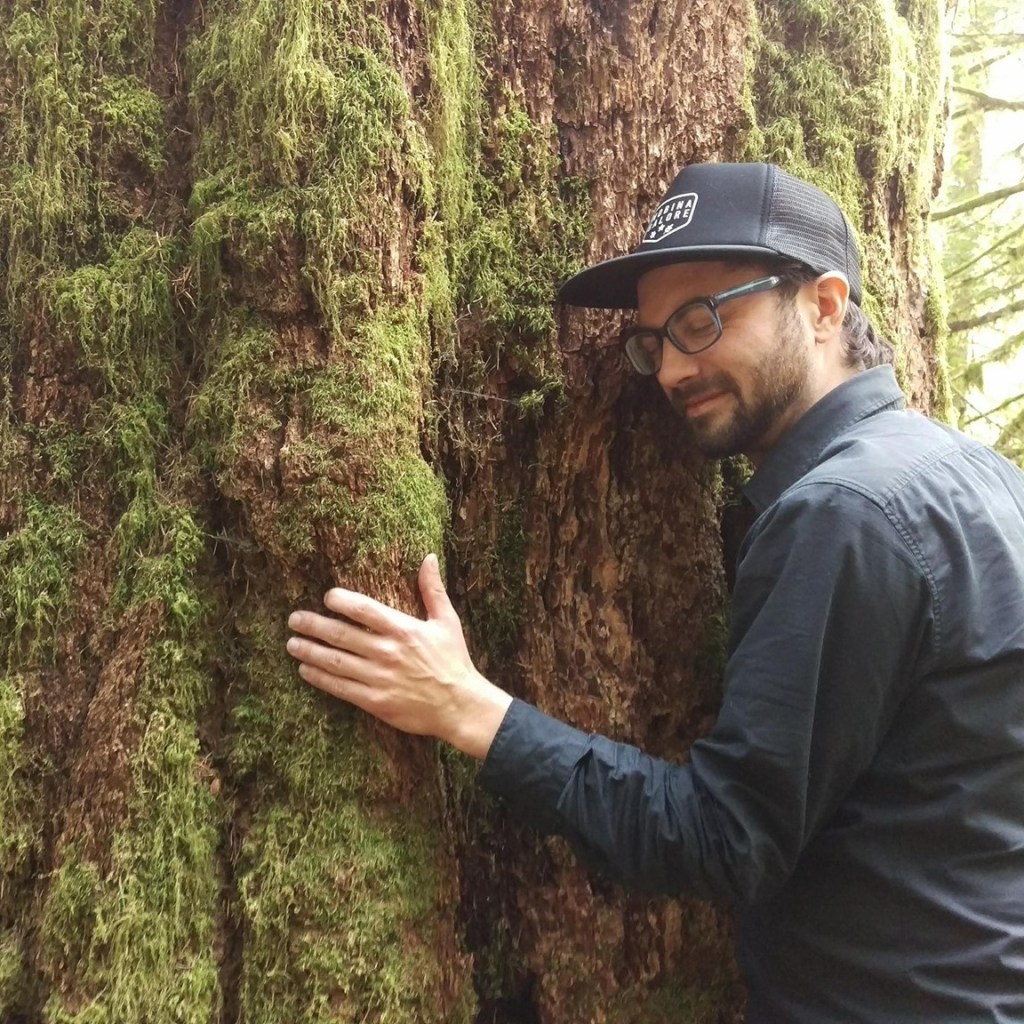
Loving nature comes with a price: watching it be destroyed and feeling powerless. Being a nature-loving farmer comes with a similar price: the same callous forces driving an economy based on environmental destruction and pollution are deeply embedded in our food production systems. With so many environmental issues facing our immediate future and my career as a farmer, I wanted to do something.I really just want to be more a part of the solution and wanted to offer what I could, and with writing, I could share what I know….even if it was all the amazing critters living in vernal pools in central Canada.
I think nature and plants are beautiful and there is nothing in the world that compares to how amazing these organisms are. I feel like if more people were aware of the incredible things living around us, we would collectively care a lot more about our surroundings. I feel that if we would realize that Nature will destroy us before we control Her, we could enter a collaborative relationship and benefit from the rewards, instead of an antagonistic one and face the consequences.
And so, I want to keep writing, at least for another year. A year ago I hoped to get sharper at articulating concepts in ecology, botany and agricultural issues, as outlined on my inaugural post/mission statement. I have been more inspired to read and study, and I have subscribed to a scientific journal. If I enjoyed anything about school, it was learning and reading research papers, not exams. I have very much come to enjoy the reading and research part of this weekly project, as well as practicing writing and sharing.
I would love to hear from you….if you had a favourite post over the past year, or if there is a subject that interests you or curious to know more about, or if there’s something you think I should cover, let me know in the comments or send me an email at graham at hey dot com.
I have now set up an archive of all the posts accessible from the navigation menu.
Lastly, if there’s anyone you think might enjoy this site or any post in particular, please consider sharing some blueberry juice with a friend or encouraging them to subscribe today on the one-year-anniversary. I am purposely not promoting this on social media (something that makes me feel very uncomfortable and anxious these days), and am choosing a slower method of communicating thoughts and ideas.
Thank you so much for reading Complimentary Blueberry Juice. It’s been a journey!
Here’s to another year and 52 more posts.
Graham
stay curious -
All That Plants Know
Let’s consider all the things a plant knows how to do.

A seed knows when to germinate…if the conditions are right, if it is too dry, too wet, too hot, too cold. A seed knows if it is close enough to the surface of the soil, or if it is too deep. Some seeds even need exposure to light, others need exposure to fire. A seed knows when to wait. A seed knows when to go.
Immediately after sprouting, the seedling knows which way is up, and which way is down. The new roots make fast friends with mycorrhizal fungi and bacteria, which help the plant access minerals and elements locked away out of reach in the soil.
The seedling pushes through the soil, meeting it’s life-long power source…photons, fired from the sun 149,600,000 kilometres away. The plant deploys its mechanism to capture photons: a net, with a Magnesium in the centre, surrounded by four Nitrogens, strung together in a structure of dozens of Carbons and Hydrogens. The captured photons are converted to chemical energy in the form of electrons.
Some of this energy finds its way to a cluster of Manganese and Calcium. When the cluster absorbs enough energy, it becomes unstable. When it is unstable, it can react with two molecules of water, releasing four electrons, four Hydrogen ions, and a waste product…two Oxygen molecules, O2.
Some of the energy is used to transform Carbon Dioxide and Water into sugar. With the carbon chains of sugar, plants can construct tissues, build structures, develop more relationships with bacteria and fungi, and improve its ability to gather more energy and more resources. There’s a lot of building left to do!
Hormones and signalling molecules let a plant know if it is damaged and in need of repair, if it has fallen over and needs to send roots from its stem, or if it is the right time of year to build flowers and reproductive structures, to send a colourful flare to insects and moths and birds to gather pollen. If the plant is successful, it may call up favours from the soil underworld to produce seeds or fruit.
Plants are incredible organisms that respond to the world around them by processing sunlight and plug themselves into the complex microbiological world under the soil. Plants are engineers, changing their immediate environment, the atmosphere, and the make-up of the soil around them. Plants supercharge the ability for other things to live around them, to borrow their sugar, to breathe the air, or to consume them and spread their seeds.
The efficient molecular innovations that plants evolved are sublime and incredible. They can produce their own food and their own energy, and survive by using only what is available to them. Our entire planet is built on invisible molecular interactions and the transfer of electrons and potential chemical energies derived from sunlight.
Life itself is intelligence. It is often portrayed in an anthropocentric sense that consciousness is intelligence. But we are not aware of the enzymes in our stomachs breaking down the sugar-chain cellulose fibres made from sunlight, we do not consider how Oxygen binds to an Iron in our blood and for what reason it is important. We think instead of what we must accomplish today, not that our neurons transmit electrical information to our protein fibre muscles in order to move, that a series of tiny canals inside our ears allow us to balance, or that our brains miraculously store all the information required to make sure we keep moving and breathing.
Our lives and the life of all things on our planet are dictated by the molecular. Plants are some of the most ingenious engineers ever known on Earth. Anything that has built solutions to generate its own energy from what is invisibly falling all around us gets my award for the most intelligent life.
Graham
thanks for reading complimentary blueberry juiceagriculture, botany, chlorophyll, climate change, earth, Ecology, evolution, food, garden, gardening, intelligence, life, nature, photosynthesis, plants, seeds, soil, solar, trees -
The Maddening Absurdity of Chemicals in Agriculture
Commodity and chemical-based agriculture has many profound effects and one of the most overlooked ones is evolution driven by mass-scale global chemical application. It is also one of the most Sisyphean: the solution is always more powerful chemicals.
Recently Reuters reported that weeds are becoming resistant to multiple chemical herbicides. It is wild that the headline for this article includes the term “crop-killing weeds” in an article which is effectively about the consequences of the act of pouring billions of gallons of toxic chemicals all over the place for several decades. The article mentions not just glyphosate but all of its chemical successors, and announces – astoundingly – that a new chemical is planned to be launched in 2026.
It is stunning, absolutely stunning, that we allow this to happen as though there are no other alternatives, that we have no choice, that it must be done for the good of this or that or the other. The anthropocentric view that humans are superior to or above nature, that we are immune to the consequences of our own absurd inventions, that the life around us is lesser than – less evolved, simple, or stupid – is the central philosophical hubris that drives these sad “innovations.”
Evolution is really simple.
A farmer can nuke a field with whichever chemical for whichever pest, insect, plant or otherwise. If one thing survives the chemical attack it will live to produce resistant offspring, and with lifecycles of one year or less, the results show themselves in a matter of years.
Commodity agriculture’s two largest enemies are weeds and insects, both things which have spent 2 billion years perfecting the ability to survive. They will not be done in by human-invented chemicals, that we spray wantonly, with little oversight, and with the assurance of lobbyists, and governments eager to help powerful companies. They have survived the paraquat, the atrazine, the glyphosate, the 2-4D, the dicamba. They will survive the next one. Here is another article from Reuters that is 12 years old warning of resistance in GMO crops.
The most incredible thing in this hamster wheel is the amount of resources spent on inventing new chemicals. It is not only the invention of the chemical, but also the accompanying GMO-infused organism: a new chemical will need an updated GMO crop. The farmer who has voluntarily signed up for the hamster wheel will need to throw down $$$ for both. The cycle never ends, the organisms evolve out, and we are back to square one. The winners here are the companies, who continue to profit, and the shareholders, who continue to profit. The entire system is based on a belief that there is no other way.
The losers are consumers, the environment, our broader public health, and the health of the environment we live in. The chemical residue is on the food you eat and accumulates in body tissues (killing hundreds of thousands per year, and untold more cancers and birth defects), it has entered the wildlife food chain and had catastrophic effects on insects and bids, it has lodged itself in soil, or washed into ditches and waterways, where it can affect groundwater, where humans get the opportunity to ingest it a second time.
In 2024, we have now experienced approximately 100 years of mass-scale applications of chemicals globally, which exploded following World War II when industries and technologies focused on war were directed instead to civilians and domestic markets.
It is enormously profitable.
If the same amount that has been spent on this agricultural chemical bondage since the end of WWII had instead been spent on research on the collective ecological function of plants, and how to leverage the systems that nature has already developed for agriculture, we would not only have a much deeper knowledge of how all life is interconnected but we would have achieved some degree of broader societal understanding of how nature functions. More importantly…farmers themselves would be transformed into ecosystem engineers and plant experts, instead of relegating themselves to paths to profit for shareholders, chemical delivery agents and unwitting evolutionary experimentalists.
World War II ended, but we have been fighting another war this entire time. A war against nature and our planet. A war denying and suppressing biology in favour of the belief in our own superior power and supposed intelligence.
Words from Rachel Carson’s beautiful and influential book Silent Spring published in 1962:
“The whole process of spraying seems caught up in an endless spiral. Since DDT was released for civilian use, a process of escalation has been going on in which ever more toxic materials must be found. This has happened because insects, in a triumphant vindication of Darwin’s principle of the survival of the fittest, have evolved super races immune to the particular insecticide used, hence a deadlier one has always to be developed – and then a deadlier one than that…Thus the chemical war is never won, and all life is caught in its violent crossfire.”
This book read today, contains within it the terrifying realization that the numbers, figures and facts cited were already astronomical for the time, and that it has largely continued unabated, for the intervening 62 years.
“The production of synthetic pesticides in the United States soared from 124, 259, 000 pounds in 1947 to 637, 666, 000 pounds in 1960 – more than a fivefold increase. The wholesale value of these products was well over a quarter of a billion dollars. But in the plans and hopes of the industry this enormous production is only a beginning.”
According to the United Nations, the number of pounds of pesticides used in North America alone in 2020 was over 1 billion pounds.
It is the wish of the author of this blog that this chemical insanity stops during his lifespan. It is time we stop being hoodwinked by the promises of these massive and powerful companies.
I believe that the more one knows about the natural world, the more phenomenal and incredible it seems, the more in awe you are of it: for when you learn what plants are capable of you can only draw one conclusion…that plants are intelligent. It is in this insight that one realizes that the concepts of consciousness and intelligence, applied to the human race, are often mutually exclusive.
“Our approach to nature is to beat it into submission. We would stand a better chance of survival if we accommodated ourselves to this planet and viewed it appreciatively instead of skeptically and dictatorially.” – E.B. White
Graham
thanks for reading complimentary blueberry juice -
The Tale of Humble Tea and the Sea
The sea is the gift that keeps on giving this winter (and it is rare to have so reliable a subject as an amateur nature photographer). The lesson learned from last week is that visiting the same place every day allows nature to reveal herself slowly and gain new appreciations for the forces that shape our surroundings. However I promptly ignored my own advice and stopped going…the temperature warmed, it went up to 3 and 4C, I assumed, the ice melted and the phenomenon was over.
Now it’s time for some humble tea, to bundle up, go back to returning to Uunisaari daily to watch the amazing things unfolding on the Gulf of Finland.
That is until it cooled off again and even more stunning sights were to be found. After an incredibly windy day and freezing night, upon returning it appeared as if waves were frozen in time before they hit the shore…the gel-like ice coating the sea had frozen solid and shards of ice piled up on top of each other as though they were moved by tectonic force. To stand and listen to the shifting water caused eerie squeaking among the ice-plates.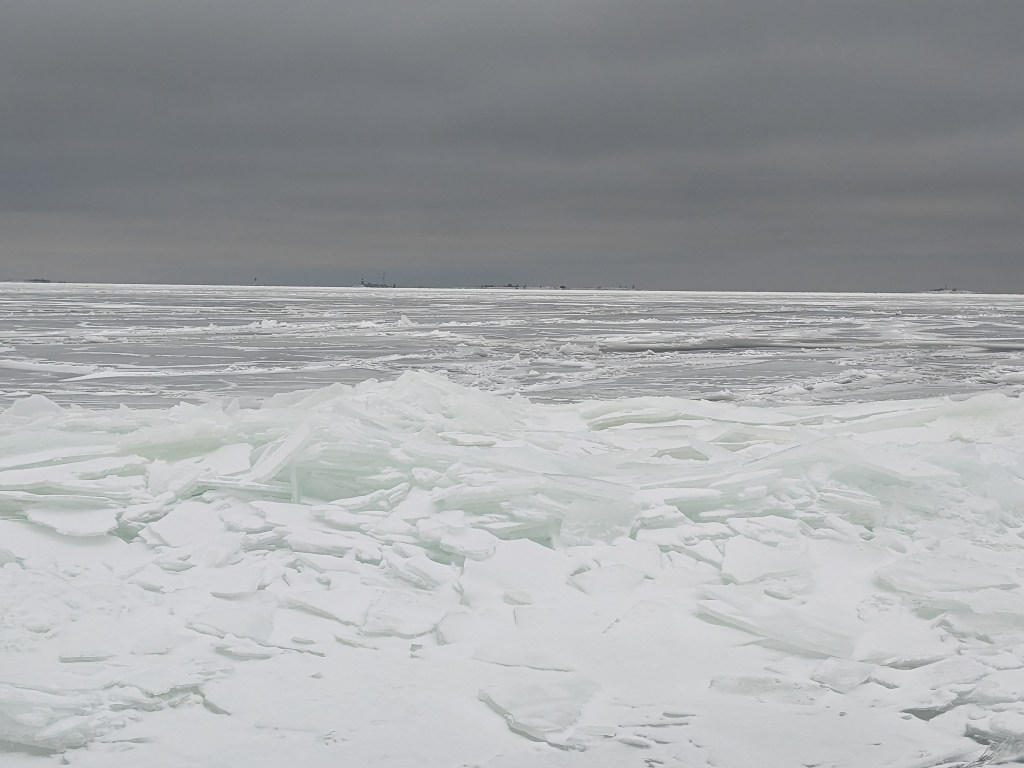
And a few days later, a little snow and a little wind…and the surface had turned completely white with snow-like vapour trails forming little snow drifts. It appears as though this photo subject will remain for the following week at least.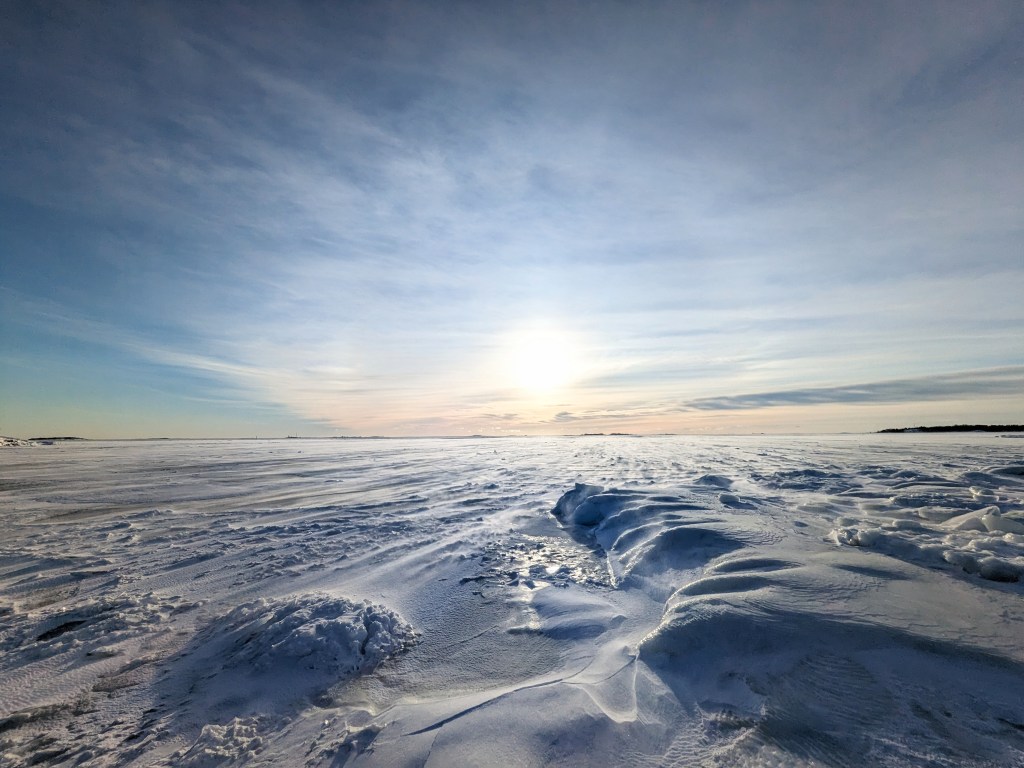
A day after last week’s post, there was a timely article in The Guardian about the record ocean temperatures observed in 2023, and today, another about Greenland losing 20% more ice than previously thought, nearing irreversibility. It is of course contrary to our daily experience amidst polar vortex systems in winter that many scoff at the idea of human-caused climate change. Whether it is in the records of atmospheric composition records, the deepest of ice cores in the most remote glaciers, the shifting pH of the global ocean, or in the geologic evidence of rocks, all the data is there to draw accurate and startling conclusions about our near future. An existential truth is that 99% of the life that has ever lived on this planet has gone extinct, and Homo sapiens are not above this potential fate. The best I have heard this be described is that we are living during a time much like Galileo: all the evidence is there, but we as a culture and a society are not fully ready to accept it readily, either as information, nor its implications.
Today, I thought the photos of the ocean too beautiful not to share, and that future generations of humans may not have the ability to witness these sorts of phenomenon without travelling to the poles. This will be the last post on geologic climate patterns and next week, I will shift to biological ones, and explore how modern commodity agriculture is influencing biological evolution.
For a little closure poetically, I will close with Carl Sagan from Cosmos published in 1981:
“We are perturbing our poor planet in serious and contradictory ways…In our ignorance, we continue to push and pull, to pollute the atmosphere and brighten the land, oblivious of the fact that the long-term consequences are largely unknown….Our intelligence and our technology have given us the power to affect the climate. How will we use this power? Are we willing to tolerate ignorance and complacency in matters that affect the entire human family? Do we value short-term advantages above the welfare of the Earth? Or will we think on longer time scales, with concern for our children and our grandchildren, to understand and protect the complex life-support systems of our planet? The Earth is a tiny and fragile world. It needs to be cherished.“
You can watch the late great Carl Sagan’s testimony to US Congress on Climate Change from 1985 right here.
Graham
thanks for reading complimentary blueberry juice -
The Incredible Oceans
Something magical can happen if you return to the same place every day to document it. Nature works slowly and reveals the methods of her beauty over time.
After 8 consecutive days and nights of -15C to -20C and colder, the sea crusted over in a beautiful pattern of hardened slush.
Visiting the same site every day and taking pictures gave a much deeper appreciation of this process and what it takes to freeze a large body of water. On the 2nd day we were treated to the spectacle of “sea smoke.” The 6th and 7th days were so windy and the windchill so extreme that I was unable to take photos (I tried, but frostbite occurred in less than 30 seconds). The sea waved and undulated in the wind and I thought perhaps the air movement alone would prevent freezing, and in a few days the temperature would warm up a bit and I wouldn’t get to witness sea ice form. But on day 8 the sun was shining in a windless perfect day, and when I walked up the hill to see the Gulf of Finland, I was absolutely shocked that overnight, a jigsaw of sea slush had interlocked and frozen as far as the eye could see, and as far as my camera could zoom in.
My thoughts have ranged from the poetic to bewilderment. What a thing for a Canadian kid from the floodplain prairies to see. How it took 8 days of temperatures that most people would consider not leaving their house to only get to a slush state that could not even be walked on. But a lot of my mind was on the climate of this planet, the history of it and the future of it. Witnessing the event made me think of the ancient glacial period caused by the evolution of photosynthetic organisms, which consumed greenhouse gases and released Oxygen, triggering a mass extinction over two billion years ago and causing an epic glacial period via an “icehouse” effect. Over geologic timeframes our frozen earth’s atmosphere and ocean chemistry shifted radically. It would be another 1.5 billion years until the Cambrian Explosion, the evolutionary expansion period which saw the development of many multi-cellular species and what we think of as life.
The ocean is the single greatest buffer planet earth has against climate change. 97% of earth’s water is in the ocean, and the ocean is 70% of earth’s surface area. Water also happens to be highly effective in absorbing and retaining heat energy. Effective enough that even small volumes of it can be used as a low-tech method for keeping greenhouses warm overnight (called thermal mass). Indeed the ocean is a massive reason why climate change will accelerate: every passing day it absorbs more of the energy trapped in our atmosphere, and with increased carbon absorption, we are able to measure another oceanic chemical change: rapid acidification.
The oceans and bodies of water of our planet are incredible. Whether the sea is open, or frozen…the darkness of deep sea trenches and hydrothermal vents or the turquoise blues of shallow carribean islands. Salt water or freshwater. In a pond or a trickle of water falling off a mountain wall.
If there is a sunset, there will be an incredible reflection. In that light we can all experience the wonder that is our existence in the universe, the magnitude of the oceans, the disappearance of the sun from the rotation of earth, and the emergence of stars light years away from us.
Graham
thanks for reading this cosmic edition of Complimentary Blueberry Juice -
The Fragility of Water

The phenomenon known as “sea smoke” happens when temperatures drop. Relatively warm water meets very cold air, and we can see condensation occur, making it appear as though there is steam rising from the body of water.
It is a strikingly beautiful thing, and I’ve been lucky enough to be able to take amazing photos for a few days from Uunisaari in Helsinki.
We are accustomed to water being a major driving force for life…not only as something we need to consume every day, but also as something needed to be consumed by all life on land. That includes plants, which require water for many things but perhaps most germane to the rest of us oxygen-breathing organisms, water is required in the first photosynthesis reaction.
When you are able to see water exist in all 3 states simultaneously it is not only stunning but humbling: the situation of stable life as we know it on this planet is a precarious miracle.
There is nowhere else in our solar system or as-yet-observed universe where the healing and life-giving properties of liquid water, the heating and cooling properties of water vapour, and the geological force that is ice water all exist and can be observed at the same time.
Altering this balance has grave implications.
Graham
thanks for reading complimentary blueberry juice…made possible by the liquid state of water and the gift of photosynthesis -
Garden Futures: Designing With Nature
When I wrote last week’s post Art Can Show Us the Diversity We’ve Lost, I didn’t know that a couple days later I would be stumbling into the Garden Futures: Designing With Nature exhibit in Helsinki’s Designmuseo.
The stated goals of the exhibition seemed to jar with my perspective as a farmer. It is not often there is a museum filled with what are effective, natural-based agricultural solutions practiced throughout the world for many decades, hundreds, or thousands of years, as well as effective government policy ideas for incorporating gardens and what amount to local food production systems seamlessly into urban areas.
It is really wonderful to see so many people take in these histories, agricultural methods, community ideas, policies and the consequences of human actions, in an exhibit that runs for nearly 5 months.
When you put it all into a condensed exhibit in a museum, it feels inspiring, and hopeful. Yet when I look out at much of the world that surrounds me, to be in the museum feels a bit like seeing a tiger in a zoo: these ideas are wonderful and amazing, they are proven to work, they are important to protect and expand, but as soon as you walk out the door, the capital decisions that drive commodity-based extraction systems built on a foundation of destroying one’s own resources and environment take over, and we are back at business as usual, destruction as usual, pollution as usual, and land speculation as usual. We simultaneously understand what we are doing, and why the tiger is in the zoo, yet we continue as though there is nothing we can do about it.
Humans have two equal powers: the ability to destroy the world as we know it with cold calculations, and the ability to create infinite abundance and harmony.
Which path we choose today is crucial for the success of our species and the well-being of our planet for generations to come.
Graham
thanks for reading Complimentary Blueberry Juice
subscribe for a new post every Wednesday, in your inbox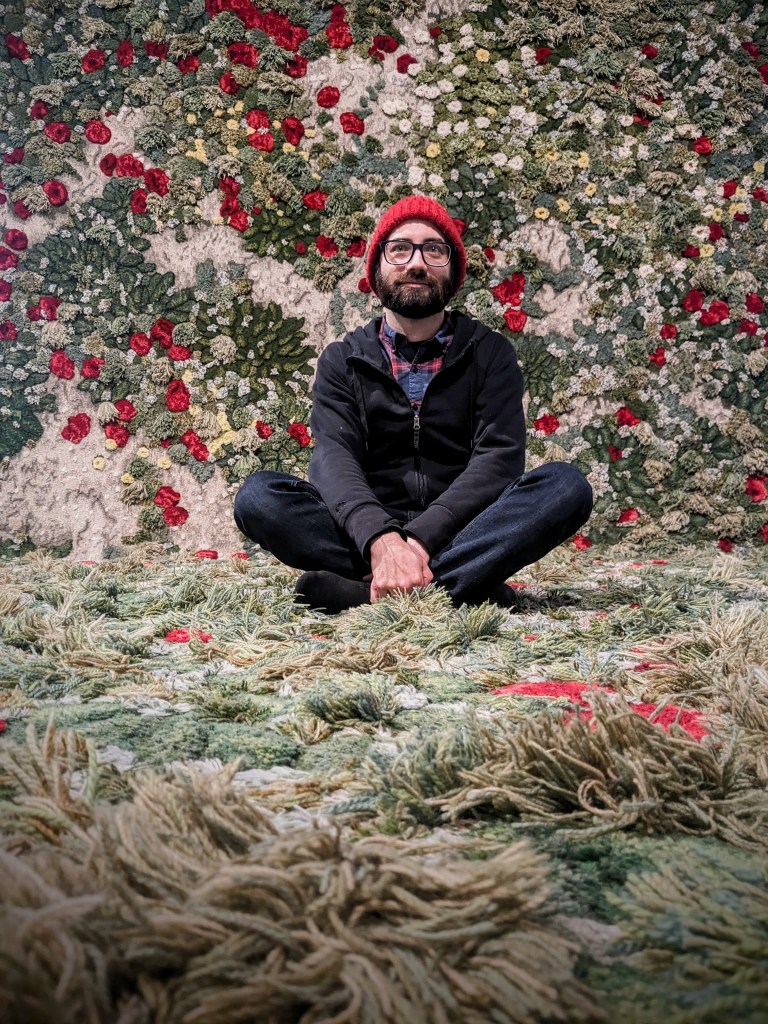
Alexandra Kehayoglou‘s amazing textile installation at Garden Futures “Meadows” measuring 4.3 metres by 6.4 metres.
Description from the installation: “…Meadows centres on the Greek island of Milos. While the operation of more than 200 mines has dramatically altered its landscape, once a year the barren rocks burst into bloom when the wildflowers blossom. Given the effects of climate change, however, it is hard to predict how long this phenomenon will endure.”
The regenerative farmer perspective: that even in a degraded ecosystem, nature is attempting to provide the tools to build soil and work towards an improved landscape capable of harbouring more. Life begets more life. Humans are in the unique position to accelerate this process….if we so choose.
Kehatoglou’s website and more of her fantastic artwork is here.
Home
About Graham
Graham is an ecologist-farmer from Canada working on educating about the wonders and beauty of the natural world, and how we can design biodiverse food production systems.

 Complimentary Blueberry Juice